Welcome to the 26th edition of the Analyst of the Month.
Every month, we highlight a leading analyst who takes a long-term view with investing.
This month we highlight David Kroger at T. RowePrice Digital Assets.
David Kroger is the Director of Digital Assets Research at T. Rowe Price, where he brings a systematic, data-driven approach to navigating the rapidly evolving digital asset space.
With a diverse background spanning venture capital, equity research, and data science, David specializes in bridging the gap between traditional fundamental analysis and the unique, high-velocity dynamics of crypto markets. His work focuses on integrating deep research, on-chain analytics, and active risk management to build institutional-grade investment strategies, such as the T. Rowe Price Active Crypto ETF (TKNZ).
Read on to learn more about David’s research philosophy, how he combines systematic data with discretionary judgment, and why he believes digital assets are becoming a critical layer of the next generation of financial infrastructure.
What is your story? What was your journey into investing and digital assets?
I started in venture capital right out of school, focused on AI, robotics, augmented reality, and virtual reality. That experience introduced me to alternative ways of analyzing companies and thinking about addressable markets. From there, I joined Piper Sandler as an equity research data scientist, where we used alternative data to analyze public companies.
I initially looked at digital assets as a way to practice and improve my data science techniques. The market was producing an enormous amount of observable data, along with more than enough volatility to test different ideas. A senior colleague and I built an algorithm that identified trending names based on their internet presence. We called it the Media-Derived Value algorithm, or MDV, and it surfaced names such as Bitcoin and GameStop. After that, I went headfirst into digital assets, first by writing research on the space and eventually moving into it full-time in 2021, when I led the research deck on digital assets at TD Cowen, then StoneX. I joined T. Rowe Price in 2025.
You’ve been at T. Rowe Price for over a year now as Director of Digital Assets Research. What was the path that led you to join T. Rowe Price, and why did you join the firm?
Over my years leading digital asset research on the sell side, I got to know a lot of great and very smart people across the industry. One of those people was Blue Macellari, the Head of Digital Assets at T. Rowe Price. She gave me the opportunity to join the firm and help build out its digital asset research and modeling capabilities, with the goal of developing what would eventually become our first exchanged-traded in this space, T. Rowe Price Active Crypto ETF (TKNZ).
What attracted me was the opportunity to combine T. Rowe Price’s long history of fundamental investment research, portfolio construction, and risk management with an asset class that is still developing in real time. Digital assets create a unique research challenge because you need to understand the technology, the economics, the data, and the market structure. T. Rowe Price had both the resources and the investment culture to approach that challenge seriously.
You were recently named a portfolio manager for the active crypto ETF that you helped launch. Congratulations. Can you tell us a little about TKNZ and why it is important to T. Rowe Price, to you personally, and to the industry?
Thank you. TKNZ is designed to be a one-stop shop for investors who want digital asset exposure without having to learn the mechanics of every asset, worry about security and custody, or continuously maintain and rebalance a portfolio as the market moves. It brings research, portfolio construction, execution, and risk management together in a familiar investment vehicle.
It is personally important to me because of the team behind it. I have the opportunity to work with Blue, as well as our co-portfolio managers Stefan Hubrich, Sean McWilliams, and Dante Pearson, all of whom bring deep and complementary expertise to the team’s modeling, portfolio construction, and fundamental research capabilities. For T. Rowe Price, the product extends the firm’s research-driven investment approach into a new asset class. For the industry, I think it represents another step toward moving digital asset investing beyond single-token exposure and toward a more diversified, institutionally managed framework.
It seems like you have always straddled the line between systematic and discretionary investing. What matters most for digital assets: factors, fundamentals, sentiment, or momentum?
We think about digital assets through three main pillars. The first is technology and economics, which is probably the closest equivalent to traditional fundamentals. That includes understanding how the token works, the security model, the supply and emissions schedule, the token’s utility, and how value may accrue to holders.
The second pillar is drivers of growth. That means understanding the sector and ecosystem, how easy the technology is to use, the strength of the team and developer community, and what improvement proposals or product changes are in the works that could materially affect the fundamentals. We then view those first two pillars through a thematic and momentum lens.
No single input matters most in every environment. There are assets with strong fundamentals that never attract an incremental buyer, and the opportunity cost of not participating in a popular narrative can be expensive - AI in equities is a good analogy. Our process is systematic in how we collect, organize, and compare the evidence, but discretionary in how we interpret that evidence and ultimately size the risk.
What is an investment thesis or core market belief that you hold, and what are the main drivers behind it?
One of my core beliefs is that digital asset markets tend to price different things in different market environments. Fundamentals and revenue adoption are often the fallback conversation in a bear market. Investors focus on revenue, usage, token economics, value accrual, and whether a project can survive a difficult environment.
In a bull market, total addressable market, user adoption, ecosystem growth, and the broader narrative tend to become more discussed. Investors are more willing to underwrite what something could become rather than only what it is producing today. The mistake is assuming that one framework works in every market. Our team can analyze digital assets on both fronts and use those insights to position accordingly. We want to identify assets with durable technology and economics, while also recognizing that adoption, liquidity, and narrative often determine when that value is realized.
Why digital assets right now in 2026? Given the growing demand for AI exposure, what could make investors more bullish on crypto and digital assets more broadly?
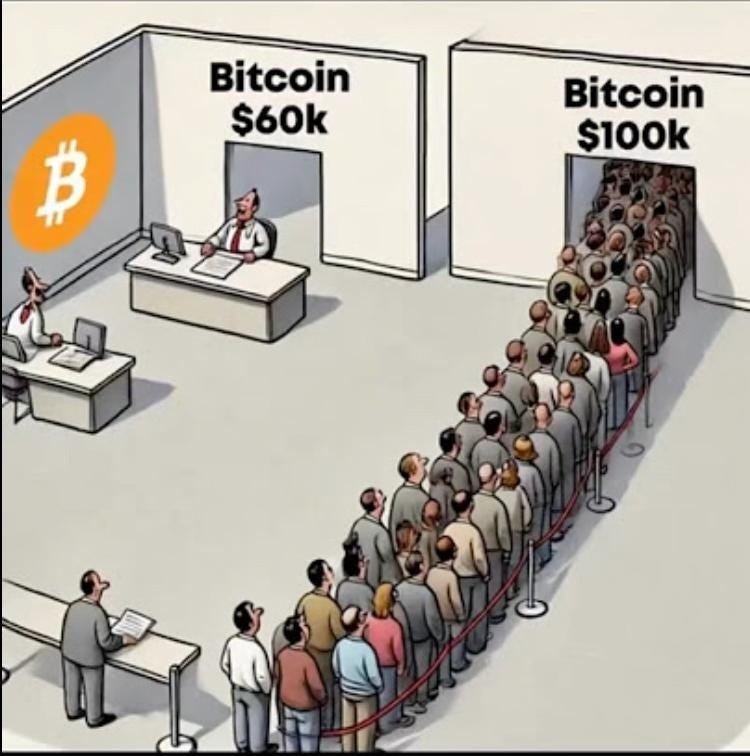
In my view, one reason to look at digital assets in 2026 is that the asset class increasingly overlaps with some of the largest technology and financial themes in the market, including AI, tokenization, prediction markets, and the movement toward 24/7 financial markets. AI agents may eventually need to hold assets, make payments, and transact with one another. Blockchains provide a natural, programmable settlement layer for that type of activity.
What could make investors more bullish is evidence that these use cases are turning into real economic activity. That could include more users, more on-chain transactions, greater adoption of tokenized assets, and stronger revenue generation. Digital assets are fighting for investment dollars that are also heading toward areas such as AI and prediction markets, but digital assets participate in both of those segments and may ultimately help enable them. We are already seeing the asset class influence traditional finance through areas such as tokenization and the expectation that more markets will eventually trade around the clock.
Investment research tools have been drastically affected by advancements in technology, particularly AI. What does your current investment research process look like, and how has it changed over the years?
I think one of the biggest changes in digital asset research has come through products such as Artemis, which streamline data processing and make the information easier to understand. I used to have to crawl Discord servers and read through multiple drafts of white papers just to find the most recent emissions schedule. We still do that from time to time when it is necessary, but now I can use API calls, or have an LLM write SQL code, to pull the relevant KPIs much more quickly.
I also have Excel plugins that update our models, relative analysis, and other inputs alongside larger macro variables. Even on the nonquantitative side, the research process has changed. Many protocols now have business development or investor-relations teams that can help educate investors and answer questions about proposed upgrades, governance changes, or announced partnerships.
Technology has not replaced the underlying diligence. What it has done is compress the time between asking a question and being able to analyze it. That allows us to spend less time gathering and cleaning data and more time determining whether the investment thesis is actually sound.
What problem does active management solve in digital assets, and how does TKNZ’s multi-token, risk-managed approach differ from passive spot Bitcoin or index products?
Digital assets are not a homogeneous market. Bitcoin remains an important part of the opportunity set, but the ecosystem has expanded to include networks and applications with very different technologies, use cases, economic models, and return drivers. TKNZ gives investors access to that broader opportunity through a single, institutionally managed vehicle. Our team uses fundamental research, on-chain data, quantitative models, and direct engagement with project teams to evaluate the durability of each investment thesis, rather than simply allocating based on market capitalization or recent price performance.
The active structure matters just as much on the risk side. We can adjust position sizes as liquidity, volatility, correlations, or fundamentals change. We can manage concentrations relative to Bitcoin and hold USDC when we believe a more defensive posture makes sense. TKNZ also provides professional oversight of custody, trading, execution, liquidity, and counterparty risk - what we sometimes refer to as operational alpha.
The result is not simply broader crypto exposure. It is a research-driven portfolio that combines asset selection with active risk management and applies the same type of institutional discipline that T. Rowe Price brings to other asset classes.
You spent the early part of your career as a data intelligence analyst at Piper Sandler and then as a data scientist at Cowen before moving into investing. What lessons from your data science background have influenced your investment style and approach?
At Piper Sandler, I worked with a ton of alternative data across different market sectors. To write differentiated research, the teams needed interesting and unique data that the rest of the Street either did not have or had not considered. I spent hours looking for an edge in the data (before LLMs could generate web scrapers in minutes) and I would sometimes gather daily data for years before being able to test whether there was a meaningful relationship with earnings or other KPIs.
That background taught me to be skeptical in a useful way. Data can tell you what happened and, in some cases, provide insight into what may happen next. But you have to understand how the data was created, what biases may be embedded in it, and whether the relationship makes economic sense.
That is particularly relevant in digital assets because so much of the data is public and observable on-chain. The challenge is not necessarily getting access to data; it is separating signal from noise. That discipline shapes how I build models, challenge popular narratives, and determine when a quantitative result is strong enough to influence a portfolio position.
What are some of your favorite tools for creating digital asset investment strategies for T. Rowe Price’s product suite? What do you use every day, and why?
Artemis Analyst is easily one of my favorite tools. The ability to consult an LLM that is connected to a large digital asset database and have it provide near-real-time analytics is extremely time-efficient. Something as involved as building a model from historical on-chain data can now be generated, evaluated, and refined much more quickly than it could have been in the past.
From there, the sky is the limit. I have used it for time-series analysis, factor analysis, relative analysis, momentum indicators, and cross-sectional comparisons - really anything that can help us gain additional insight into an investment. It also makes it easier to test a question before committing the time and resources required to build a larger model.
The tool itself is not the strategy, though. The real value comes from knowing which questions to ask, validating the output, and connecting a quantitative signal back to the technology, token economics, and real-world adoption. The tools make us faster, but the investment judgment still has to come from the team.