

“My thesis on why I left Circle was this is the greatest TAM opportunity of our lifetime and the biggest thing that you could do was not to build a stablecoin...the biggest thing you could do was build a fintech or a bank on top of those rails”
This is a bold thesis from Raagulan Pathy, the Founder and CEO of KAST. He doesn’t want KAST to be labeled a crypto company, rather KAST one day being in the same realm as Nubank and Revolut, or even bigger.
Due to the regional nature of banking, there hasn’t been a truly global fintech. Companies like Nubank and Revolut have billion-plus market caps, but 90% of their revenue tends to be concentrated in a handful of countries or a single continent. The exception to this rule is to build your own network. Visa and Mastercard have exceeded the $100bn+ range by building global payment networks and taking a small cut on each transaction. In order to achieve the multiple hundred billion market cap status, one needs an entirely new rail.
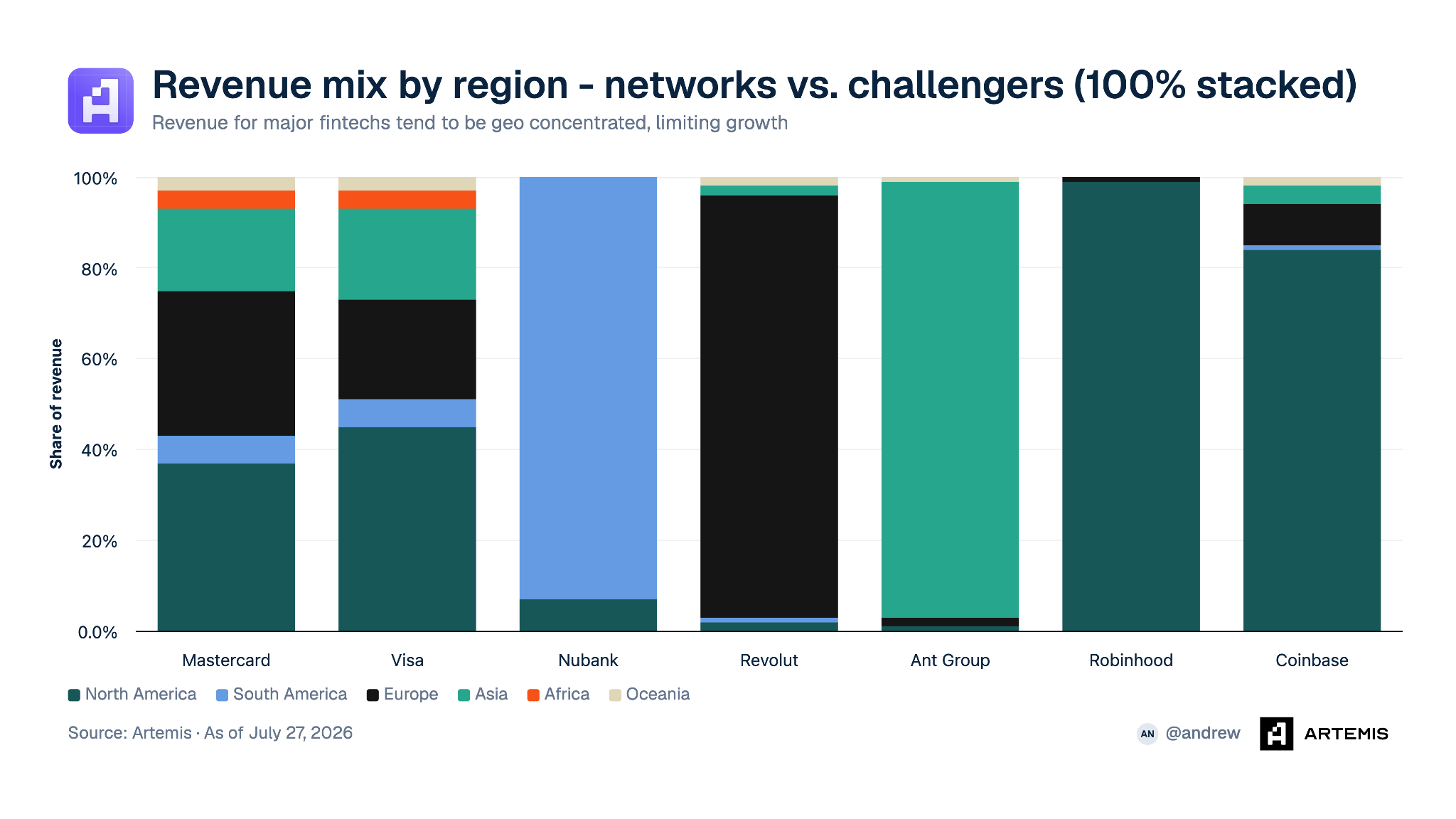
Enter Stablecoins
While much has been written about stablecoins, it’s hard to discount their growth. In less than 10 years stablecoins have gone from $3bn in market cap to over $300bn. Over the past few years, major companies like Stripe and Mastercard have made acquisitions to enter this space and governments around the world have developed legislation to allow this technology to flourish.
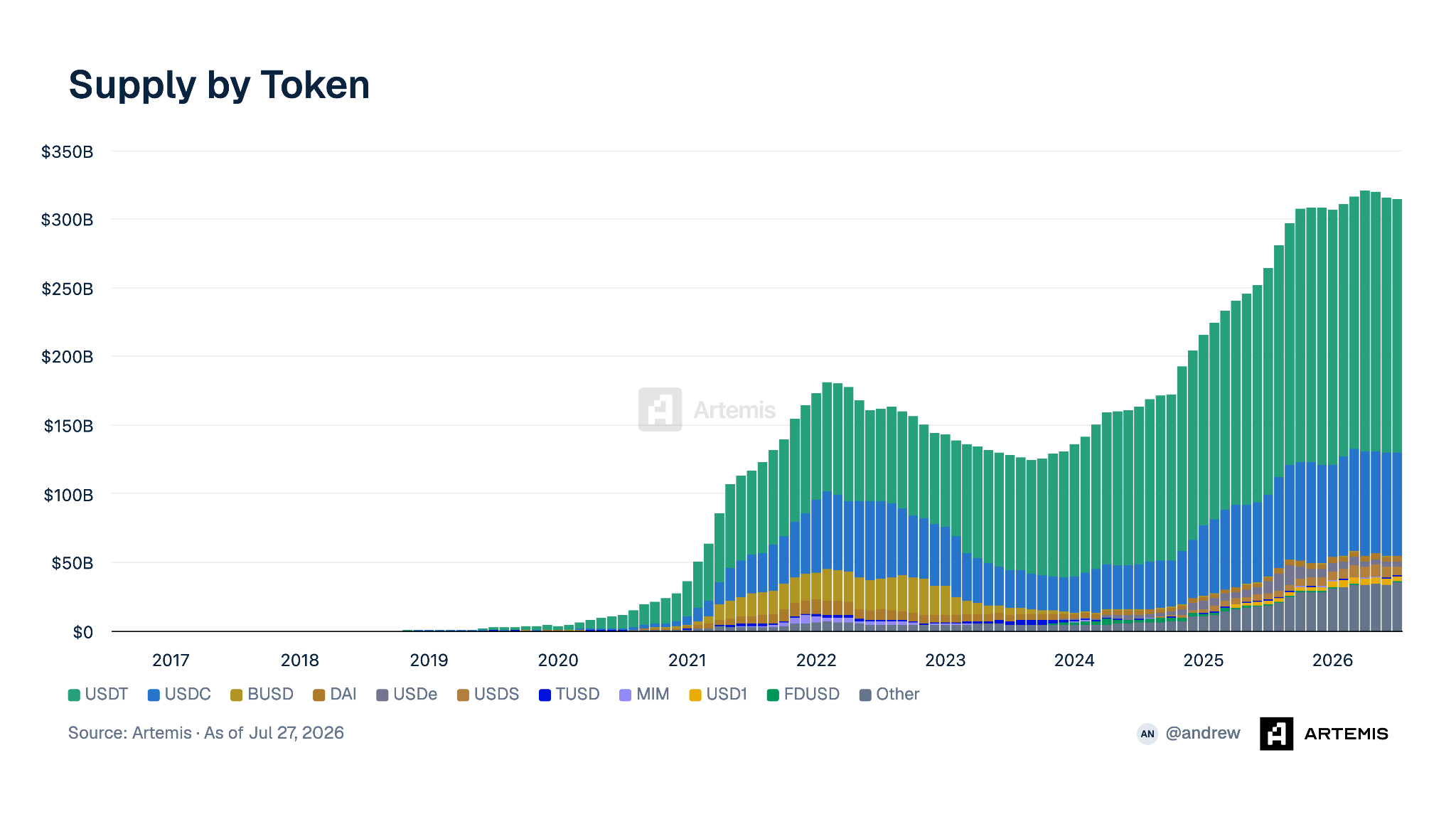
Stablecoins at a turning point
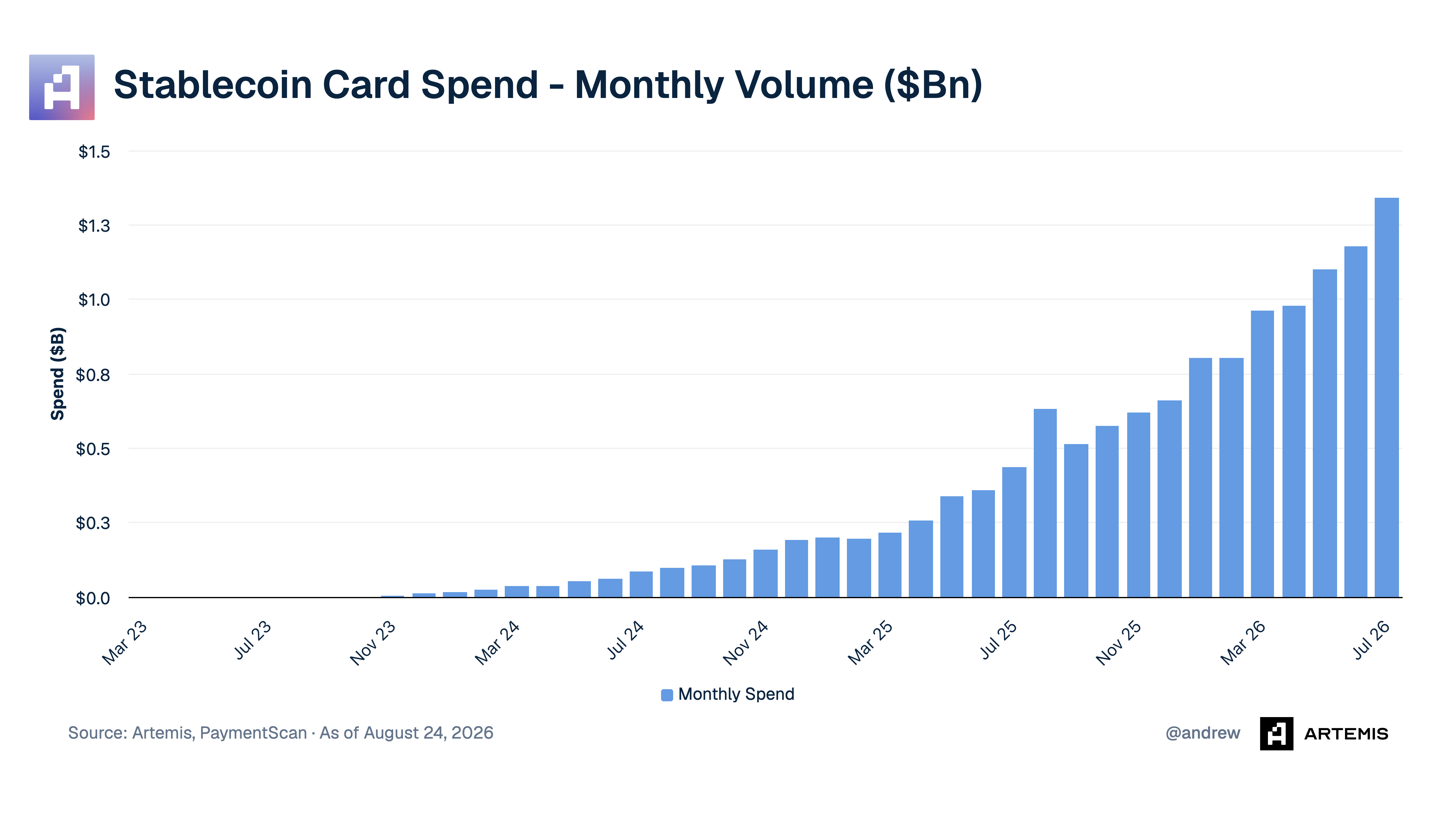
Stablecoins found their original use case in trading, but several years later have found real-world utility. In 2023 stablecoins found another use case of everyday payments. Stablecoin-linked payments have had explosive growth over the past two years. Card spend was almost non-existent at the start of November with about $3mn in spend. May 2026 was the first month that stablecoin spending surpassed the $600mn mark. Different cards found different audiences. RedotPay took market share in emerging markets, EtherFi took share in DeFi and KAST found a unique “Digital Nomad” customer.
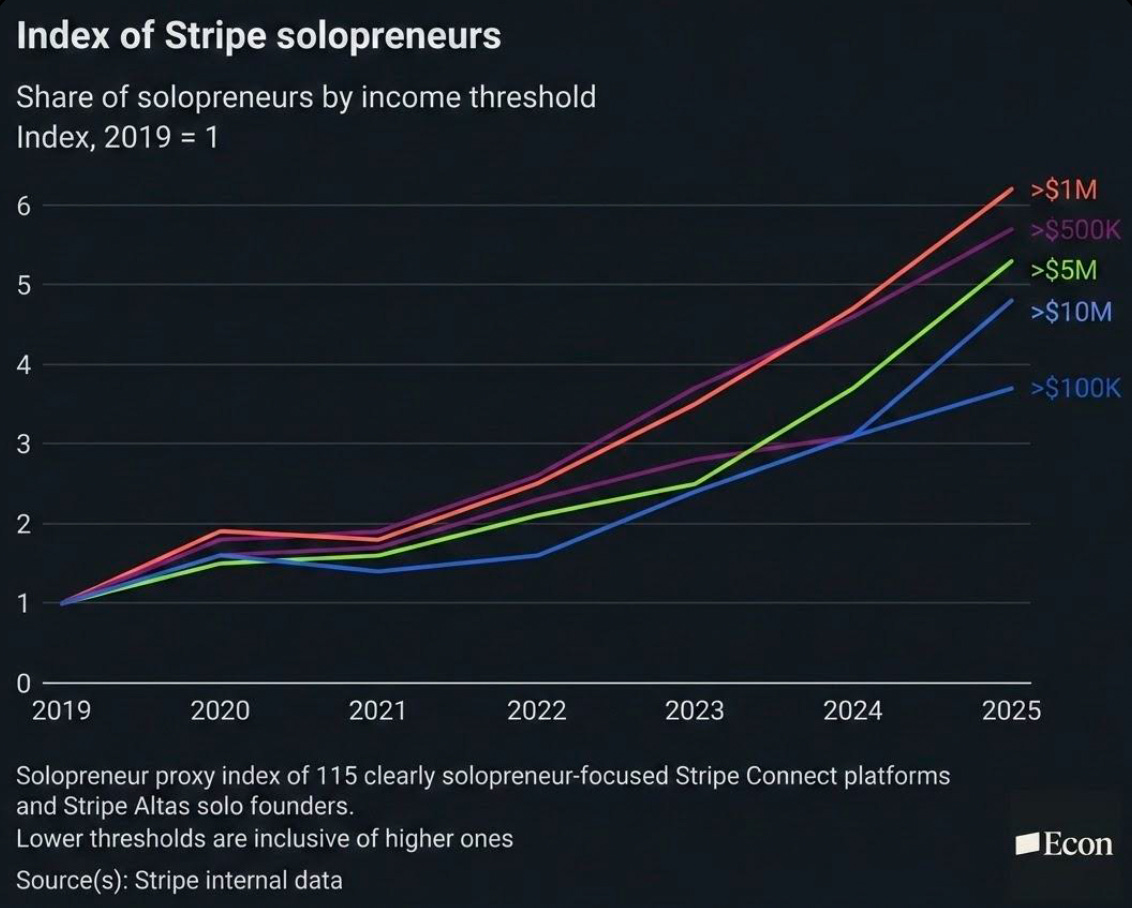
KAST started with an interesting customer type of people who were working remotely and needed to spend money. Earlier this year, Stripe reported data showing significant growth in the solopreneur audience. Data from Carta shows that About 36% of startups founded on Carta in 2025 were led by solo founders, a jump from 31% in 2024.
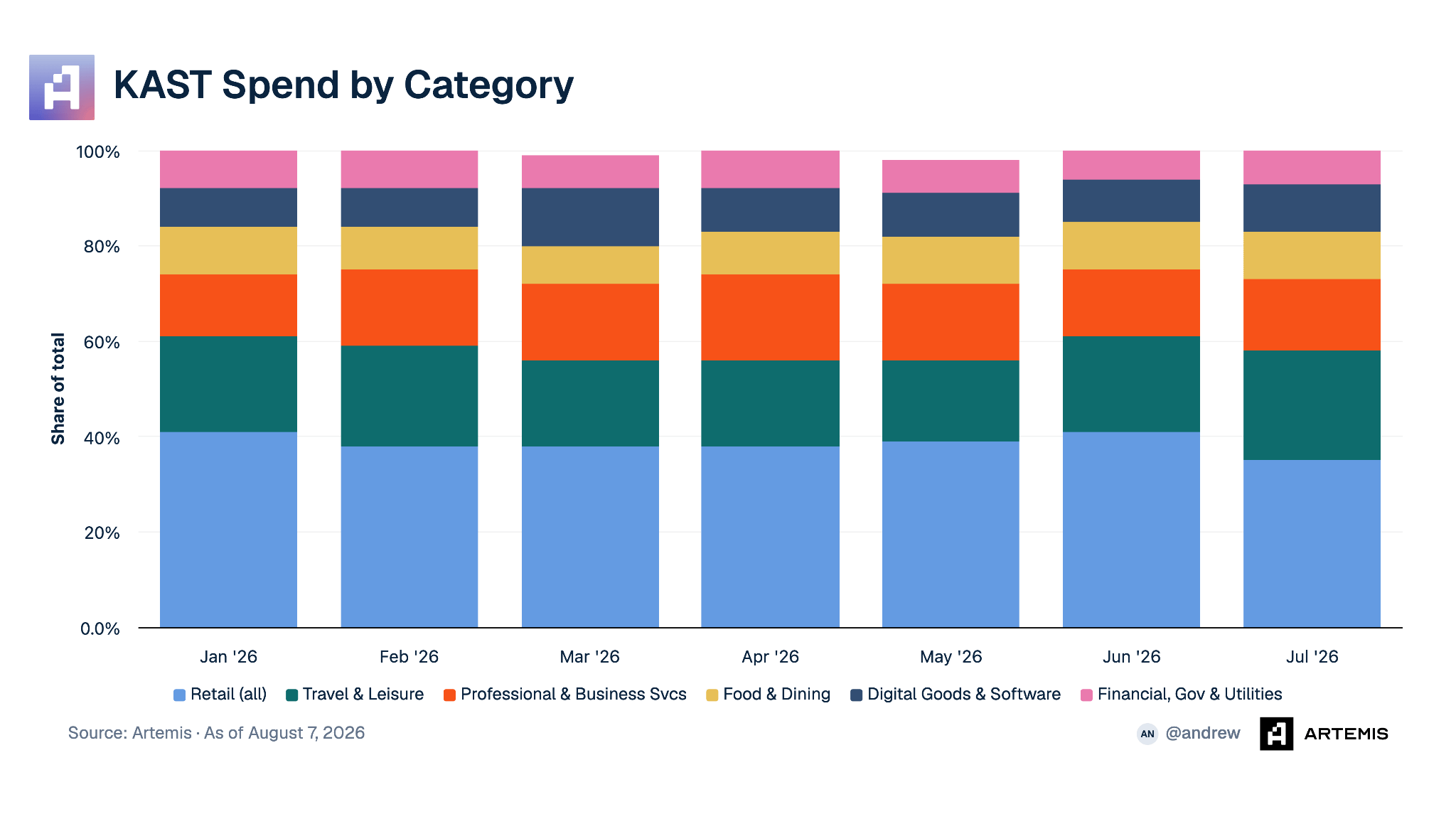
Data supplied to Artemis from KAST confirms the real users spending money. KAST consumers are using their card for everyday purchases like retail, food, and travel. Spending patterns have also remained consistent, indicating customers routinely rely on their KAST card for purchases.
What’s the next leg of growth for KAST?
Cards are just the first step for KAST and the company expects 50% of its revenue to be from products other than cards in the next year. The diverse set of product offerings that KAST has planned validates the thesis of stablecoins being a global payment ramp. KAST has a team working on business accounts for solopreneurs, but also stablecoin-linked applications that resemble WhatsApp for African countries. Below are examples of the KAST suite of products:
KAST for Business: This is a full-blown B2B product designed to be a global competitor to corporate spend platforms like Brex and Ramp. B2B payments are disproportionately cross-border, and stablecoins give KAST a single payment network that reaches markets traditional rails don’t. It is currently in beta with 3,000 companies on the waitlist and through a partnership with Deel, it will also include features like payroll and employer of record services.
Kastro: This is a “lighter” social money app tailored specifically for emerging markets across Africa, Latin America, and parts of Asia. It’s designed to feel like a WhatsApp for money, instead of a traditional banking app.
Expanded Money Movement Infrastructure: KAST is heavily investing in the backend tech to allow instant money movement in and out of 180+countries.
KAST Reserve: Allows customers to earn rewards daily representing between 6 and 12% growth on USD balances and spend around the world.
In Conclusion
In some ways, KAST feels like the Amazon Web Services of money. AWS started working with many different startups and as the startups scaled, they needed more compute, Amazon was there to help them service their needs. As many digital nomads and global entrepreneurs start businesses and eventually take on more employees, they could see an interesting rise in using KAST’s card and products.
As one of the first companies to universally embrace stablecoins, KAST is expanding quickly into all sorts of money movement. Very few companies can target business-to-business audiences that were competitors to Brex and Ramp, underbanked customers in Africa and global pay-in and payouts across Europe. The 24/7 nature and instant settlement of stablecoins could allow KAST to achieve Pathy’s ultimate thesis.