

Market Overview
The theme of the week was indices falling, led by an unwinding in risk assets amid a reescalation of the US-Iran war, and a global selloff in memory stocks. The Nasdaq100 closed the week down more than 4.1 percentage points, and the S&P500 down 1.5. There were some positive signs as PayPal rose 22% following an acquisition offer from private competitor Stripe, while Figma rose 13% as part of its month-long rebound that has been defying the “software is dead” narrative.
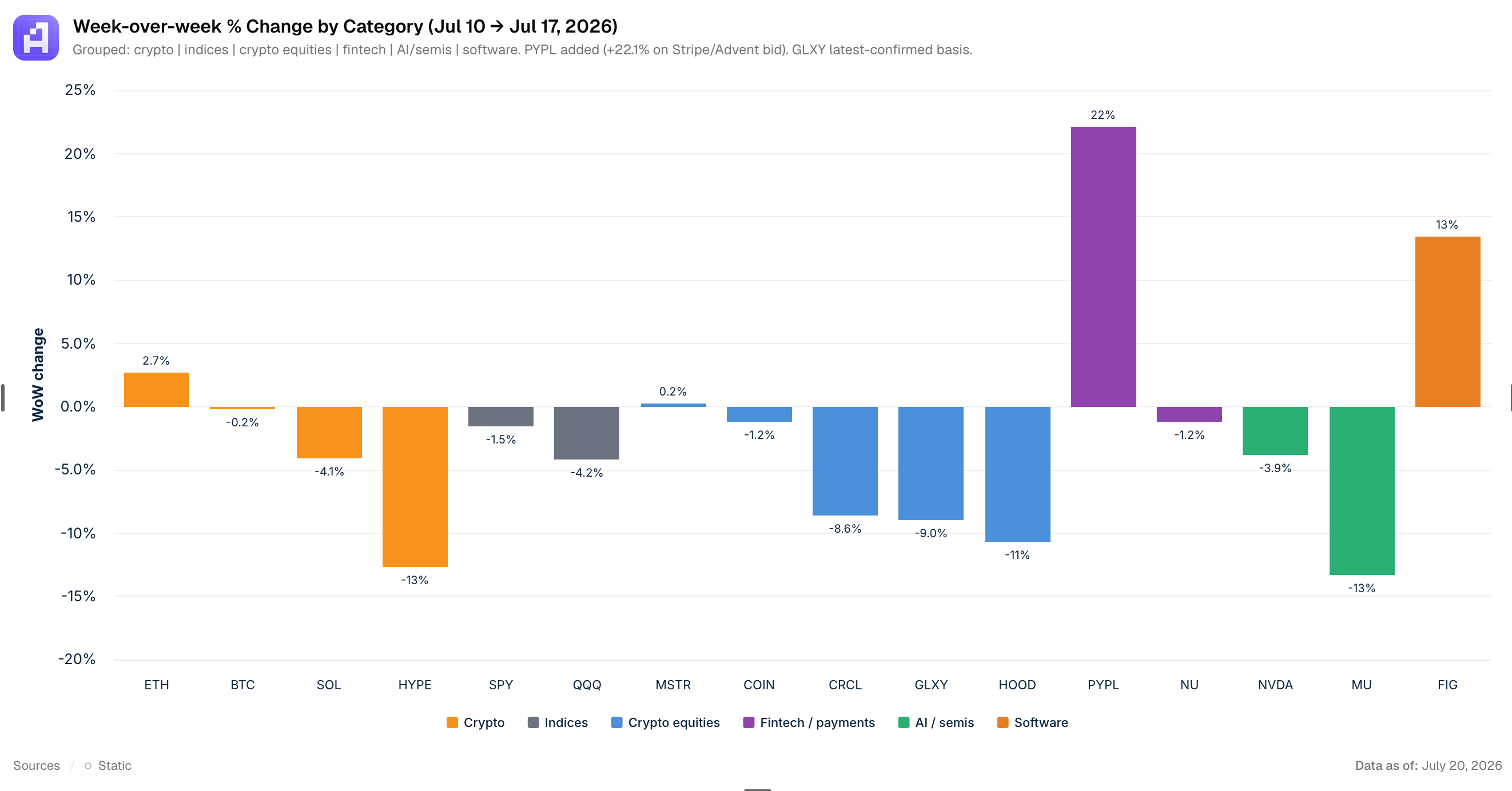
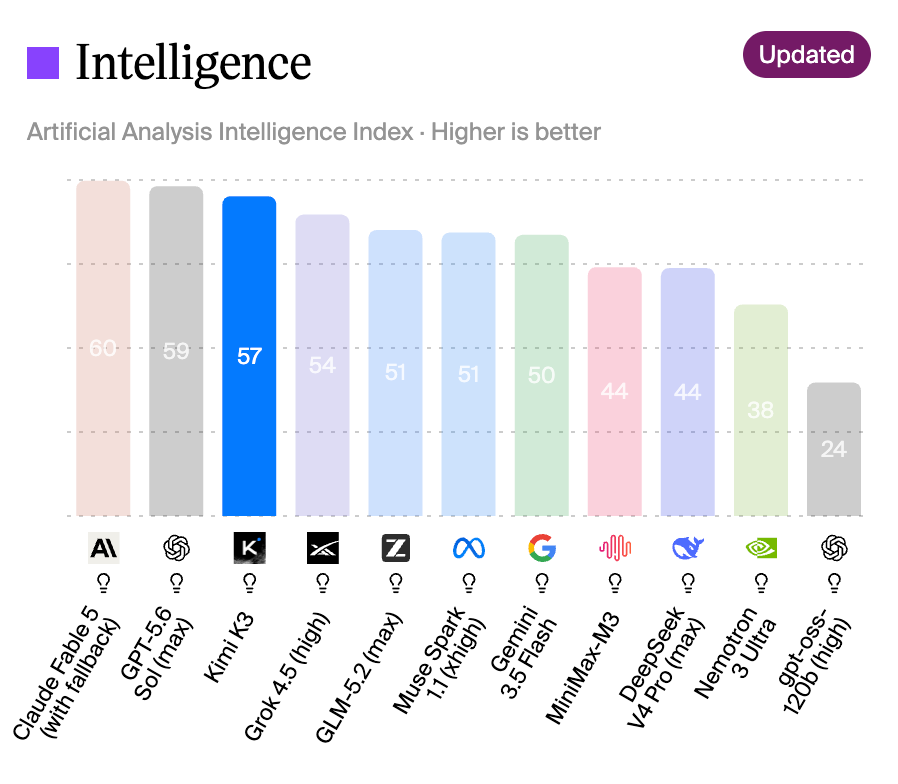
Memory stocks were the talk of the town in H1’26, but since their June highs, major names have seen valuations correct: Micron down 28%, SanDisk 38%. The meltdown continued into last week but there was a bright spot in the AI industry as Kimi launched their latest open weight model (soon-to-be open, rather) called K3. K3 performed well in benchmarks, ranking behind only Anthropic’s Fable 5 and OpenAI’s GPT-5.6 Sol on Artificial Analysis’ intelligence index. This reinvigorated the conversation around open vs proprietary weight models which has so many implications across the full AI stack.


Today We Highlight:
Kalshi Introduces Compute Forward Curves
Stripe tries to buy payments giant PayPal for $53B
Kalshi Introduces Compute Forward Curves
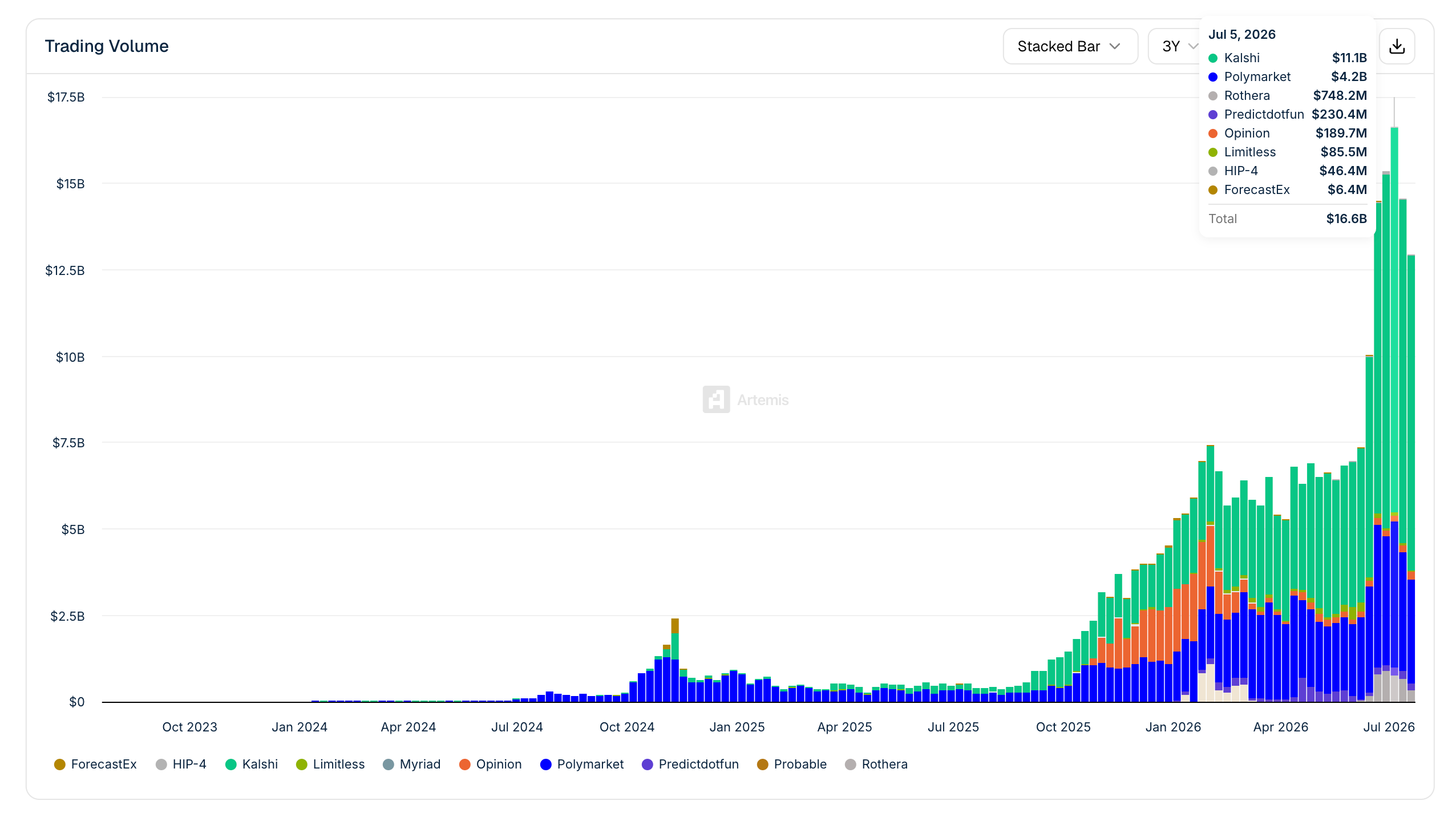
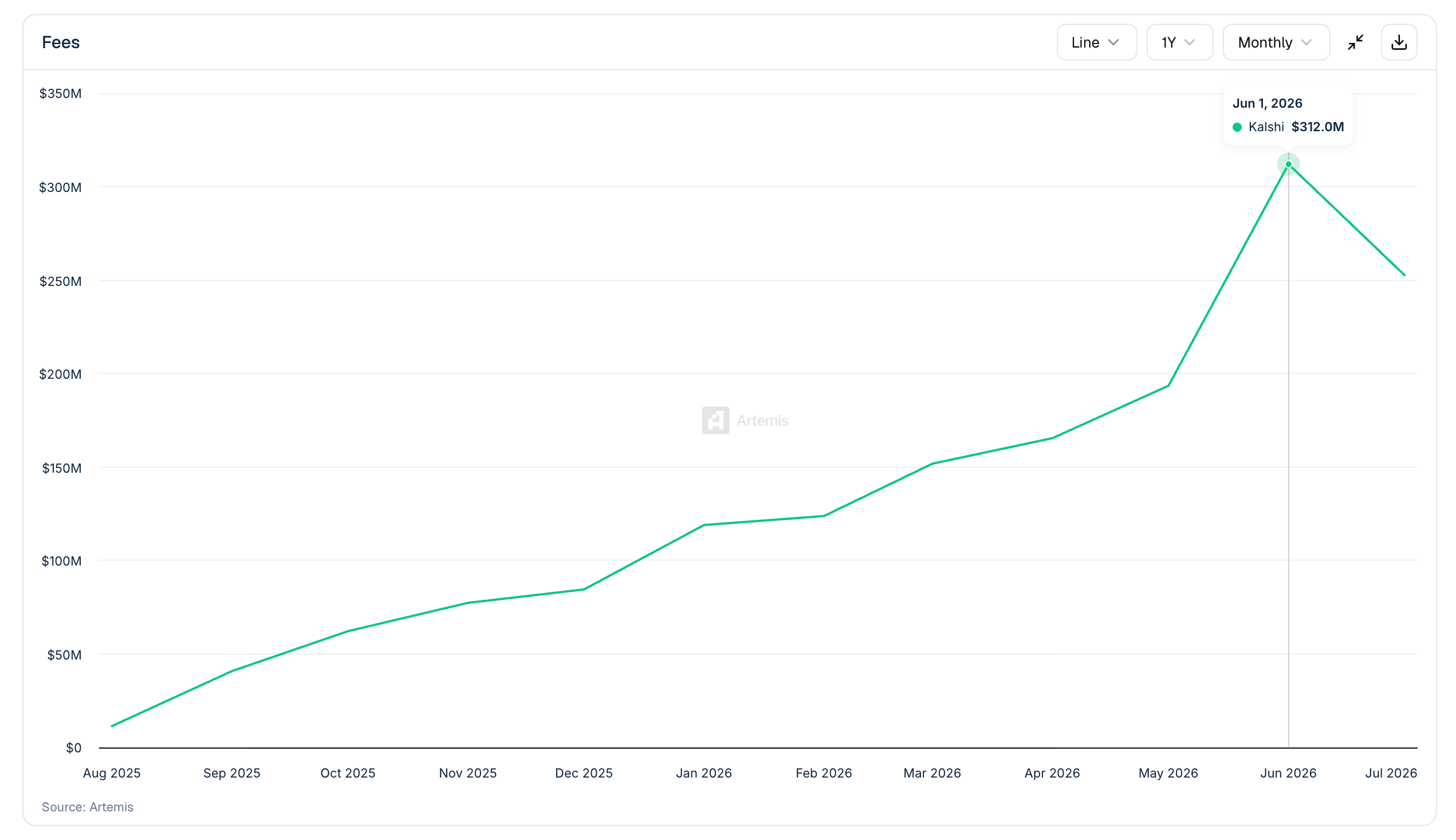
Pioneering a new class of market, Kalshi has done over $120B in volume so far this year. Prediction markets have captured the zeitgeist as a new type of market that enables betting, hedging or speculating on any event. Their early traction was led by politics, and more recently, has been driven primarily by sports (+75-90%). Their popularity has put them under the microscope. They’ve come under serious scrutiny from critics and regulators, who have criticized the dominance of sports-related volume, commenting that the activity is not all that different from the activity seen on regulated sportsbooks like DraftKings and Fanduel. But the promise and potential of prediction markets extends far beyond mere sports betting. Kalshi’s May raise at a $22B valuation (and search to raise again at 40B) indicates that investors are willing to underwrite that case.
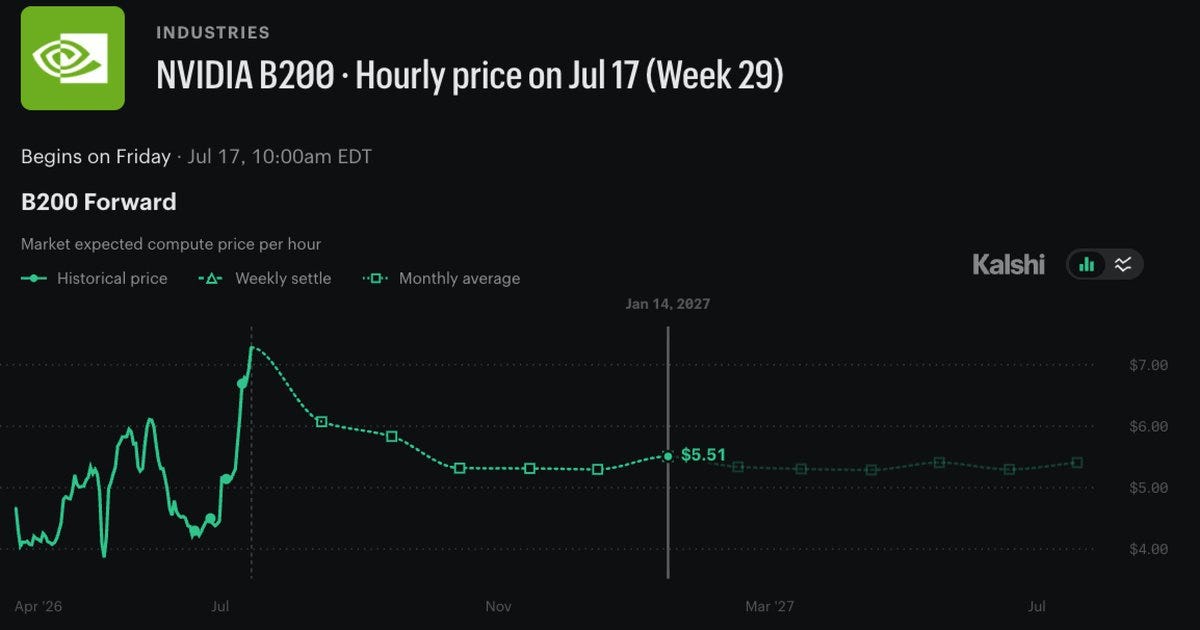
This week, Kalshi took a step towards that future by introducing a first of its kind market-implied compute forward curve. This is not sports betting and it is not political speculation, its a real signal for one of the most consequential markets in decades, maybe ever. The benchmark is derived from Kalshi’s own event contracts for individual chip models, which it uses to calculate an implied future market price. For instance, the chart below shows the historical and future implied prices for NVIDIA B200’s which indicate that the market is in backwardation (future prices lower than current spot prices).
Although Kalshi is the first to build a forward curve derived from prediction market data, they are not the first to this space. Just a few weeks ago, Ornn announced the launch of their own forward curves, though you have to talk to sales before being able to view it. Silicon Data is another platform building in this space, though their data is also gated behind sales. Interestingly, Kalshi’s seems to be the only one freely accessible for anyone. Kalshi also uses Ornn compute price indices to settle many compute-related markets. On the crypto side, Venice is an interesting case study in pricing compute as its VVV/DIEM token system confers holders $1/day in compute API credits.
So what?
The compute market has been catapulted to the center of global attention by the explosive growth of artificial intelligence. Analysts project annual AI-related capex to reach $5-10 trillion by 2030 while experts are noticing that compute markets have begun to resemble traditional commodity markets like oil and natural gas. But the compute market is still relatively crude: there is no pricing benchmark or hedging mechanism, which is a problem for companies holding billions of dollars of compute on their balance sheet. These markets are missing the financial instruments used to hedge and track in standard commodities markets.
Kalshi and other prediction markets have a lot of work to do to remove the perception that they are just an alternative to traditional sports books. Search “Kalshi” on Google and you’ll see it is labeled as a “Sports betting company”. While the data at the moment supports that, prediction markets offer a vast canvas for markets and financial products. Kalshi’s compute forward curves show that they intend to continue innovating and become a core part of financial markets, especially at the cutting edge.
Stripe tries to buy payments giant PayPal for $53B
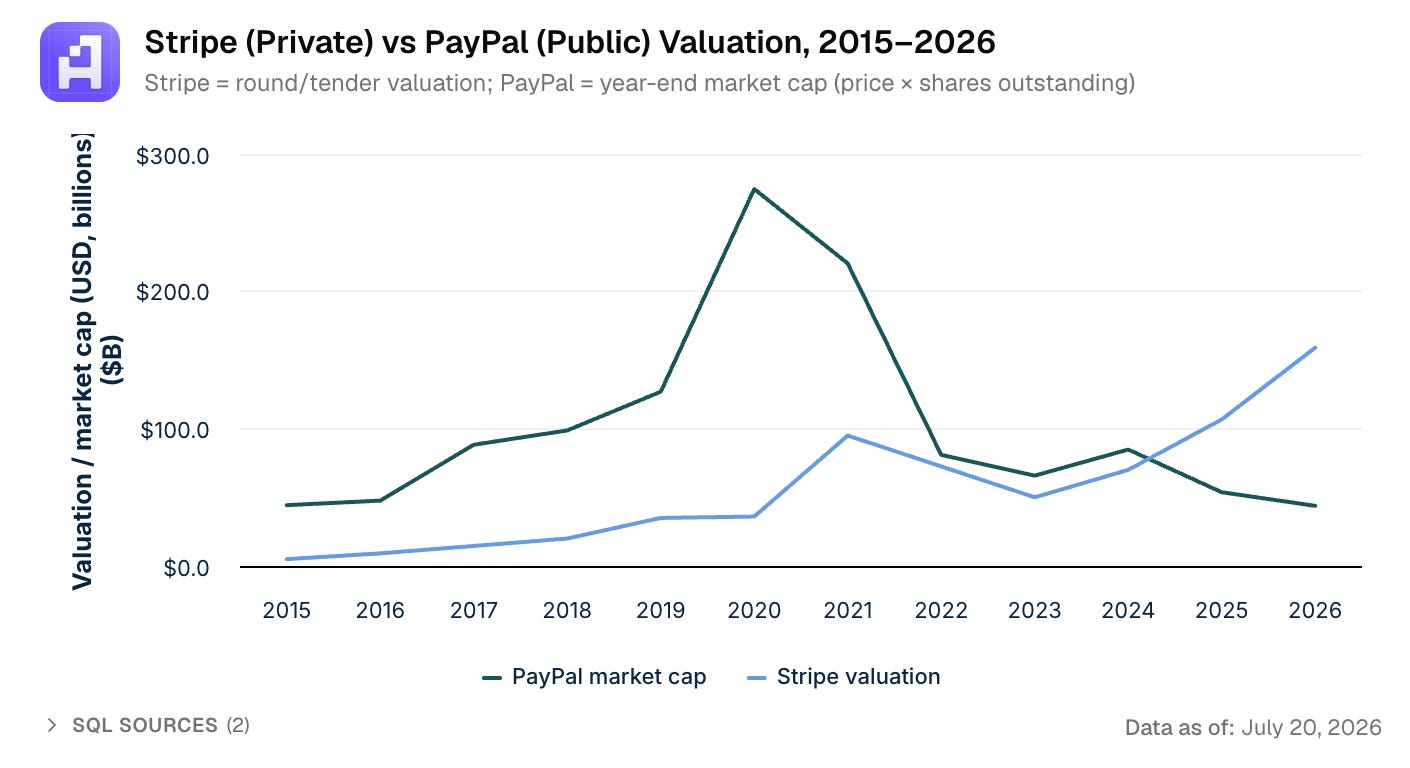
Last week, Stripe and PE firm Advent International, offered to buy PayPal at a $53B valuation, an 85% valuation drop from its ~$340B peak in the summer of 2021. PayPal’s board rejected it.
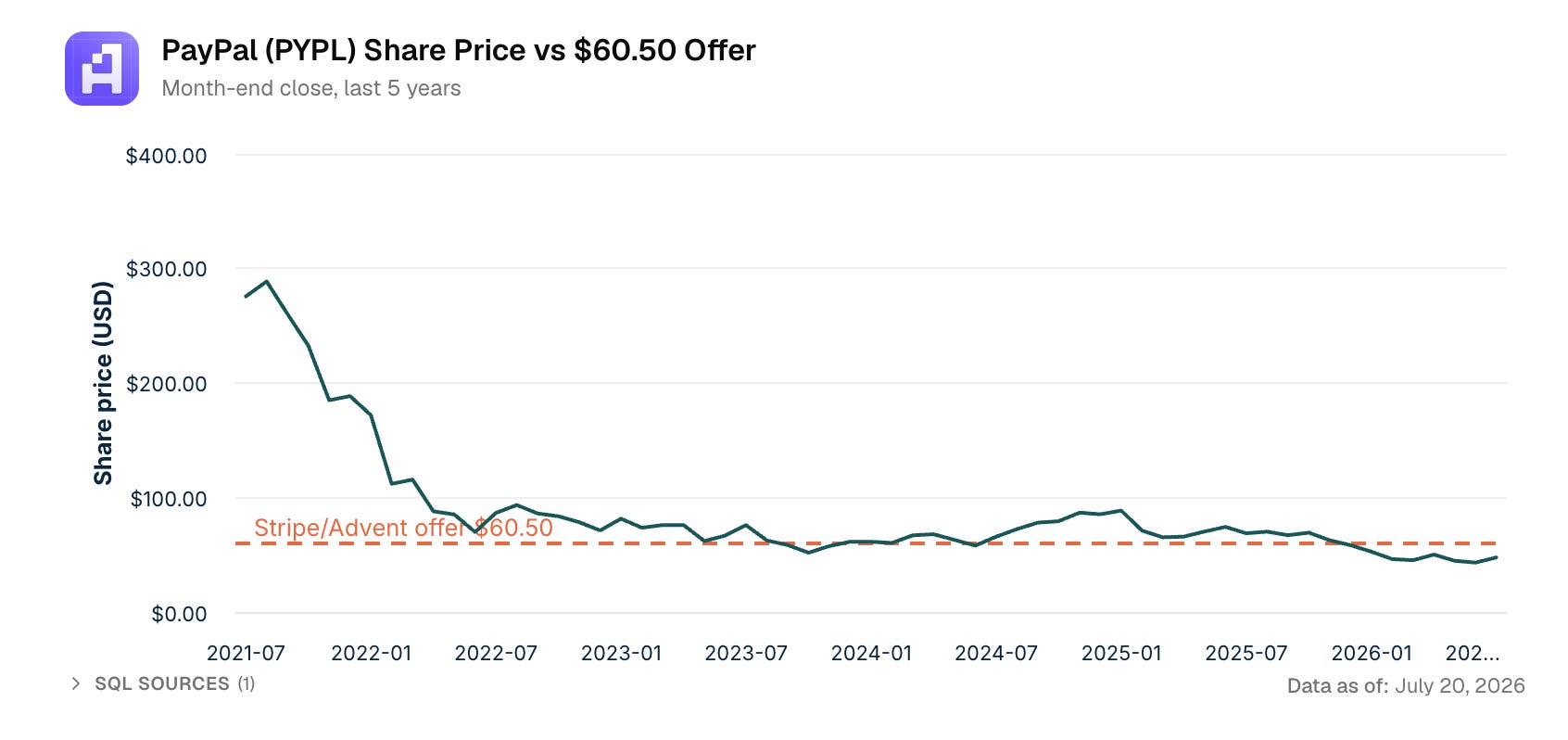
Deal terms at a glance
Price: $60.50/share, a 28% premium to PayPal’s Tuesday (July 14) close of $47.37.
Equity value: ~$53.4B (all cash).
Financing: ~$50B committed bank debt + $17B equity from Stripe, Advent and Block.
Structure: Stripe and Advent each hold 50%, with PayPal kept intact rather than broken up.
Buyer context: Stripe was valued at $159B in a February tender offer, has raised ~$10.4B since 2010, and completed 21 known acquisitions - the largest previously being stablecoin platform Bridge for $1.1B. A PayPal deal would dwarf all of them.
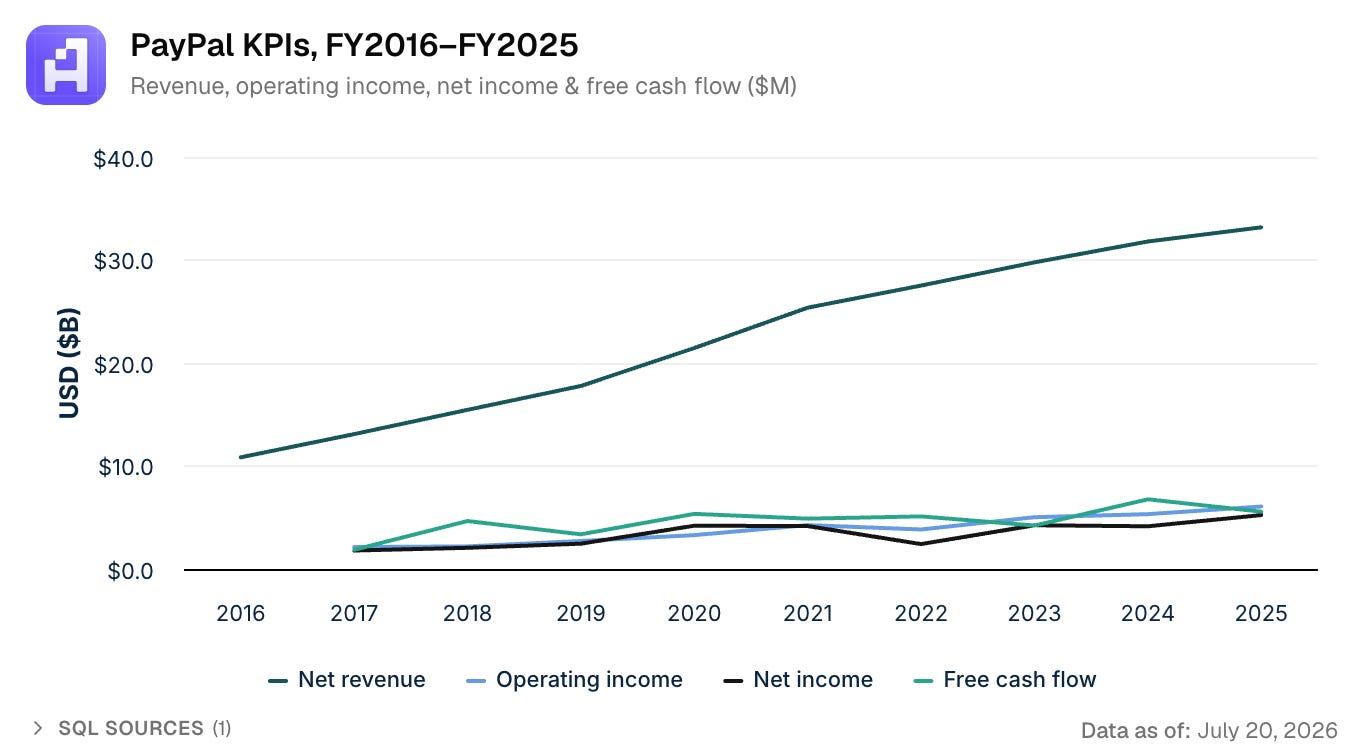
PayPal has been a falling giant: in FY25 it processed $1.8T in payments volume, eclipsed for the first time by Stripe’s $1.9T. Stripe raised capital earlier this year at a $159B valuation, valuing the private company about 4x what the public market had been valuing PayPal. This might be surprising given both platforms processed a similar volume of payments in 2025, but Stripe’s outstanding growth (34% Y/Y vs PayPal’s 7%) has earned it its premium.
PayPal stock reached 9-year lows despite having nearly half a billion users and billions in free cash flow (recent quarter FCF yields have been 10-15%). But this acquisition attempt does not come as a surprise given the recent consolidation in the payments industry: WorldPay was acquired by Global Payments for $24.25B in 2025, FIS acquired Issuer Solutions in the same transaction, and Brex was acquired by Capital One.
So what?
PayPal stock jumped 16% on the news, despite its board rejecting the offer. Stripe’s attempt to take over PayPal shows their ambition to increase the GDP of the internet by having a fully integrated product suite that spans the full stack. Also, this acquisition would give Stripe full stack ownership over the stablecoin stack: Tempo as the settlement layer, Bridge for issuing and orchestration, Privvy as the wallet and management layer and, at last, PayPal’s PYUSD ($3B circulating) as the asset with existing distribution.
Charts of the week
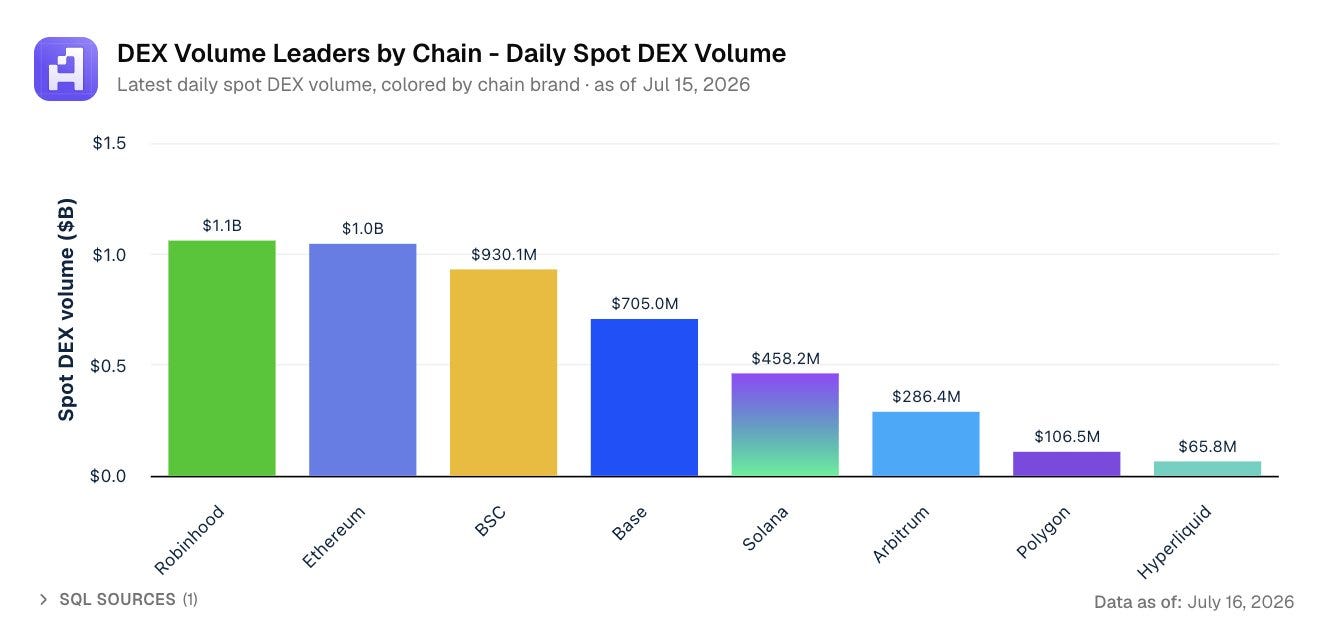
Robinhood Chain becomes the leading chain by DEX Volume
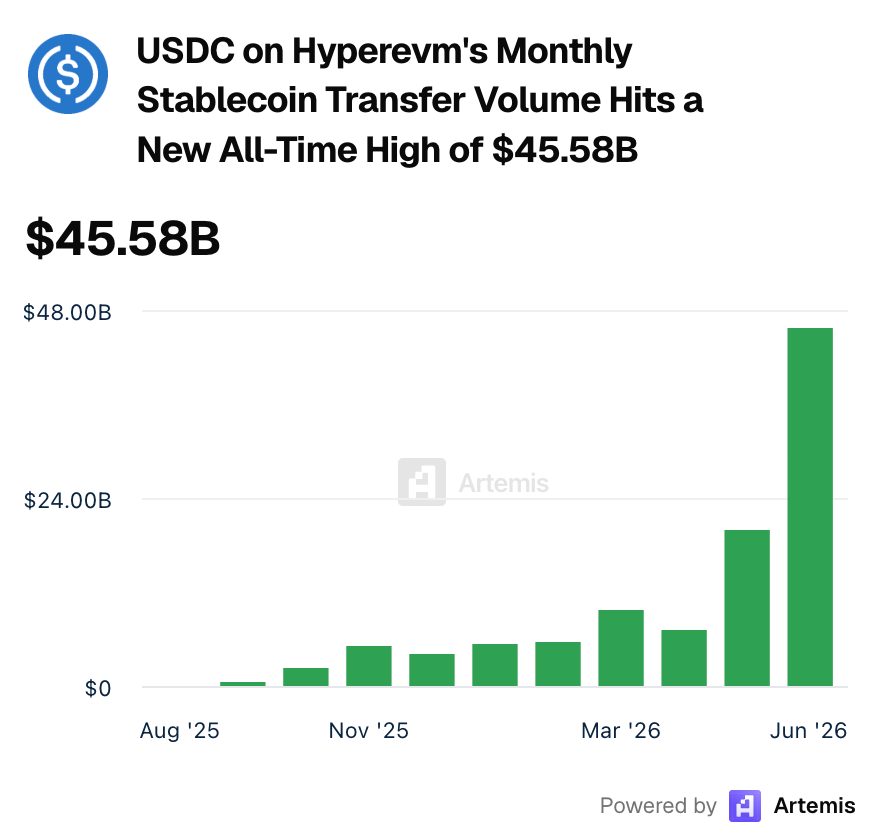
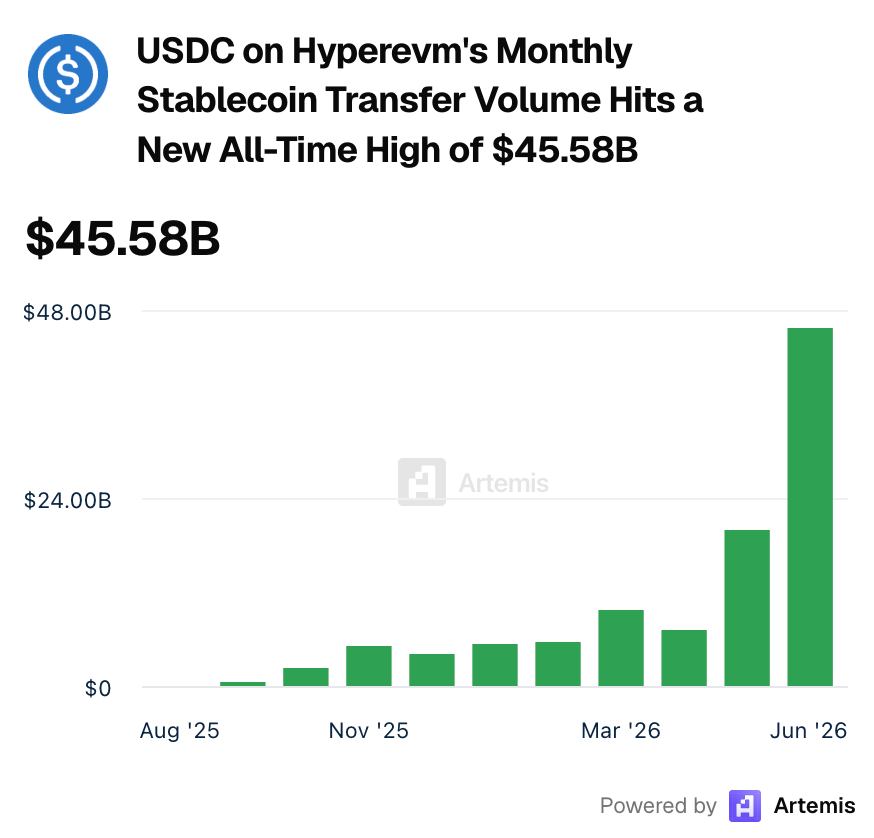
USDC transfer volume on HyperEVM hits an all-time-high
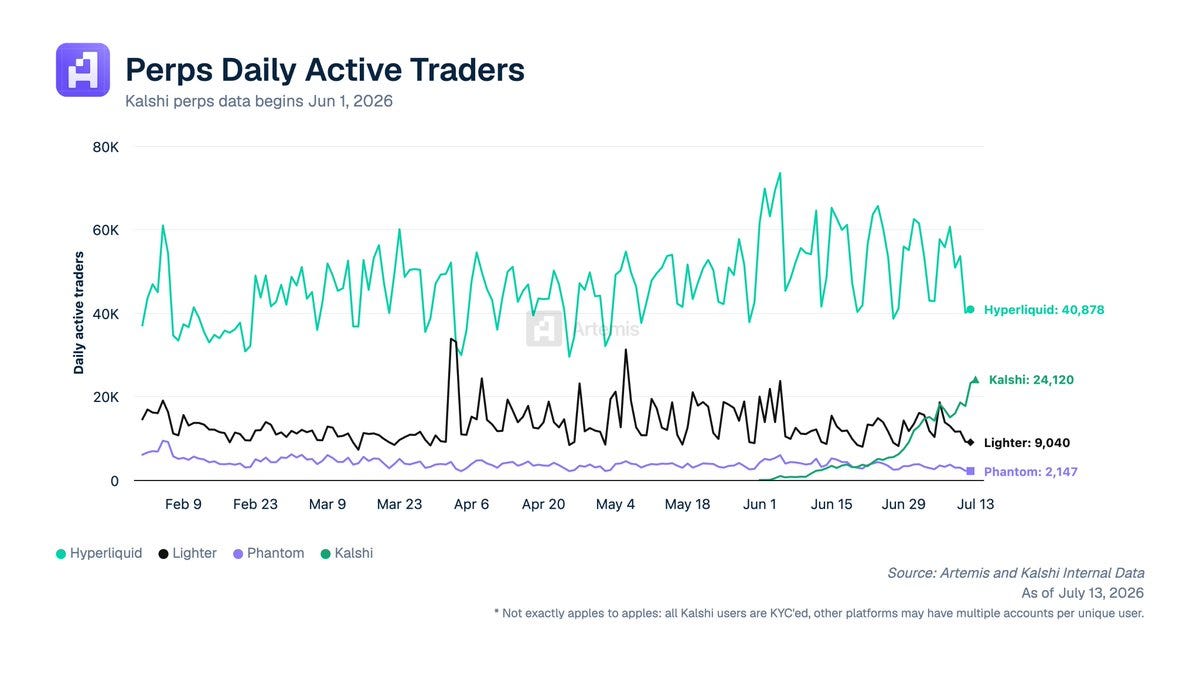
Kalshi’s daily active perpetuals traders surges to 60% that of Hyperliquid
Kimi K3 ranks 3rd on Artificial Analysis’ Intelligence index
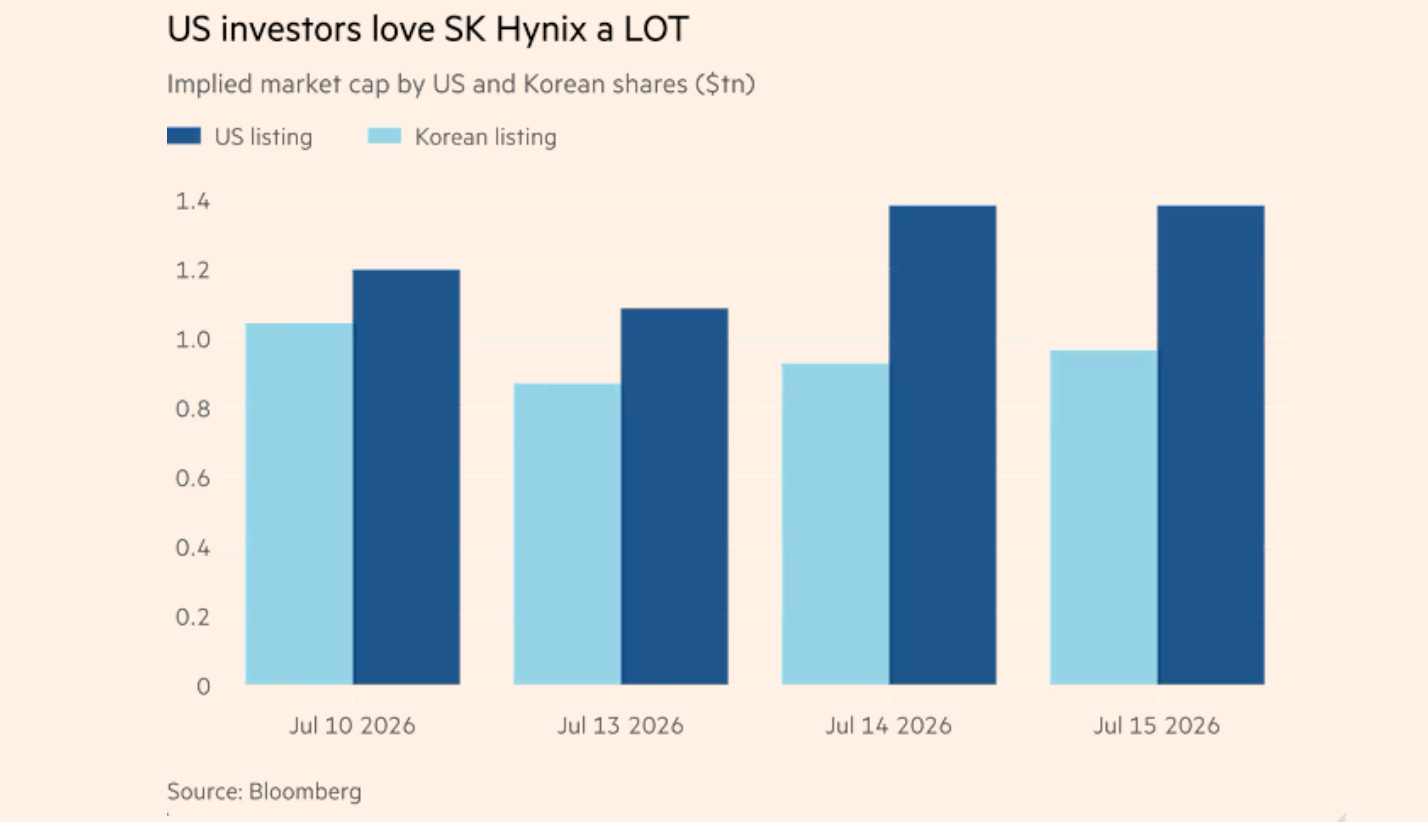
SK Hynix ADRs listed on the NASDAQ, and the shares traded at a BIG premium to their Korean counterparts
Other Notable News
Thanks for reading! Go deeper on any story above with Artemis Analyst — our new AI analyst built on Artemis’s institutional data. Ask it anything (”compare Kalshi vs. Polymarket volume,” “chart spot BTC ETF flows”) and get data-backed answers, comps, and charts in seconds – right in the Terminal.
Disclaimer: This newsletter is produced by Artemis for informational and educational purposes only. It does not constitute investment advice, a recommendation to buy or sell any security or digital asset, or an offer to provide advisory services. Artemis and its employees may hold positions in assets discussed. Figures are accurate to the best of our knowledge as of publication; markets move quickly.