

This week was a wild ride. Nearly $25T worth of companies reported earnings only to be overshadowed by the Situational Awareness news. Leopold Aschenbrenner’s now infamous AI fund, (nearly?) blew up: the fund reportedly reached a book value of $45B at its peak riding the growth of AI stocks like BE and SNDK, names that fell 40-50% from peak to trough over the past month. Last week, news broke that Citadel bought all of Situational Awareness’ distressed public equity book, a reminder of the dangers of leverage in highly volatile and concentrated portfolios.
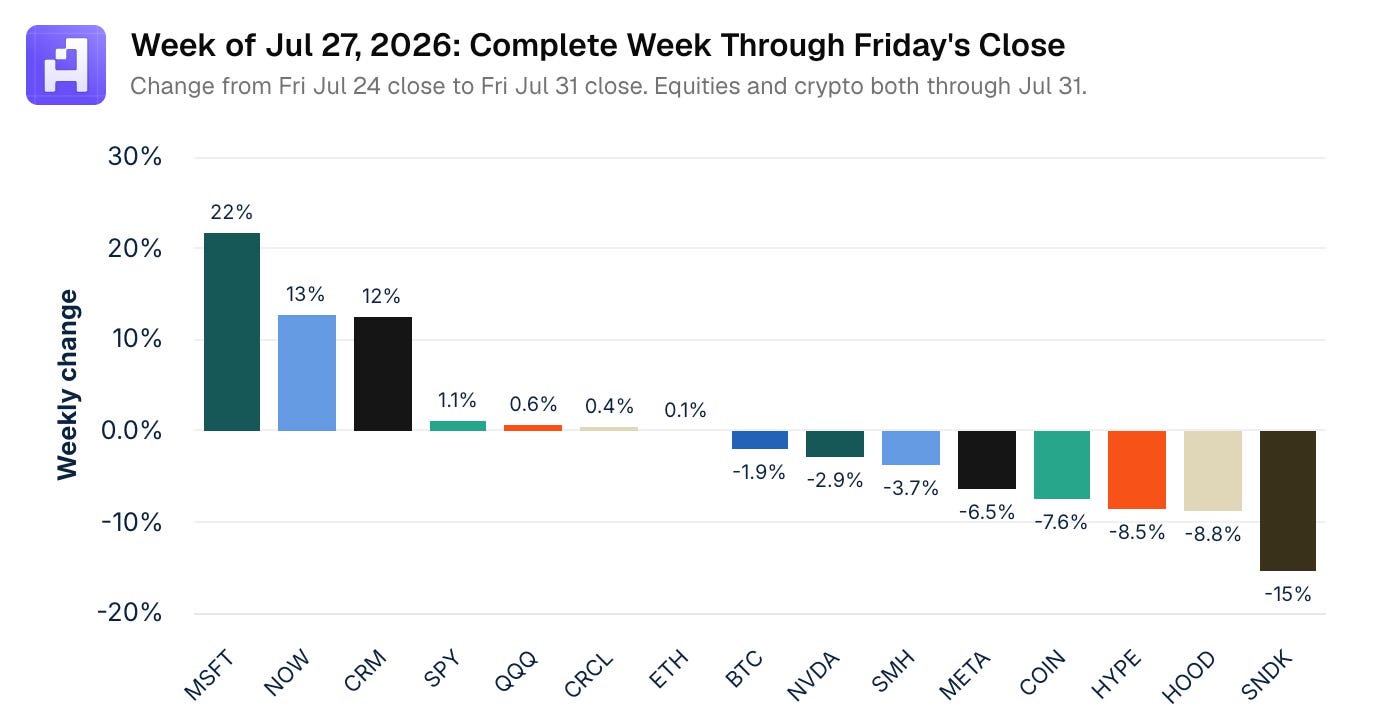
The week ended mixed, with MSFT up 22% of Azure revenue growth, fintech/crypto stocks COIN and HOOD ended down an average of 8.2%, and memory stocks down double digits.
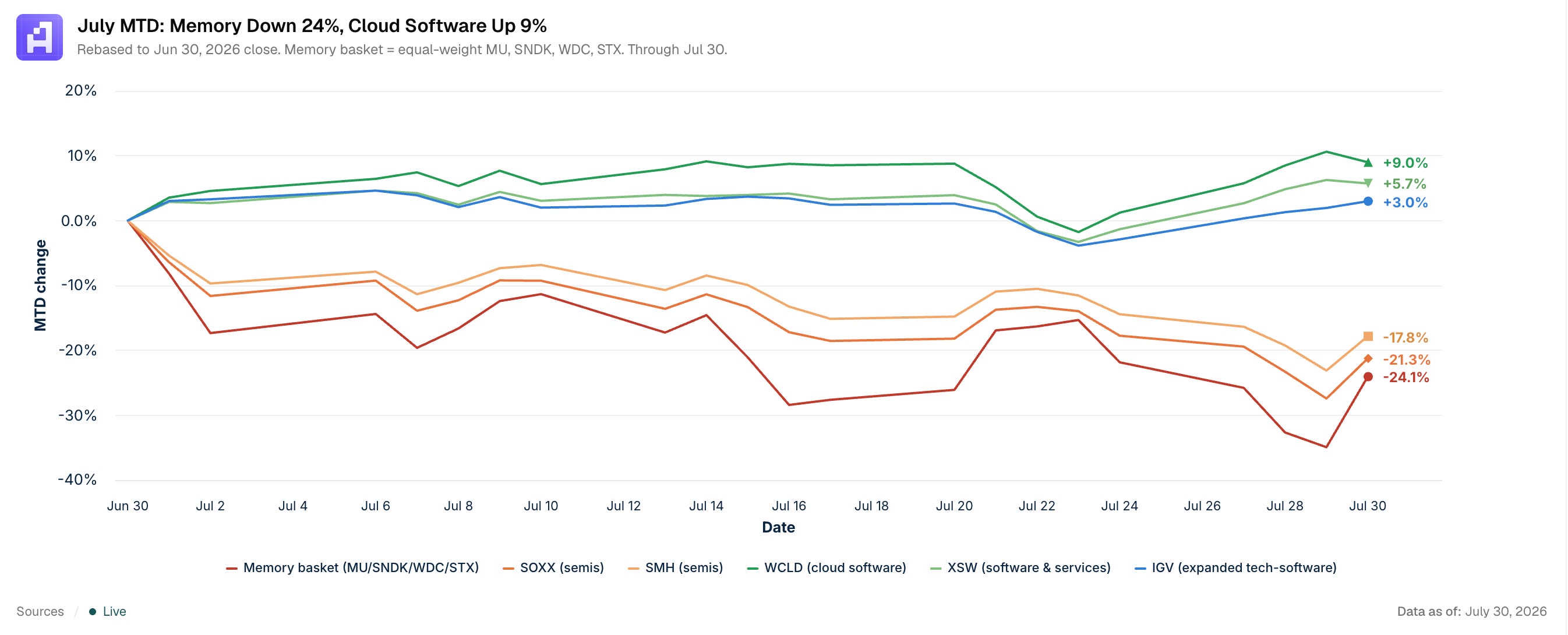
This week also saw the month of July come to a close. The chart below tells a meaningful story for the month: memory valuations corrected down, while the inverse thesis — “software is dead” — defied expectations ($FIG up 33% M/M).
Lastly, on the macro front, the Fed met and decided not to change short term interest rates as , though some members of the committee did vote to raise rates 25bps. This second bit would likely indicate future rate hikes, especially if the war in Iran does not see a resolution and inflation does not fall as quickly as hoped.
Some Artemis specific news/announcements:
We posted our Coinbase Q2 earnings estimates, and were included in Coinbase’s own distribution!
We released Episodes 3 and 4 of our Thesis Podcast
We attended Robinhood‘s Q2 Earnings call live, and Jon got to ask Vlad a question
We shipped a lot on product like a refreshed look, dark mode, privacy controls, and much more
Today We Highlight:
Major DeFi protocols continue to mature
Major Earnings Week Recap
DeFi continues to mature
Last week we released the 4th episode of our Thesis podcast: DeFi Decade with Ishamel Asad. And it couldn’t have come at a better time.
Decentralized finance (DeFi) has long been the wild west, insular and rife with dodgy characters, malicious code, and scams. It is often said that onchain finance is relearning all of the lessons that traditional finance has already learned — at many times the speed. The maturation and growth of onchain finance has been hindered by a couple of big blockers, chief among them: an inability to embrace compliance, and a lack of fixed rate credit products. Recently, there were two major developments that aim to address these issues:
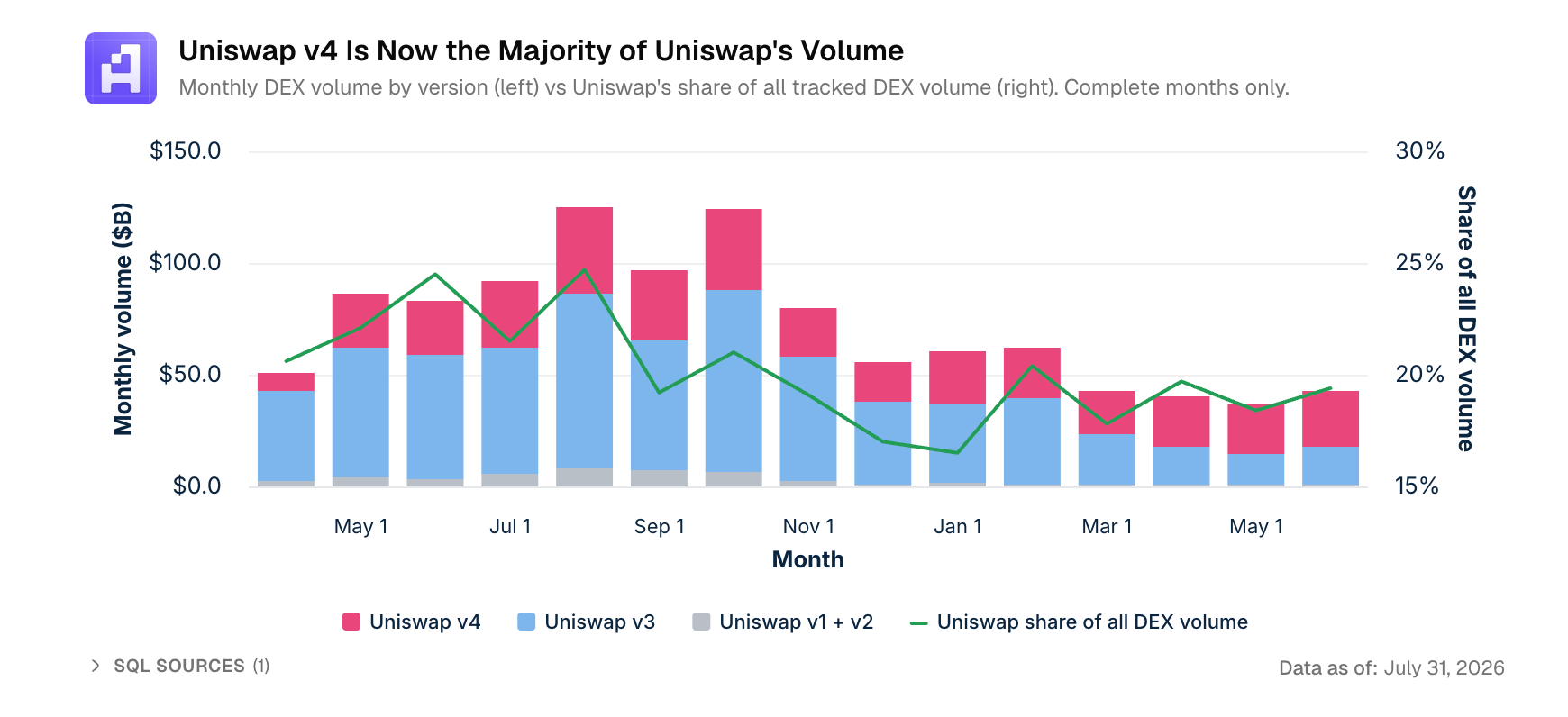
Uniswap, the world’s largest decentralized spot exchange, introduced Permissioned Pools, allowing Uniswap pool deployers to enforce compliance directly onchain. Uniswap’s Permissioned Pools were built in collaboration with firms looking to bring regulated assets like stocks, funds, and more onchain. Launch partners include Superstate, Securitize and Dowgo.
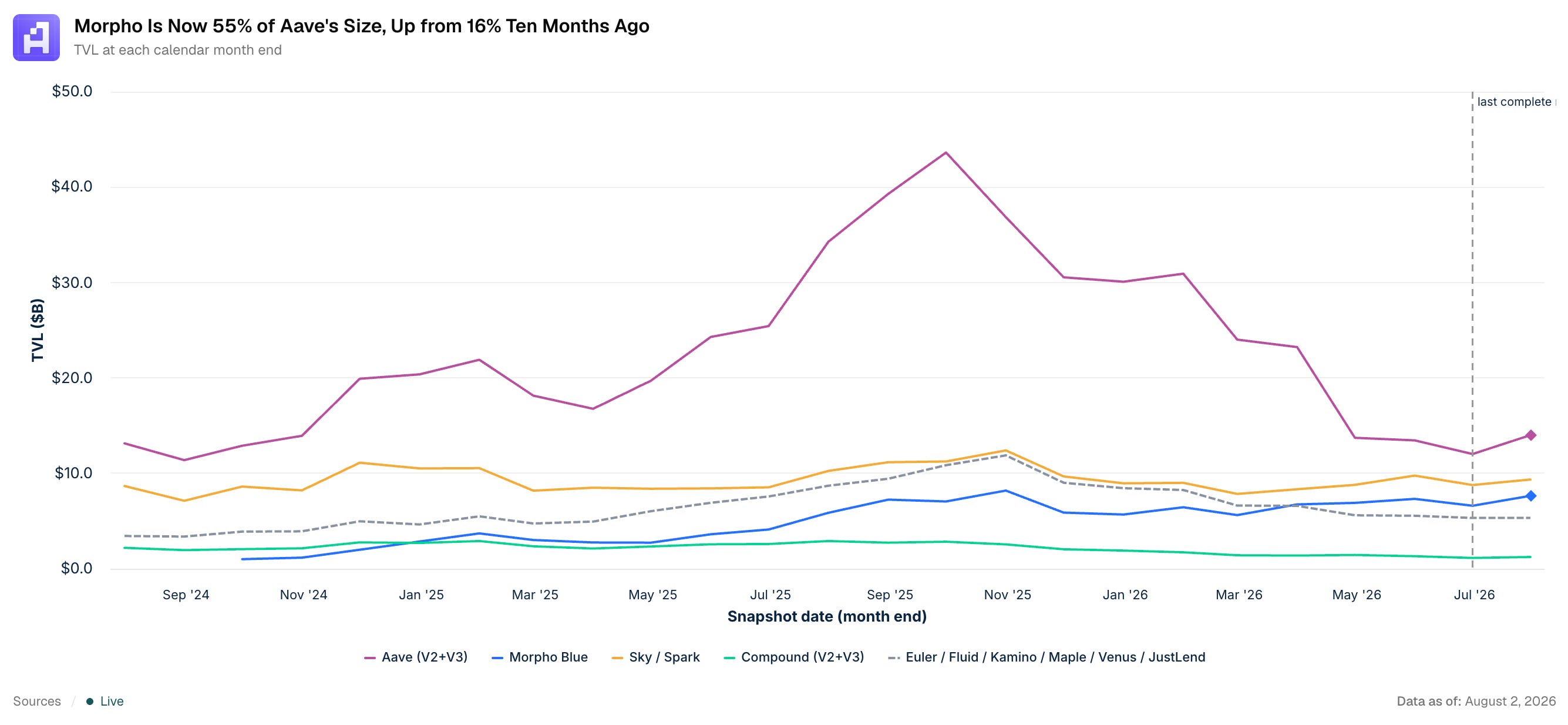
Morpho, the world’s second largest decentralized lending protocol, launched Morpho Midnight, their implementation of onchain, non-custodial fixed-rate lending markets.
So what?
For public blockchains and their applications to be beneficiaries of real world asset tokenization, liquidity on chain must continue to improve and regulated assets must be able to remain compliant. Uniswap and Morpho are giants in the public, permissionless onchain financial system. Uniswap, the world’s largest decentralized spot exchange, who counts BlackRock among its recent investors, released permissioned pools, directly addressing the fear of lack of permissions and compliance for assets. At the same time Morpho announced Midnight, their solution to the lack of fixed-rate debt onchain. While everyone is looking at AI, semis etc, the best teams in DeFi are continuing to ship new major protocol versions and upgrades, and continue to march forward toward the vision of an internet-native financial system. We remain extremely excited and optimistic about developments in democratizing and improving finance.
Major Earnings Week Recap
This past week was the most consequential of this earnings season. About $25 trillion worth of companies announced earnings, including the hyperscalers/CapEx spend leaders like AMZN, META, and MSFT.
This quarter ended an H1 of debt issuance where hyperscalers issued more debt than in any prior full year. And we’re only halfway through. Hyperscalers have started running out of FCF to invest in CapEx and will likely continue reaching to credit markets for funding.
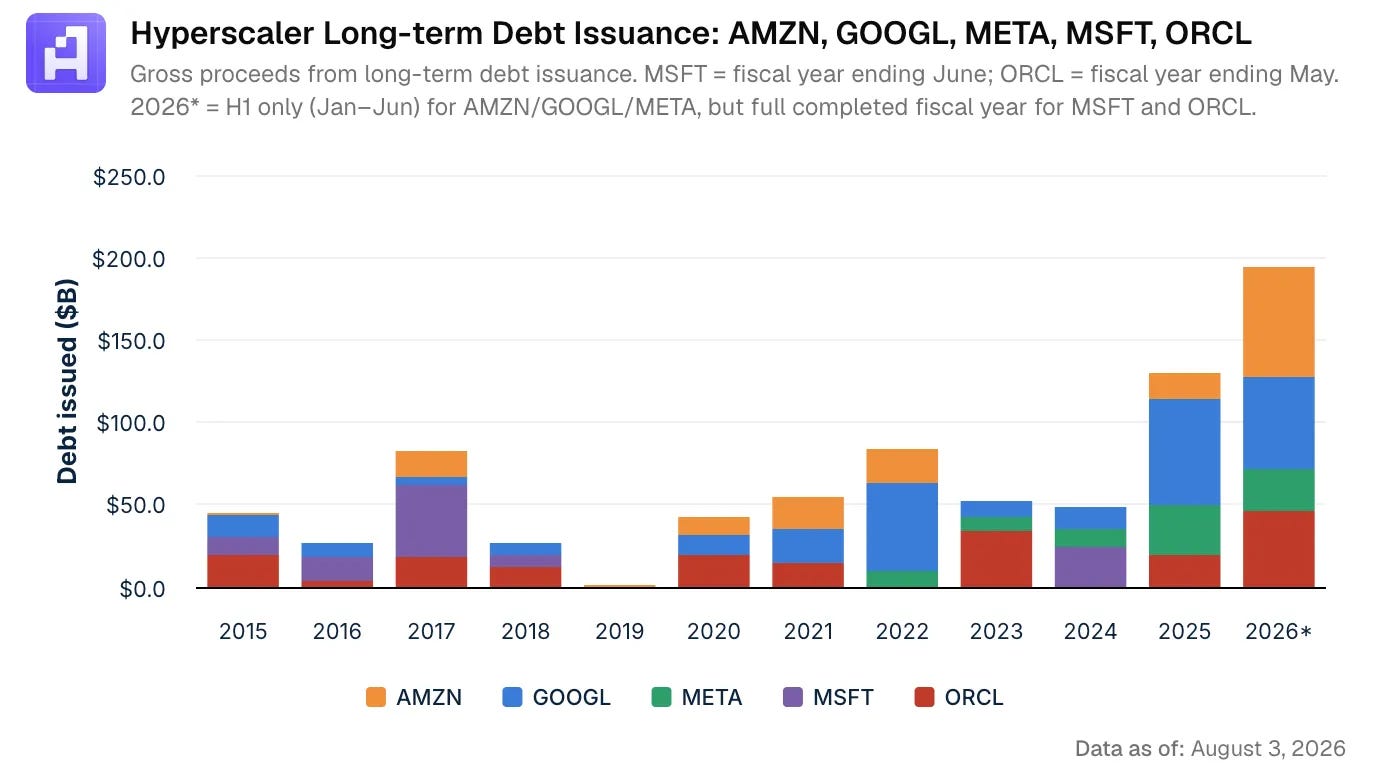
Per Apollo’s Rob Bittencourt, partner and head of thematic investing(Tech Disruptors, Jun 11):
“If you look back at capex amongst those five companies in 2019, I think it was below $100 billion. We’re now talking about over $750 billion of expected capex across those five companies… Those five companies collectively generate about $800 billion of EBITDA… But the capex numbers have gotten so large that now they’re in a position where they need to look toward alternative sources of capital.”
“By our estimates, about 50% of net IG issuance year to date is AI related. The hyperscalers issued close to $100 billion last year. I think they’re at $120 or $130 billion this year. That number’s only going to go up.”
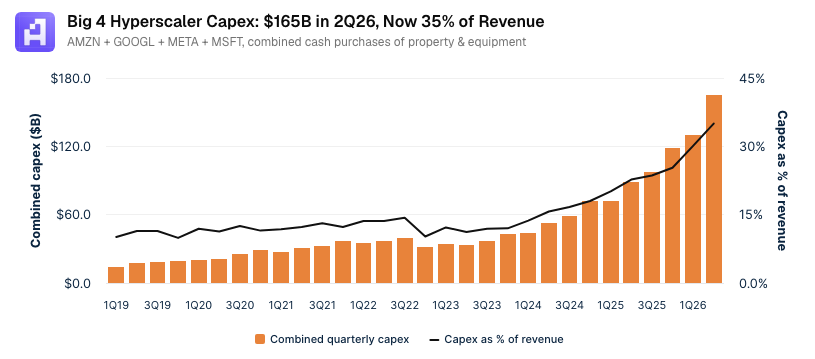
AI CapEx does not look like it will slow down any time soon as hyperscalers continued to guide robust spending. Credit markets are becoming a key player and could act as a moderator.
Also noteworthy, crypto related stocks were down through earnings, COIN and HOOD ended the week down 7.6% and 8.8%, respectively, on weaker crypto revenue. This week we are watching out for CRCL earnings, and FIGR and SECZ next week.
Charts of the week
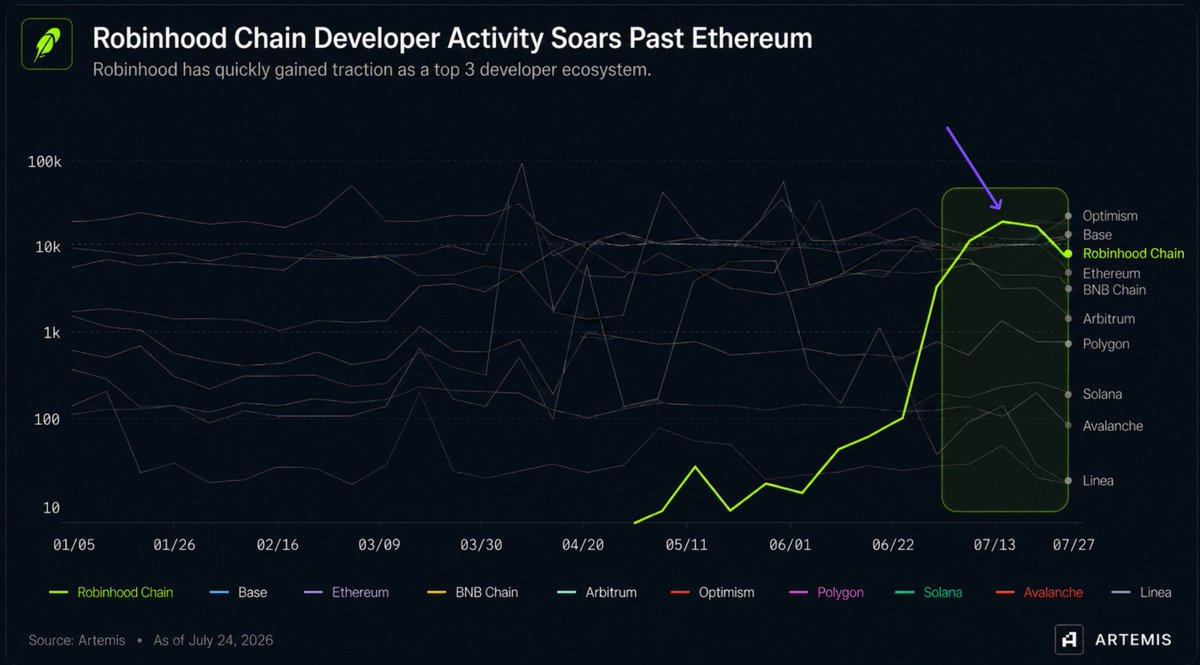
Robinhood chain developer activity soars past Ethereum
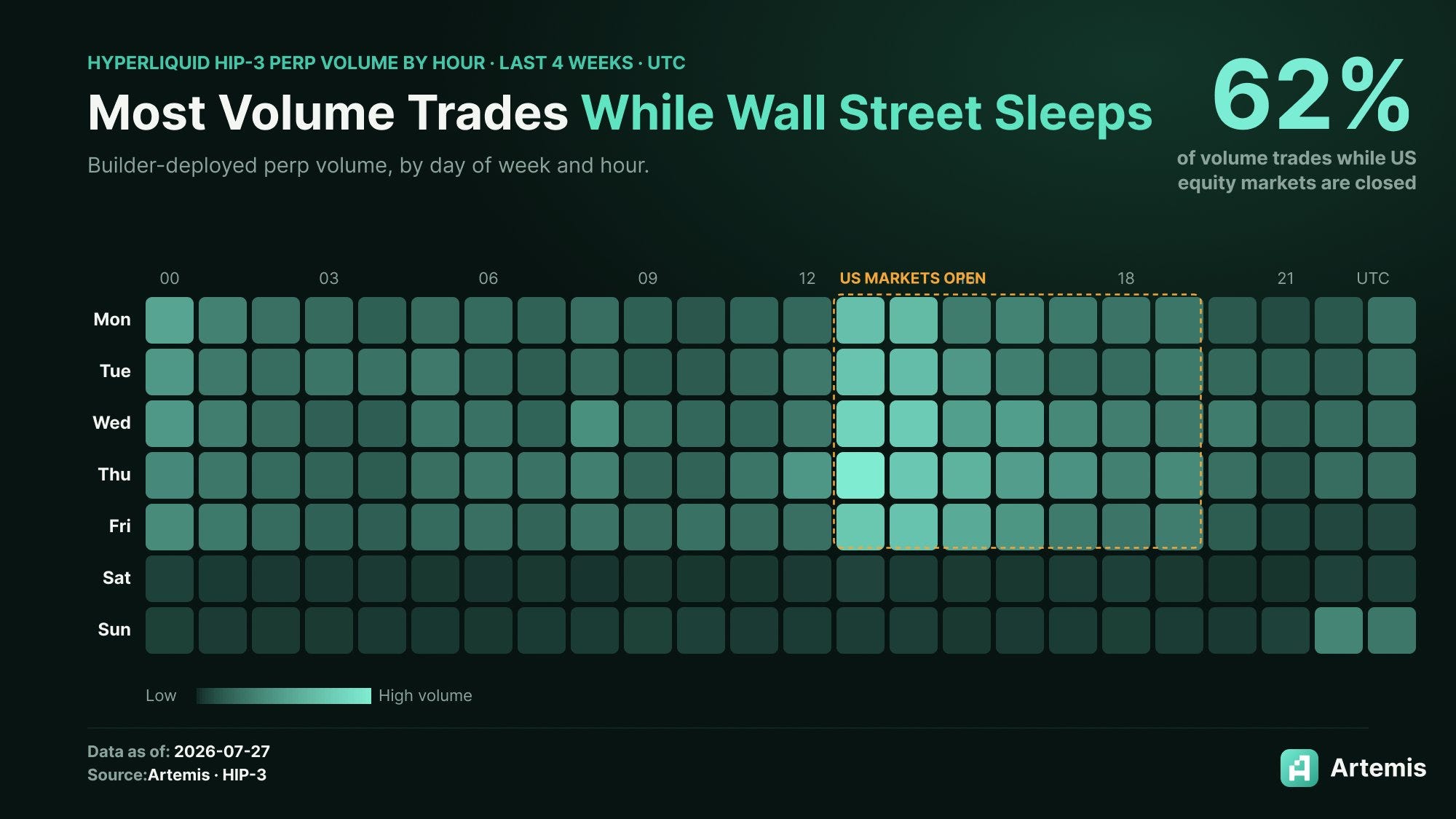
62% of HIP-3 volume happens when US markets are closed
Hyperscaler CapEx has reached 35% of revenue
Hi Jon,
Great to connect. I've been following Artemis and really enjoy the data driven insights your team shares on the digital asset ecosystem.
I work in the fintech, crypto, and payments space, where I write about blockchain, digital banking, payment infrastructure, and compliance. I've subscribed to your content and look forward to learning from your updates.
I'd love to support each other's work, exchange ideas, and hopefully explore collaboration opportunities down the line.
Looking forward to staying connected!