

Elections, AI blowups, jobs - what a week. This week we try to make sense of it all.
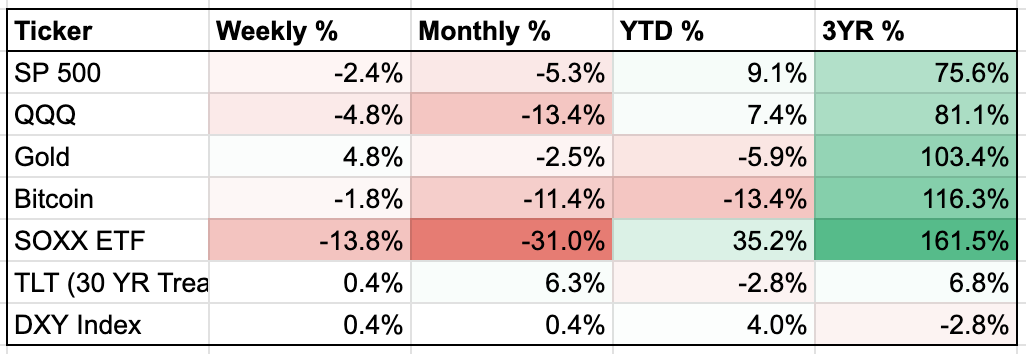
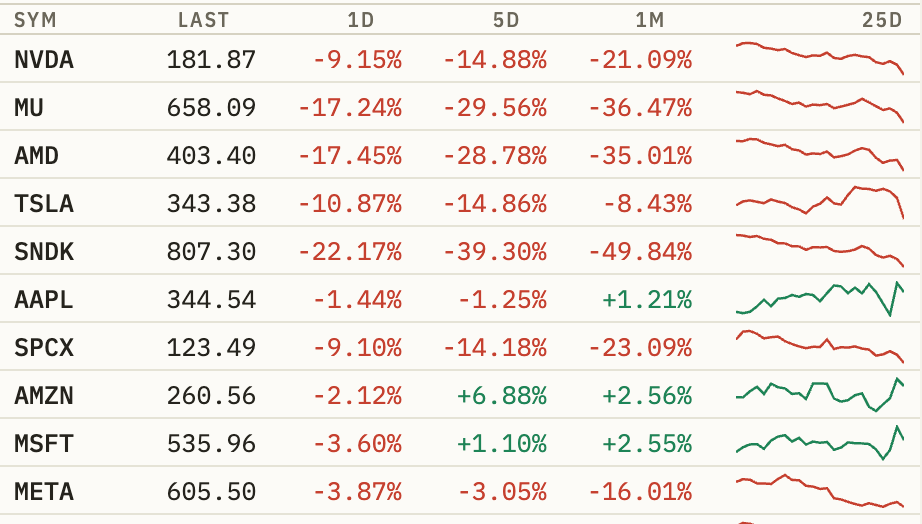
Markets continued to tumble on rumors of Leopold blowing up (again), uncertainty around data center buildout and general market fear. Sorting names by most active trading volume on 11/5 shows the extent of the carnage
Most Active Names 11/5/2026 (Ouch)
Demand > Supply
The supply/demand market dynamics are truly puzzling. While the stock market seems to be panicking, comments from CEOs this past week across earnings calls reflect an enormous interest in AI - with demand exceeding supply. Lets look at some quotes.
Alex Karp - CEO, Palantir
“We really cannot satiate demand. This is a market that is growing so rapidly.”
This was in response to an analyst question on how Palantir is converting CEOs that are still skeptical on AI. His response was they tend not to work with these companies or don’t need to convert them as demand for their product is so high. Many AI related pilot projects that Palantir starts go from $200k to $20mn in spend.
Lisa Su - CEO, AMD
“It is true that demand is higher than supply”
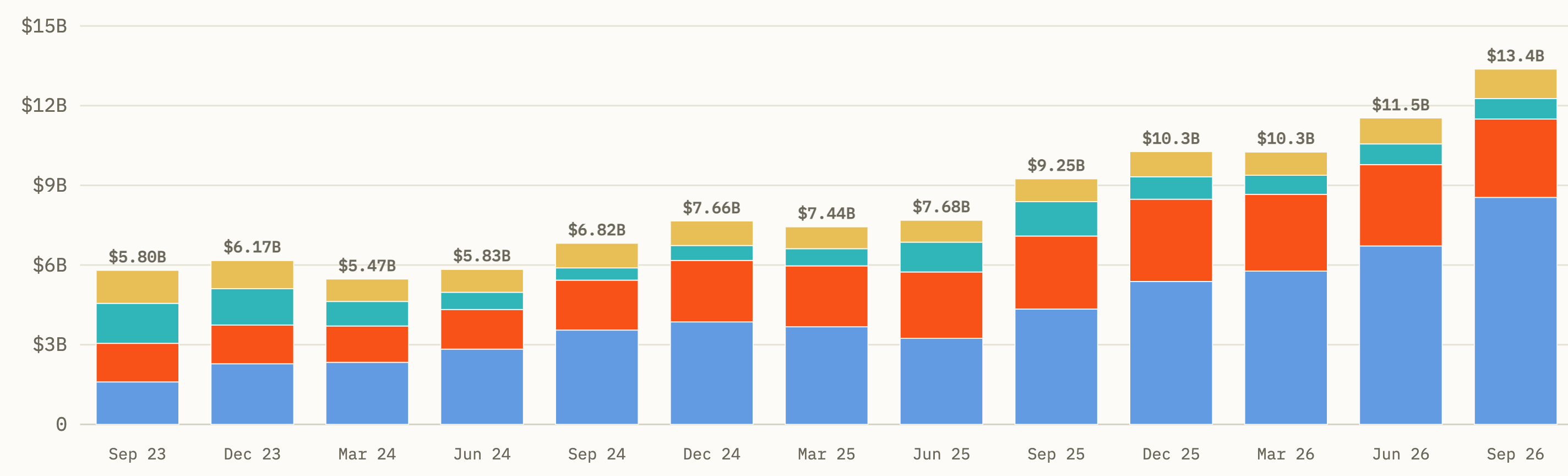
This was a response to a question around data center revenue growth and if AMD could secure more resources, could it sell more chips? Clearly the answer is yes. AMD raised its 2027 outlook and revenue in some segments (Data Center AI, Server) are growing more than 80% Y/Y.
AMD Revenue by Segment
Time will tell who is right, but with potential data center delays with incoming Democrats, Anthropic’s upcoming IPO - there will be no shortage of drama.
Prediction Markets Show Massive Volumes
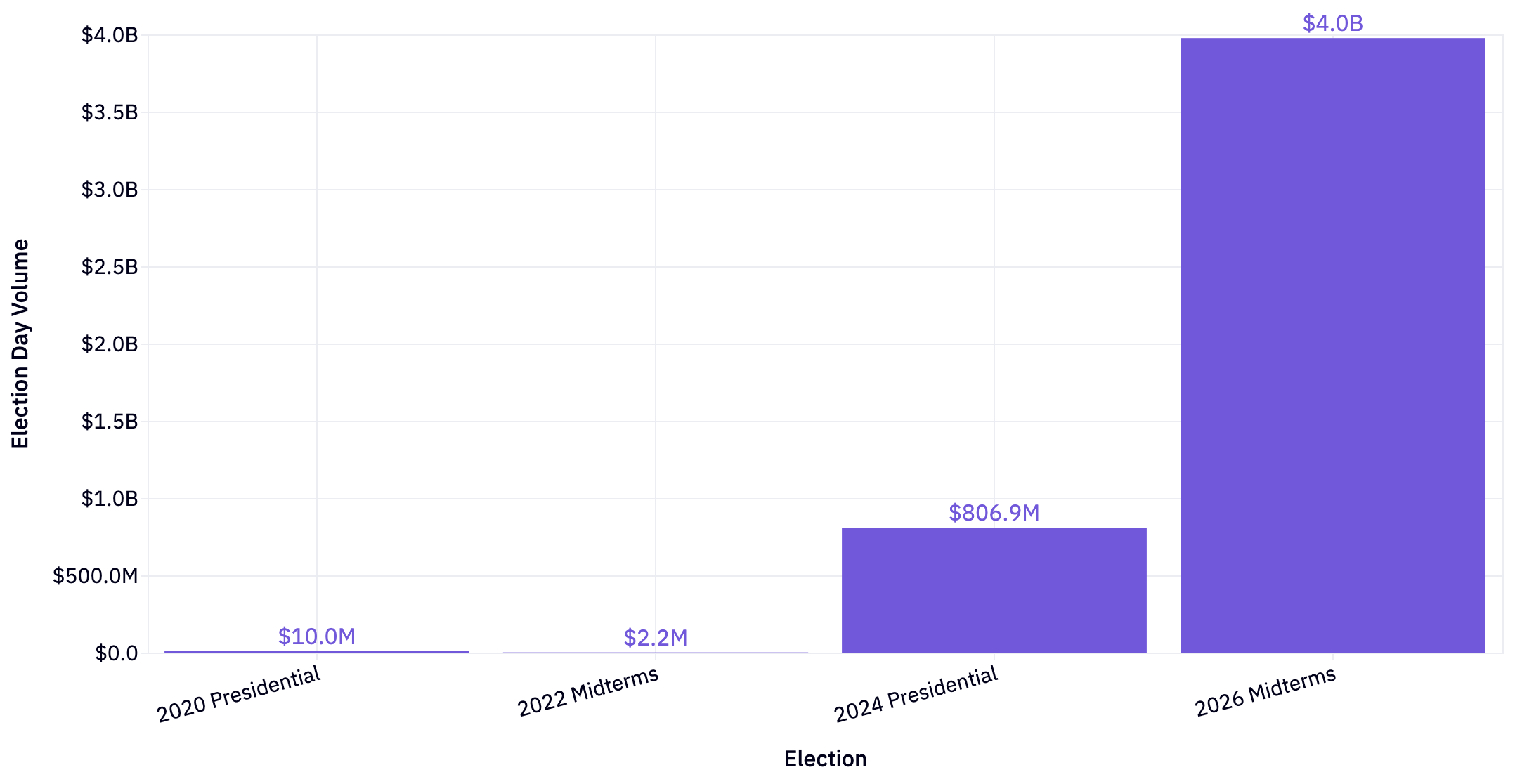
What once was a small niche market has expanded to a massive billion dollar industry. Prediction markets have come a long way since FTX was one of the first to list contracts in 2020. The most recent midterm elections saw a surge in trading volume, from ~$400mn last year to almost $4bn this year. While not all volume is related to politics, the astonishing growth is testament to how widespread these platforms have become.
Prediction Market Volume by Election Night
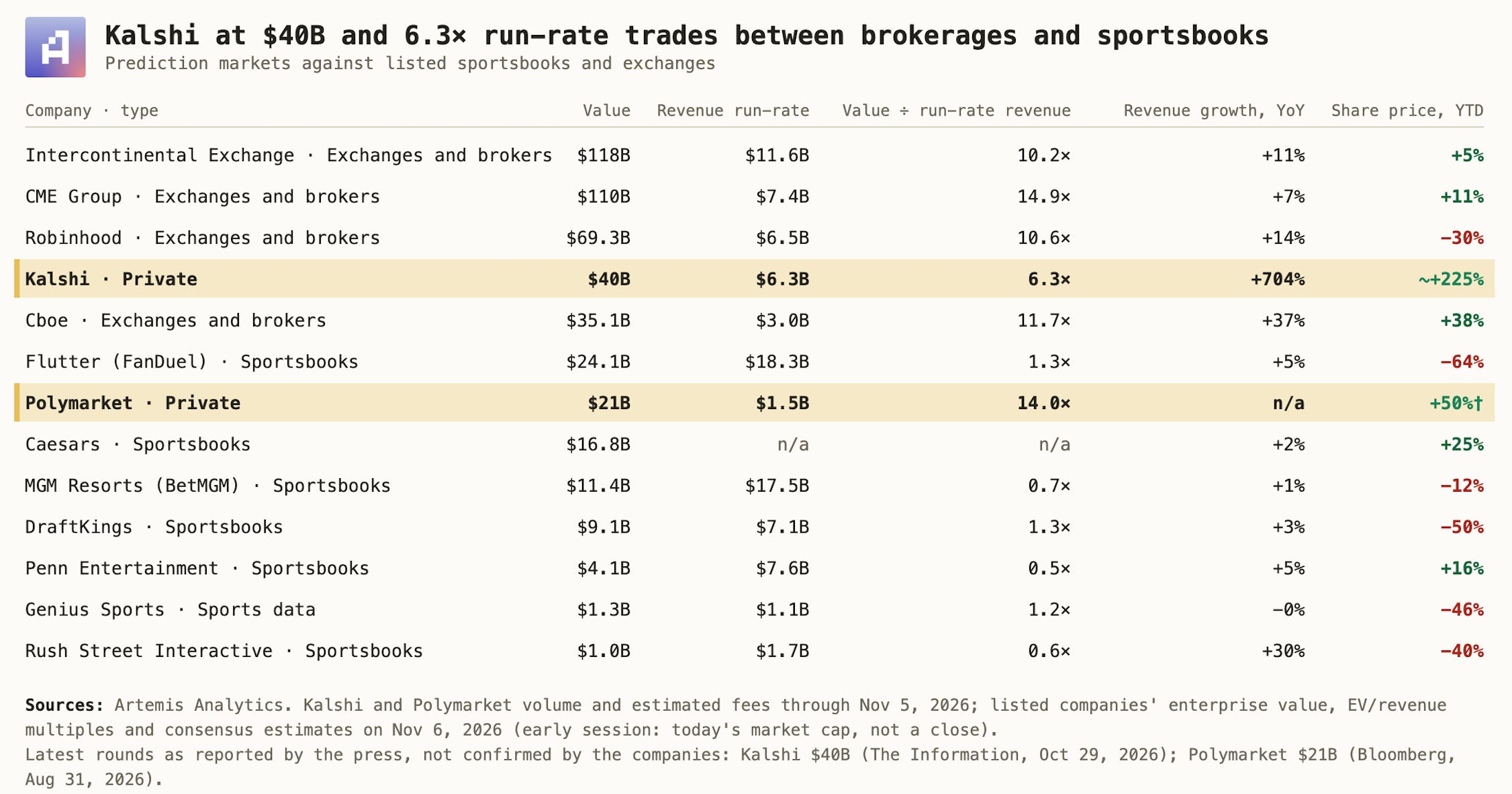
The record volume has lead to record fundraises. Both Kalshi and Polymarket announced additional funding rounds in the past few months, valuing them between on a revenue multiple between sportsbooks and exchanges. Their success has come at the expense of traditional sportsbooks, whose shares are down between 12 - 50% YTD. After Draft Kings reported Q3 earnings, it had one of its worst days ever on increased costs due to its prediction market buildout.
Clouds on the Horizon?
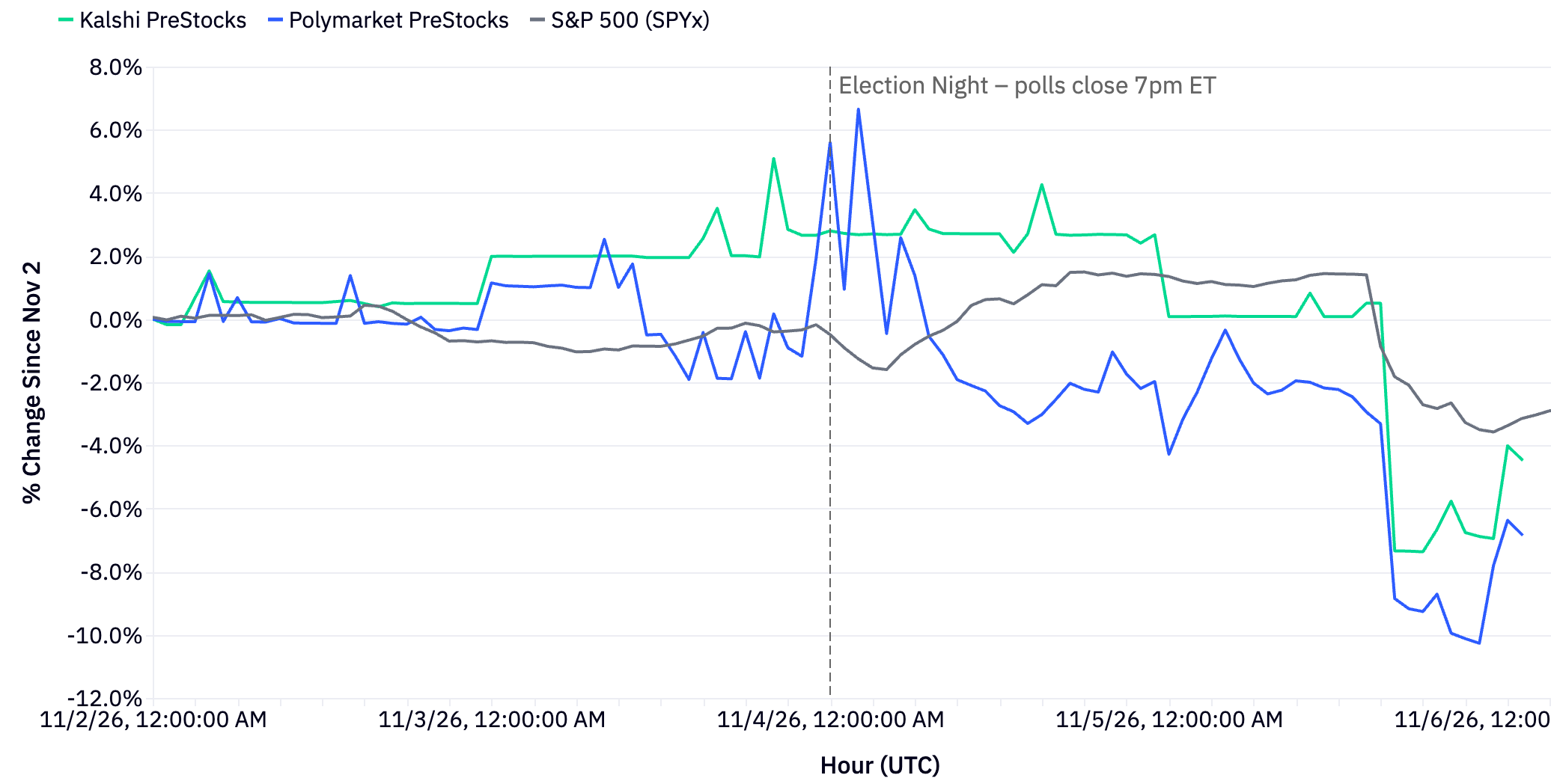
However, despite the record volume, tokenized products linked to prediction markets fell after the election. While their decline mirrored a fall in overall markets, an open question is if these markets will see more scrutiny given recent democratic wins.
Percent Change Pre/Post Elections for Tokenized Prediction Markets
Legislative interest in prediction markets are one of the few areas that see bipartiasn support. The “Prediction Markets Are Gambling Act” was introduced in March 2026 by Sen. John Curtis (R-UT), and Sen. Adam Schiff (D-CA) and seeks to ban sports contracts on CFTC-registered exchanges and clearinghouses like Kalshi and Polymarket US. Complicating matters further is the firm 1789 Capital, where Donald Trump Jr. is a senior partner, recently lead the $1bn funding round of Polymarket. Donald Trump Jr. is also an advisor to both Kalshi and Polymarket.
Bonus Charts- Prediction Market Parlay Growth
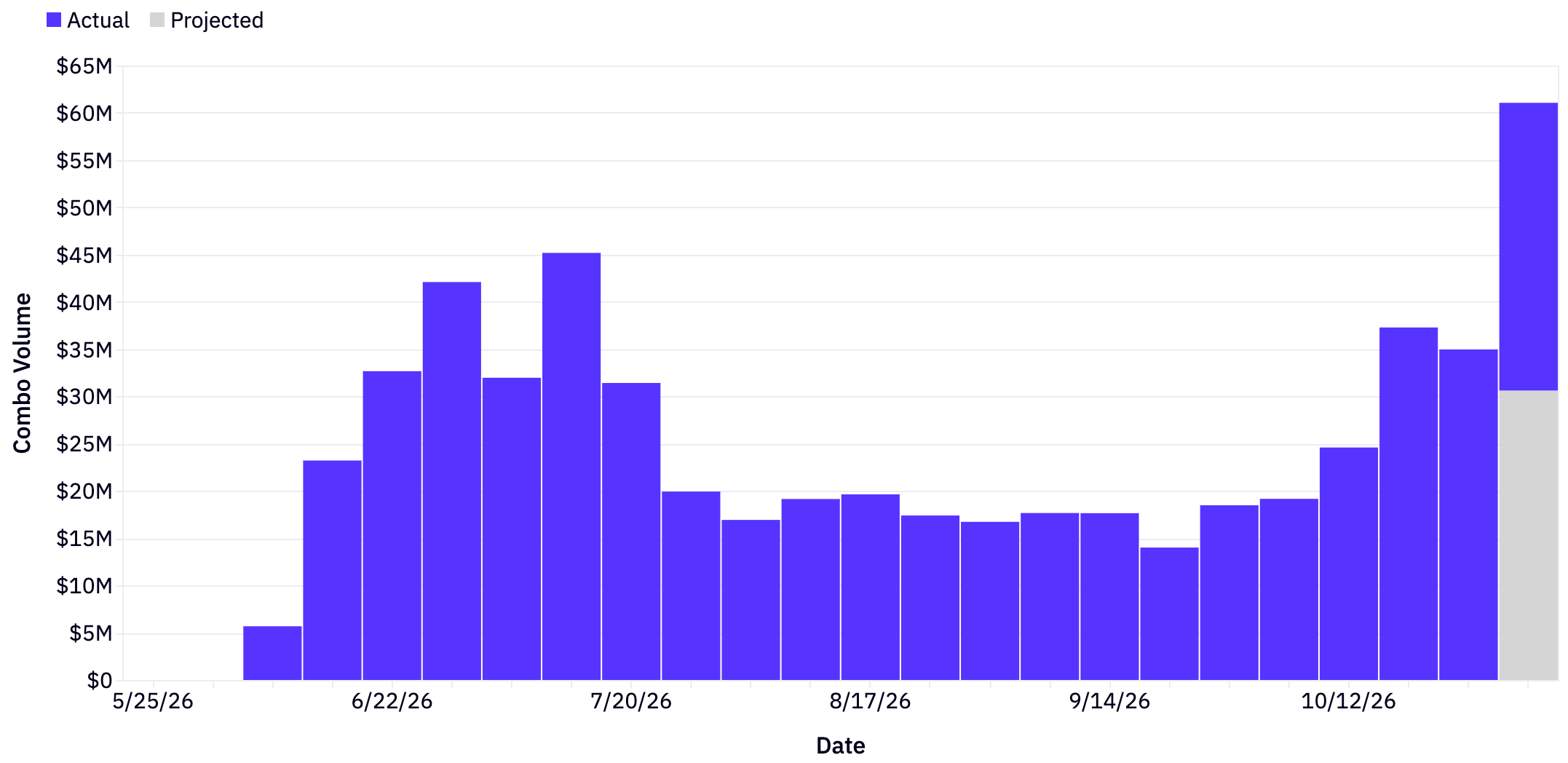
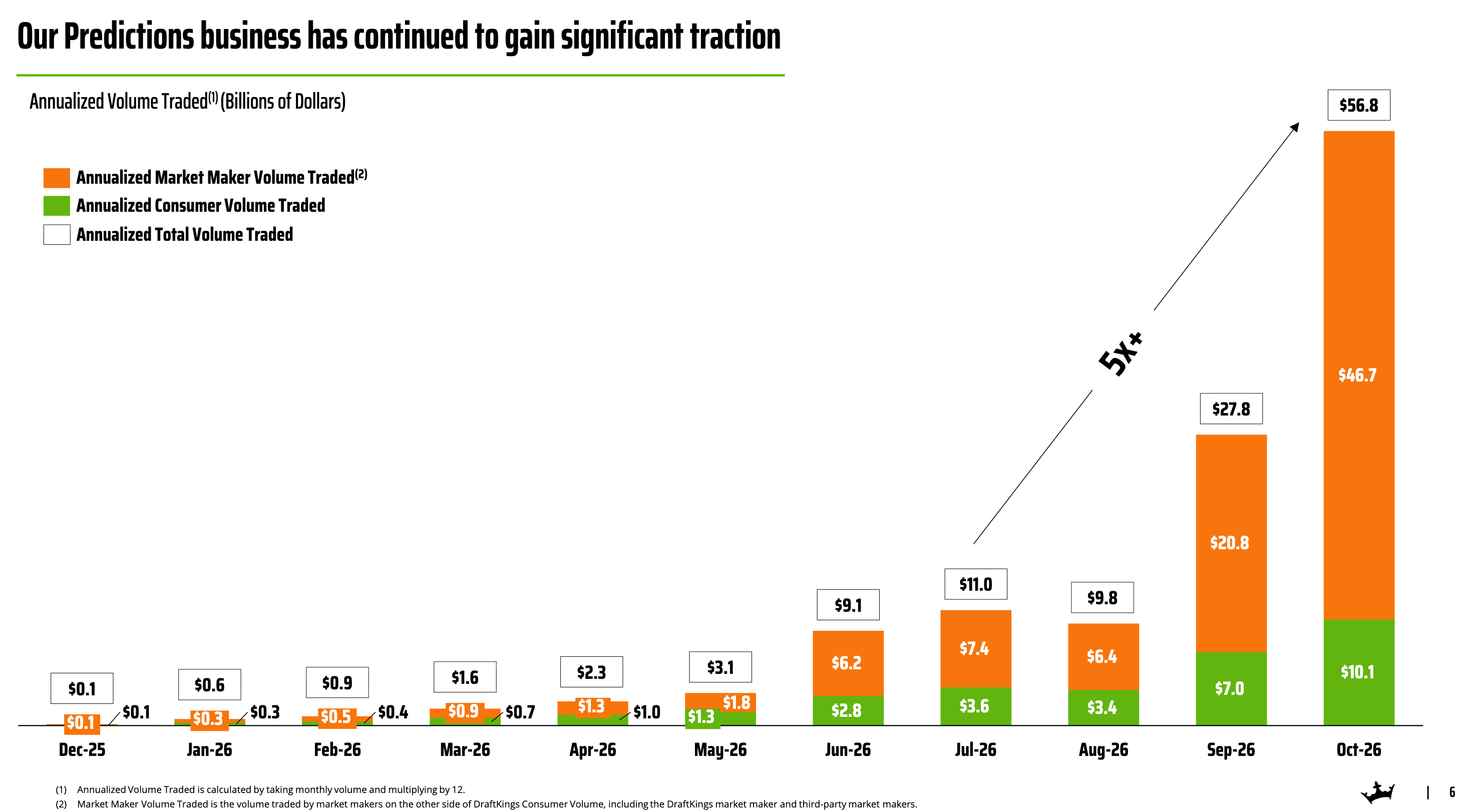
Prediction market users love to parlay. Polymarket and Draft Kings (measured by market maker volume) combo/parlay volume is on pace to reach a new record highs. Combos, traditionally known as “parlays” serve as a significant profit engine for sports books, often accouting for 40-60% of profits.
Polymarket Combo Volume
Visa Leans into the Future
Ok, maybe this is mostly news from last week, but important to mention. After underperforming the broader indexes for most of the year, Visa is BACK. It’s share price is now +21% for the year vs 11% for QQQ. How has Visa been able to outperform their competitors and the red hot QQQ?
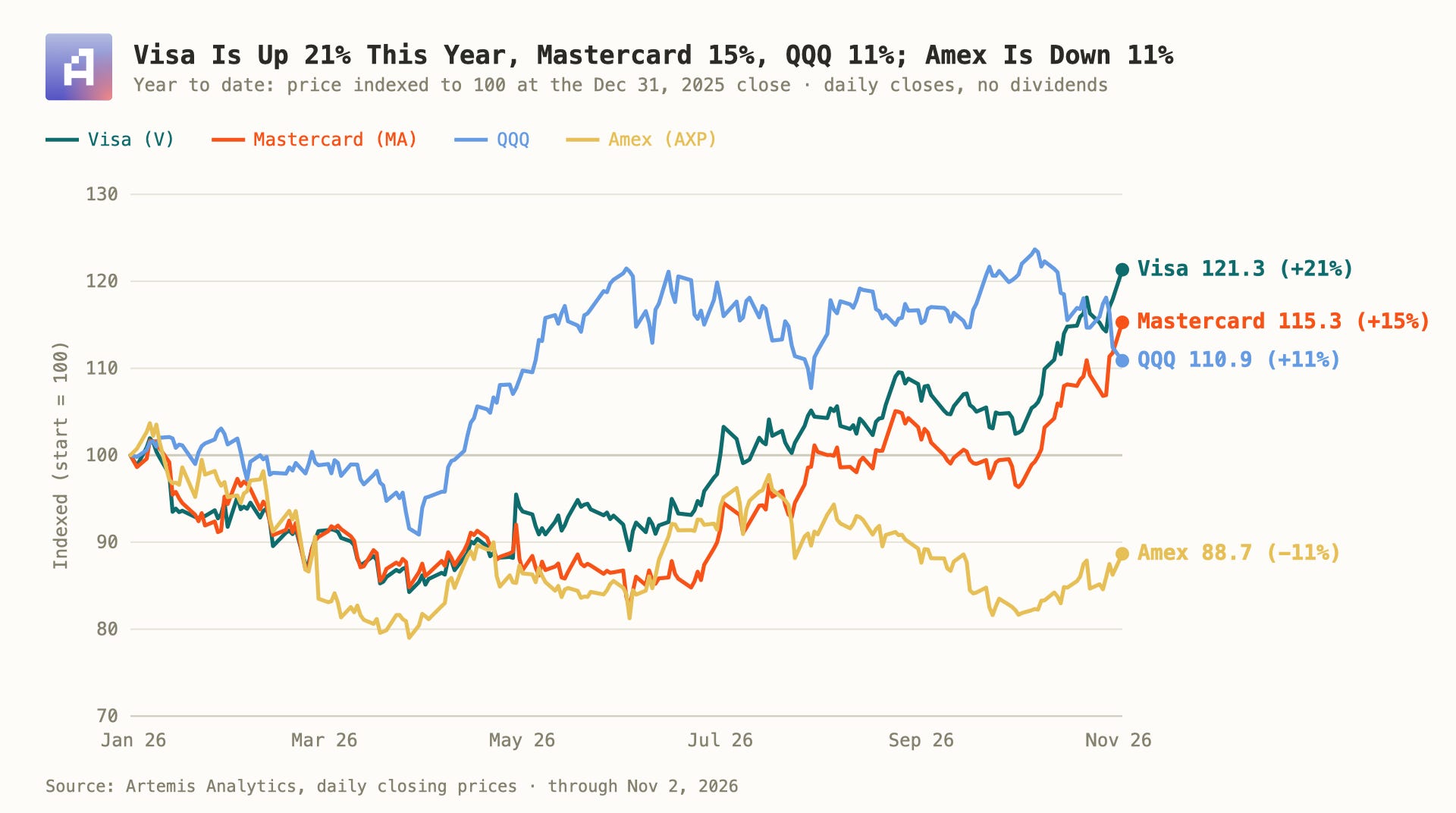
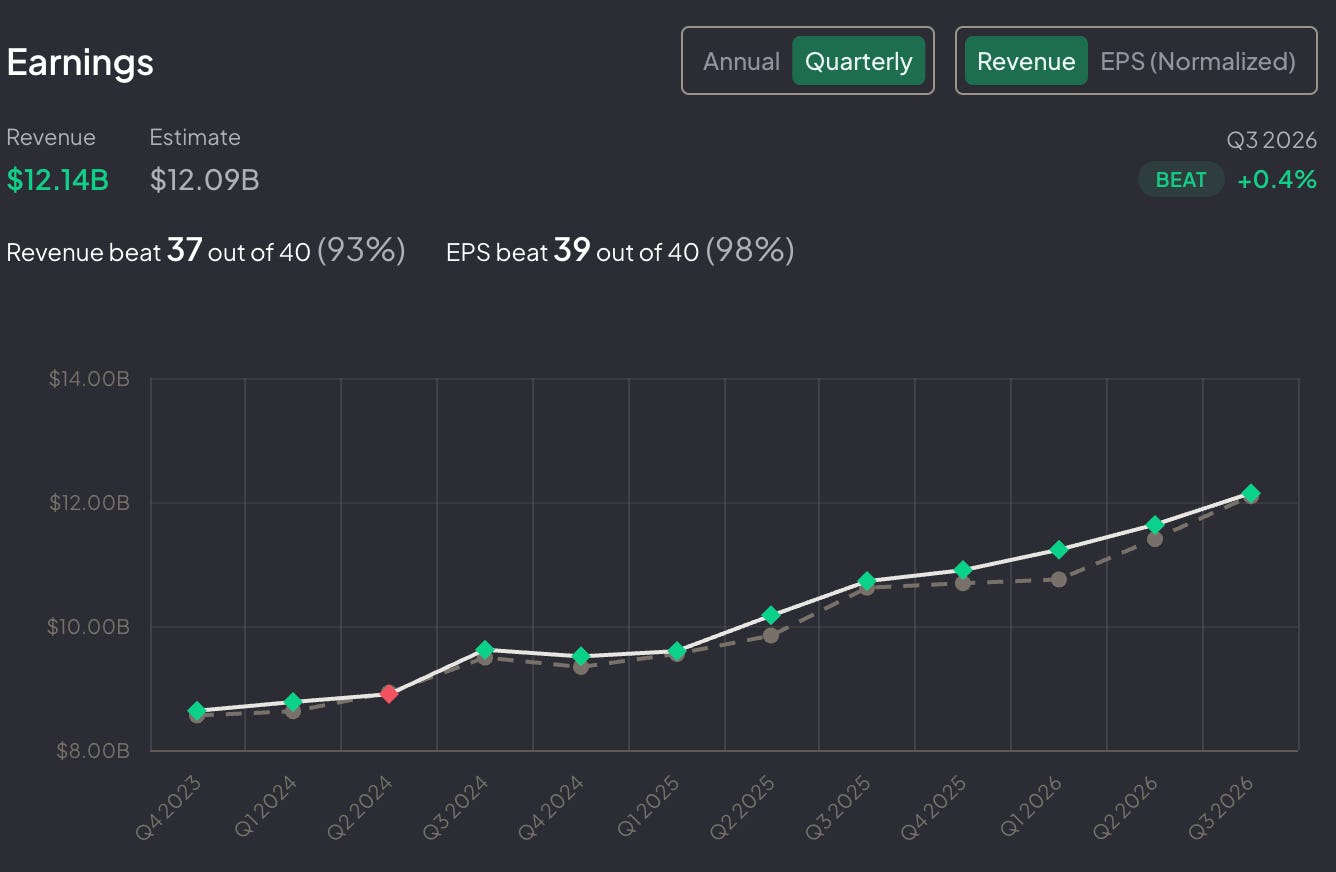
First, Visa has delivered on earnings, beating by 4.0%, 2.1% and 0.4% in Q1, Q2 and Q3 2026. It has shown strong growth in its Value Added Services division and has seen healthy payment volumes with over 10% growth.
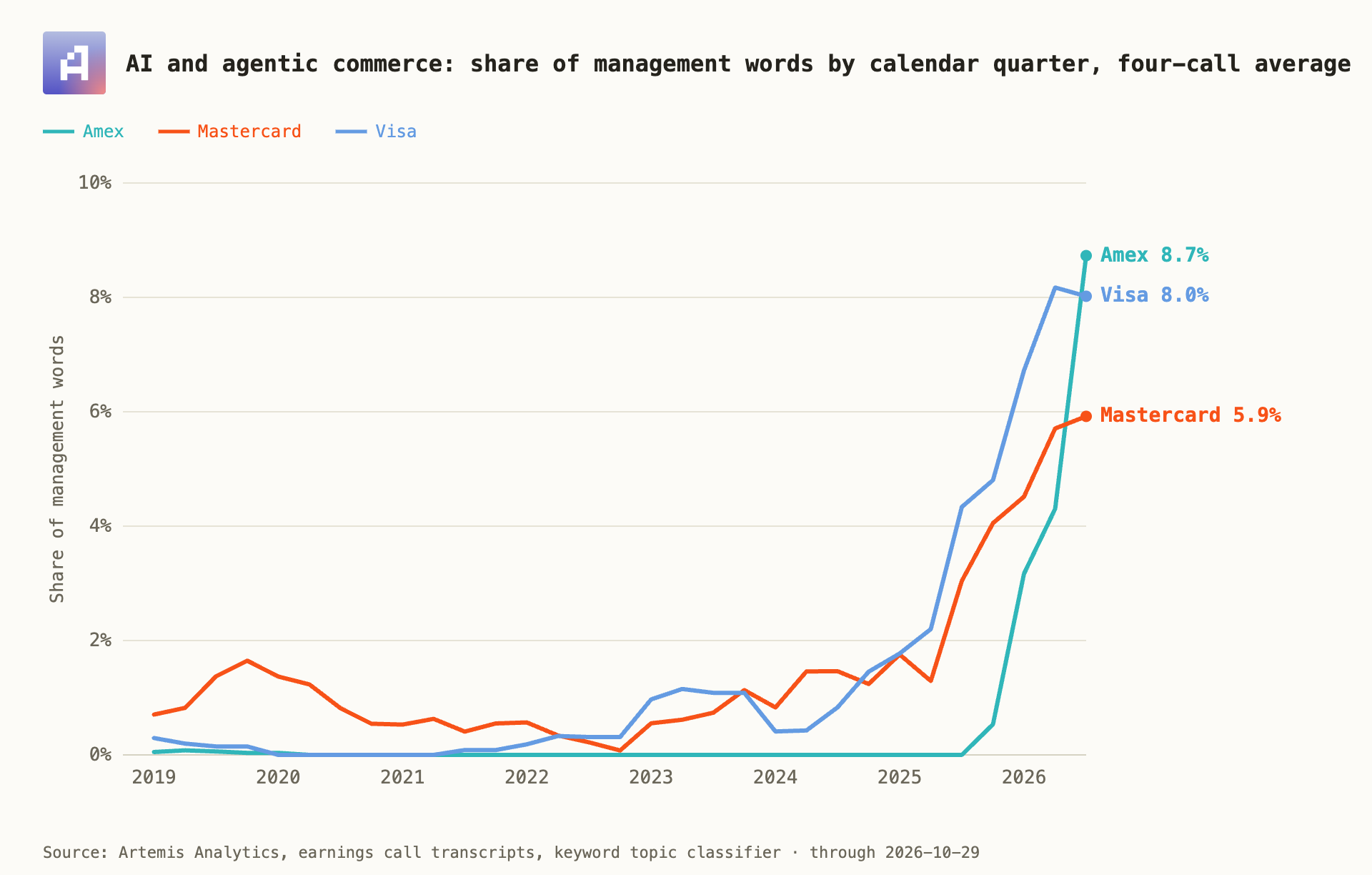
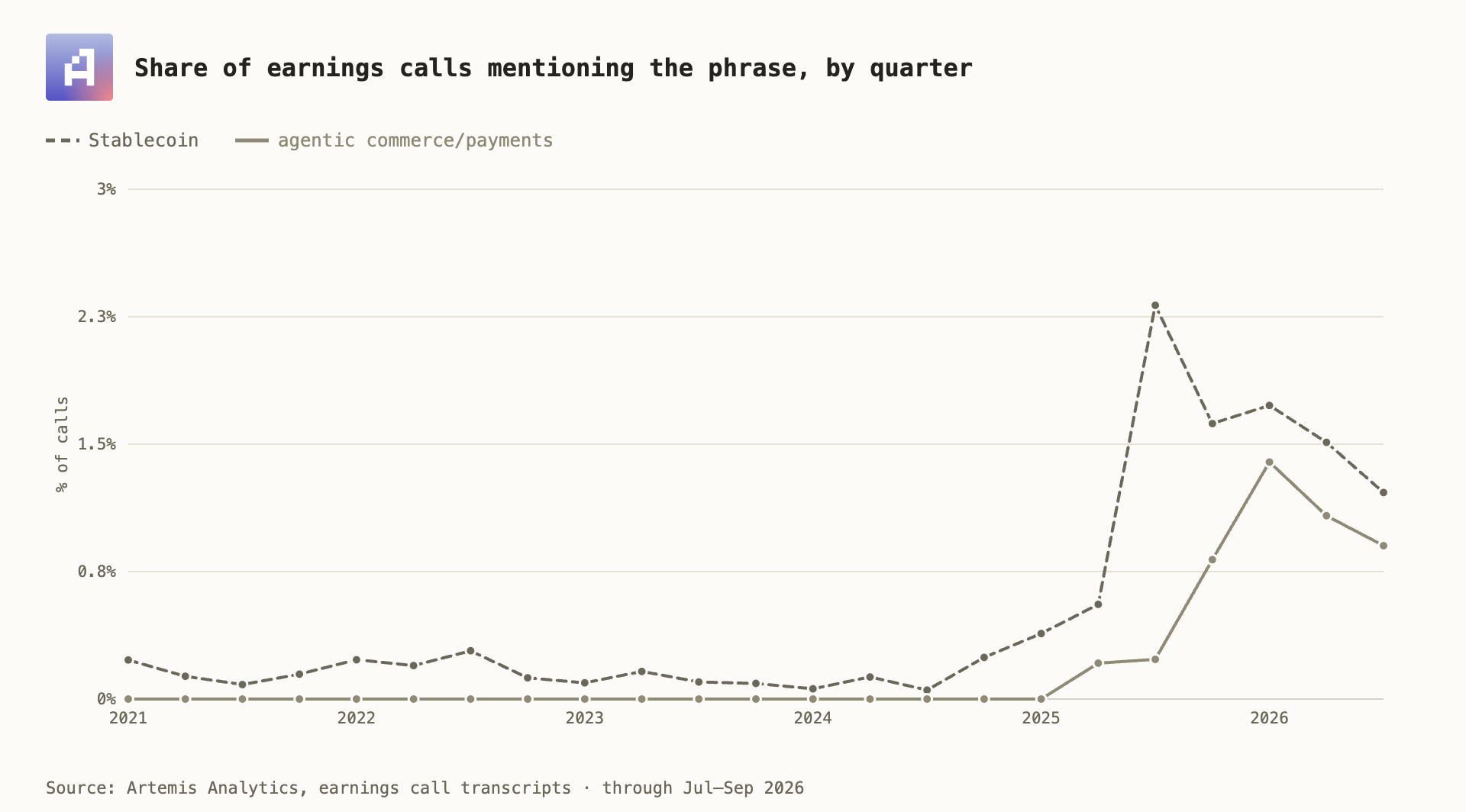
Visa is also thinking towards the future. Visa spent over 15% of their most recent earnings call talking about AI/agentic finance and stablecoins. While other companies have stopped talking about agentic commerce and stablecoins, the card processors have leaned in. Mentions of stablecoins and agentic commerce across all companies have dropped between 30-50% but are increasing sharply for card processors.
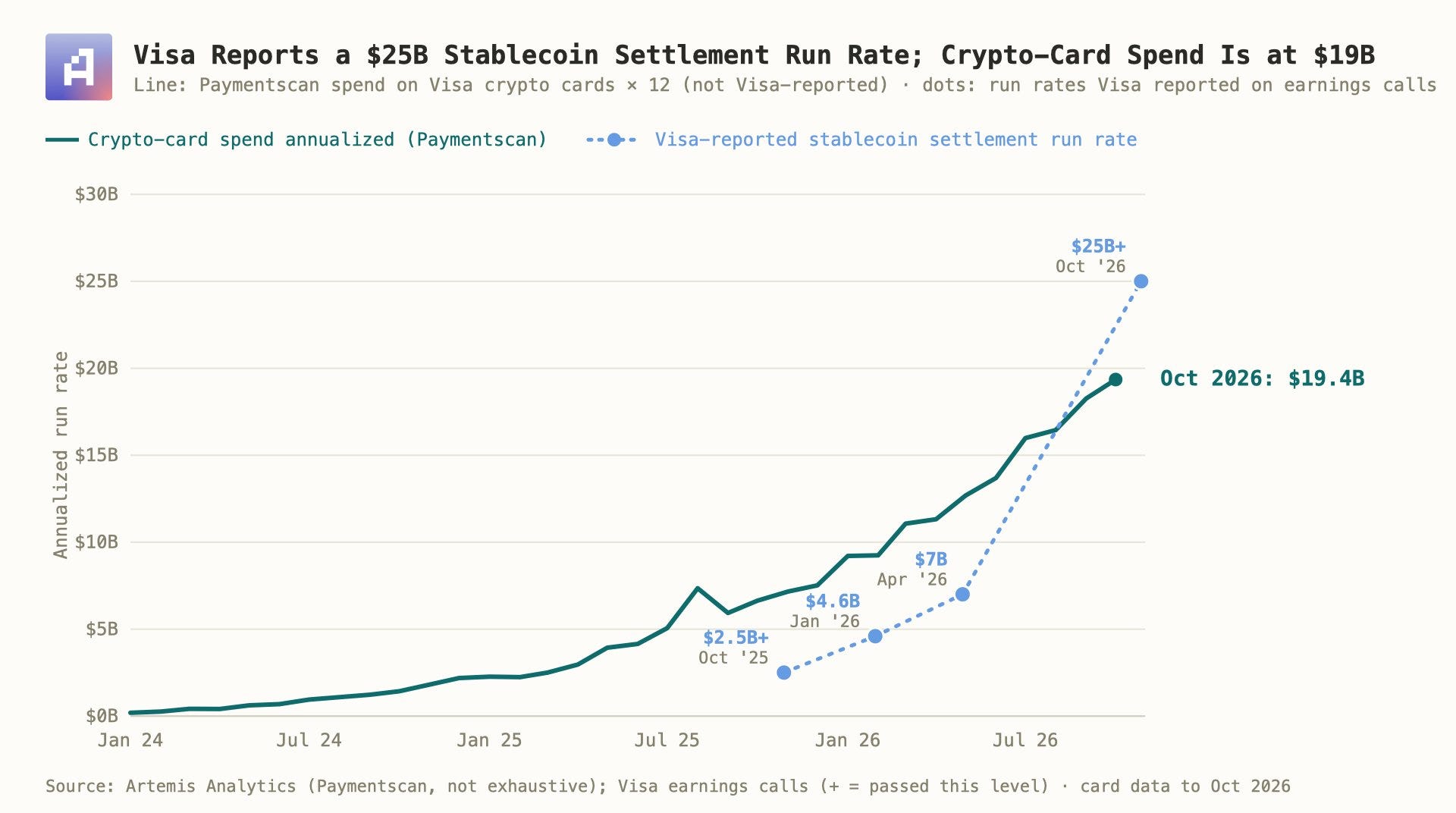
Visa has already shown in can execute in these new areas. Annualized volume on Visa stablecoin linked cards has now crossed $25bn with astonishing grwoth rates. Growth of Visa cards is now outpacing the onchain card market, showing just how well Visa is doing in this new market
Until next week
The GOAT at work. Thank you for the weekly fundamental. Loved reading about Visa is back and the massive stablecoin settlement run rate