

We’ll refrain from analyzing one of the biggest CEO shakeups of all time, as you’ve probably had enough of that. This week we continue our earnings season analysis looking into business units that management called “material” and heated analyst/management interactions. Then we do a quick anecdotal check on how much AI everyone wants.
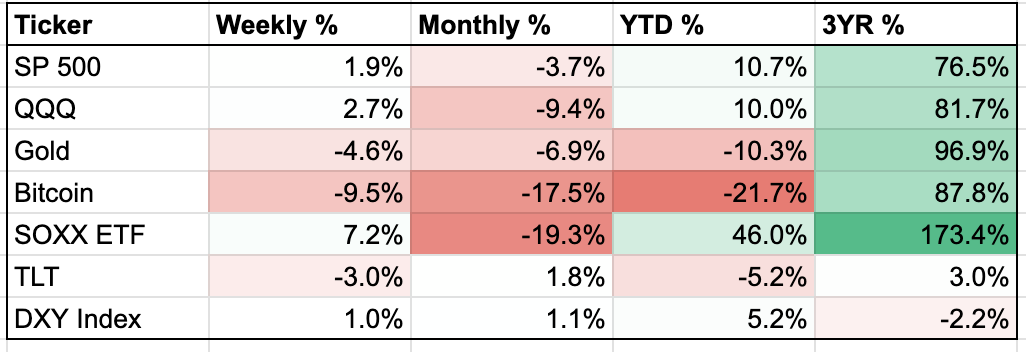
Weekly Performance By Asset Class
Uncovering “Material” Business Opportunities
We ran this season’s earnings calls through Claude to find examples where management says future business lines will have a meaningful impact on businesses going forward. We then had Claude rank the opportunity by high, medium, and low, and this week we’re going to take at one of those opportunities: Circle Payments Network.
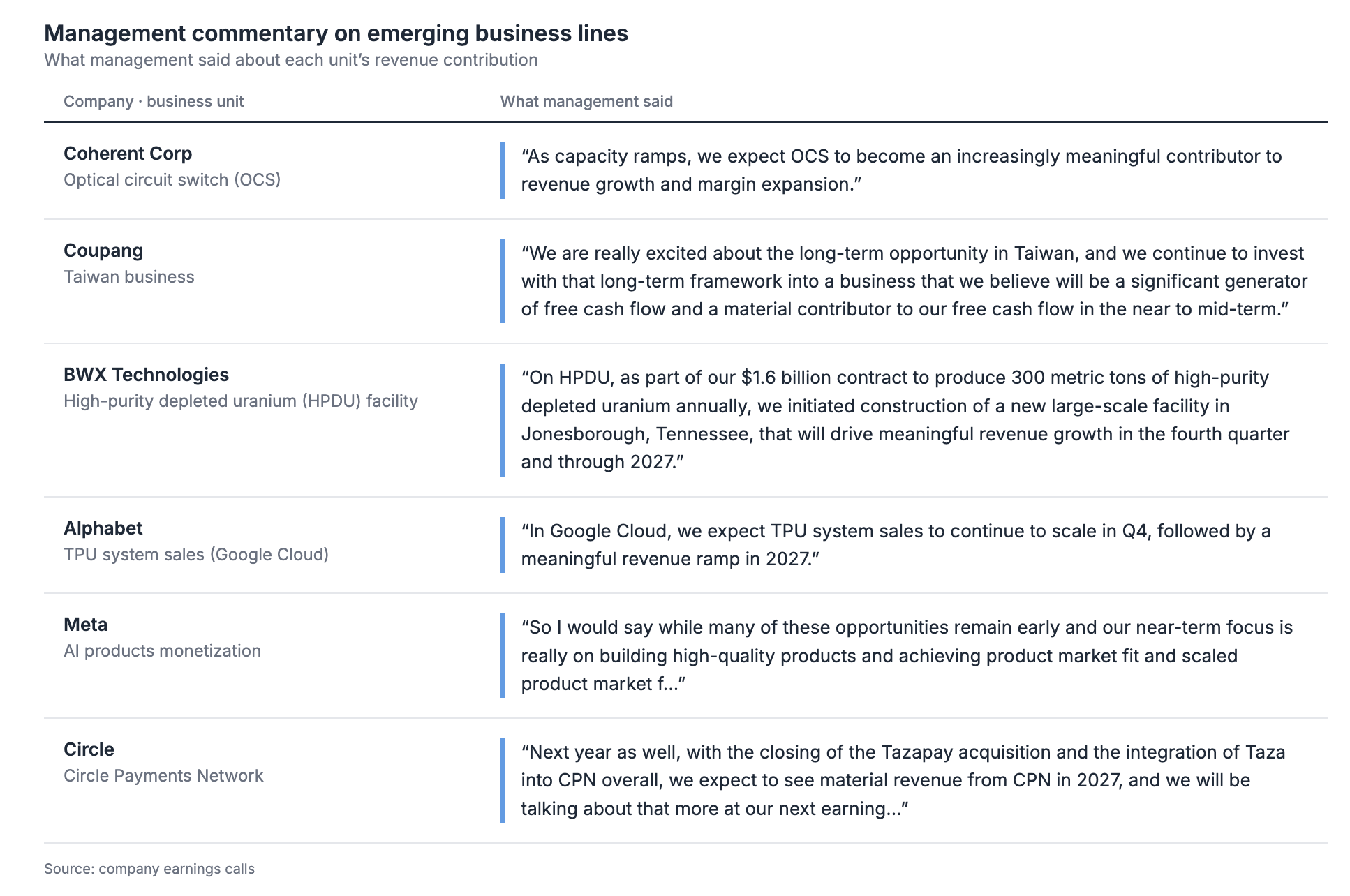
Let’s start with Circle Payments Network, a network Circle developed to facilitate stablecoin payments. Stablecoin payments have seen massive growth in the past few years, going from essentially $0 in 2021 to between $400 to $600 billion today. On a recent earnings call, Jeremy Allaire, CEO of Circle said this about Circle Payments Network:
I think one is, our general philosophy is that on-chain infrastructure, digital dollars, stablecoin money, the protocols we build around it, that on-chain infrastructure will drive the cost, the marginal cost of storing and moving value down considerably from where it is. I think anyone who is taking a comp and saying, “Hey, this payments company makes 10 to 15 basis points,” or, “This payments company makes 20 to 30 basis points,” that is the wrong comps.
When this achieves scale, it is going to have enormous velocity, and the unit costs are going to be much, much lower. That is a benefit to people and businesses and households, et cetera, around the world. That is what we are shooting for. We are not shooting to, let us go repeat the margin structure of the existing payments industry.
Payment network revenue is highly dependent on the type of transaction. Person-to-person (P2P) payments on Venmo are effectively free, remittance payments can fetch up to 3% via Western Union. For Circle to deliver the promise of Circle Payments Network, we estimate Circle will need to be sub 10 basis points for a transactions.
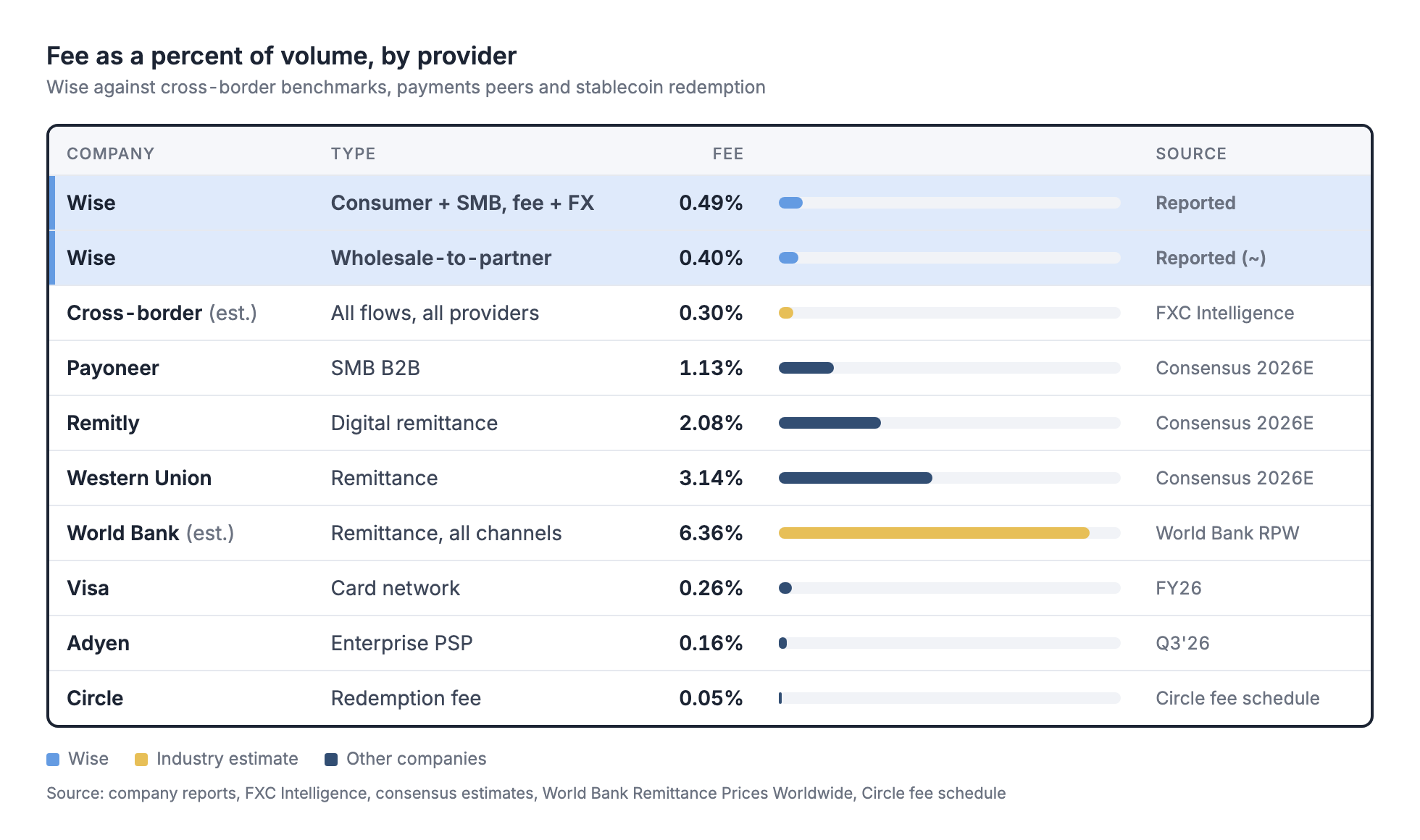
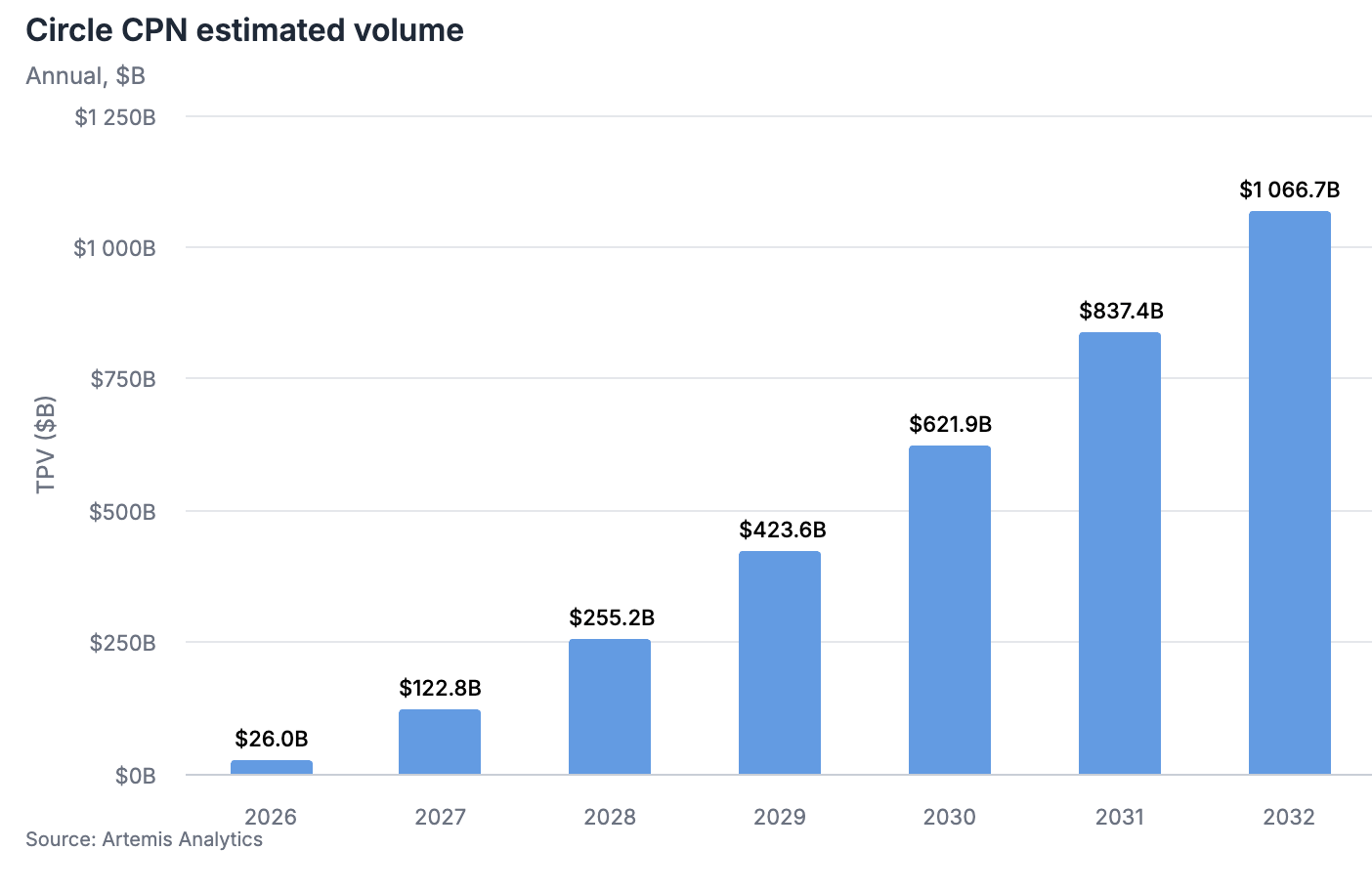
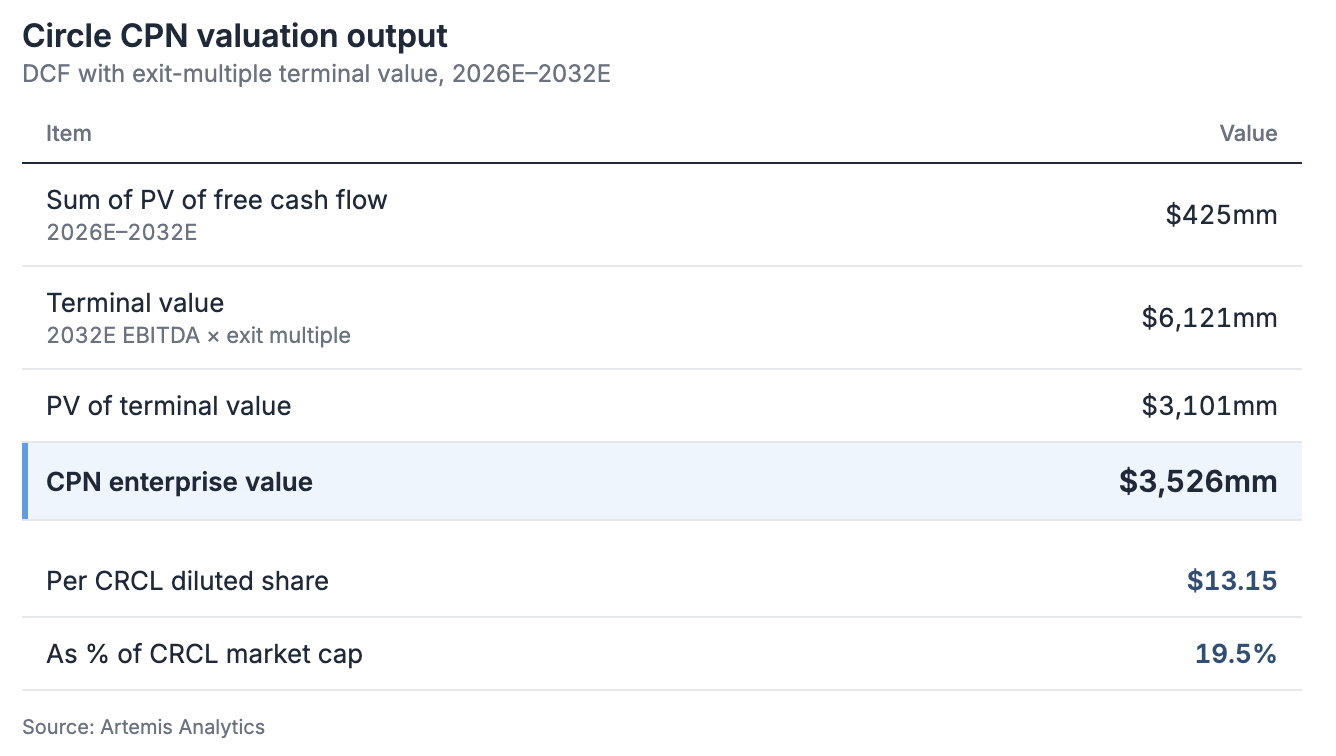
Based on its early trajectory and growth of other payment networks, we estimate ~$1T of stablecoin volume on Circle Payments Network by 2032 (~1.5% of projected non-wholesale cross-border flows, per FXC Intelligence). At roughly 7bp per transaction, we believe CPN could generate about $755M in revenue by 2032. Assuming a 45% EBITDA margin, CPN could be worth ~$3.5B in enterprise value and contribute $13.15 per net present value of Circle, or 20% of total market cap.
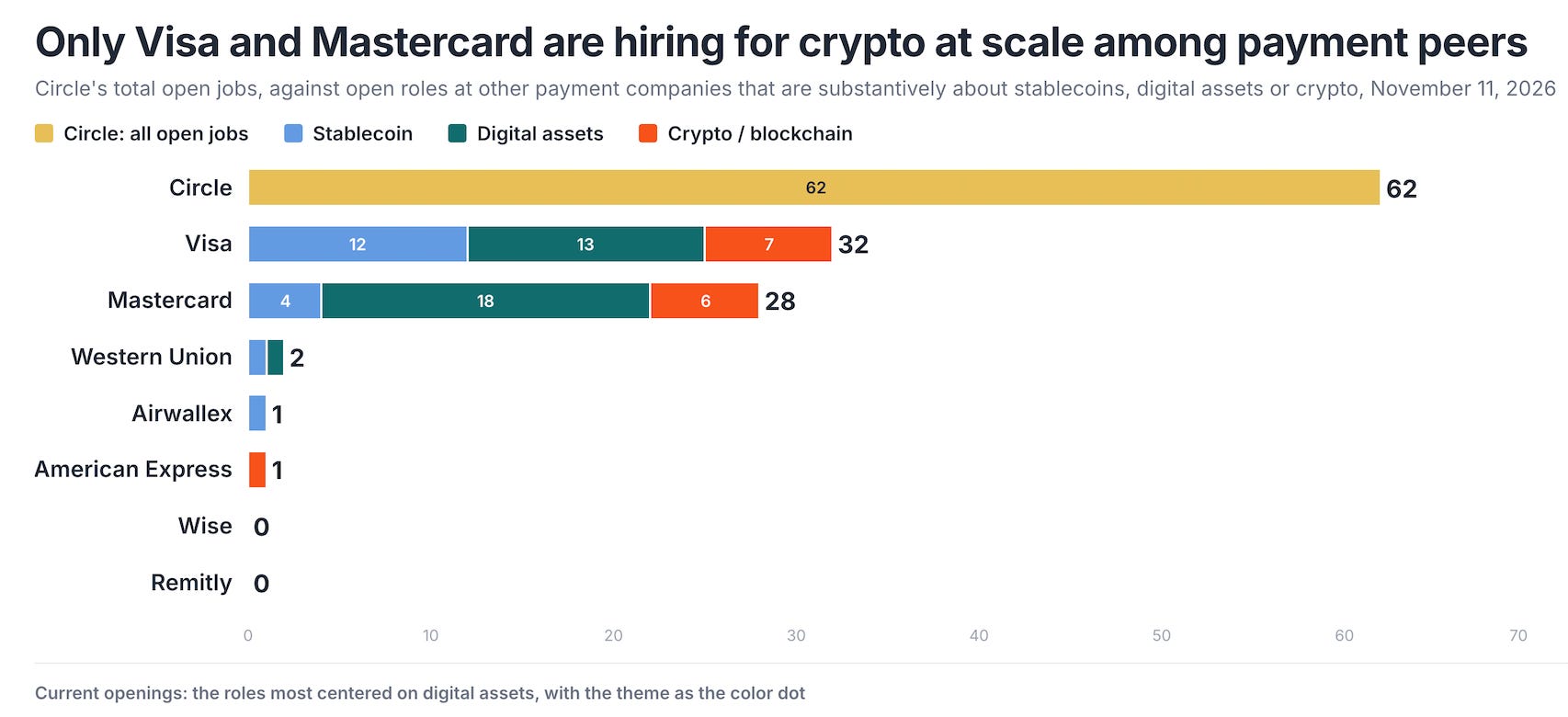
However, we expect competition in stablecoin payments to heat up. Traditional payments companies have invested into digital assets, as Mastercard acquired BVNK and Visa was rumored to acquire Fireblocks, which often touted their payment metrics. Both of these companies are aggressively hiring in the space, as Visa and Mastercard both have 30 open roles for stablecoin/digital asset roles, about half of Circle’s total job openings.
Can Circle ramp fast enough before Visa and Mastercard catch up?
Spicy Question Index
After reading a very pointed question from Robin Farley at UBS over whether DraftKings should remain in the prediction market business, we asked ourselves:
Could we use AI to find other spicy questions?
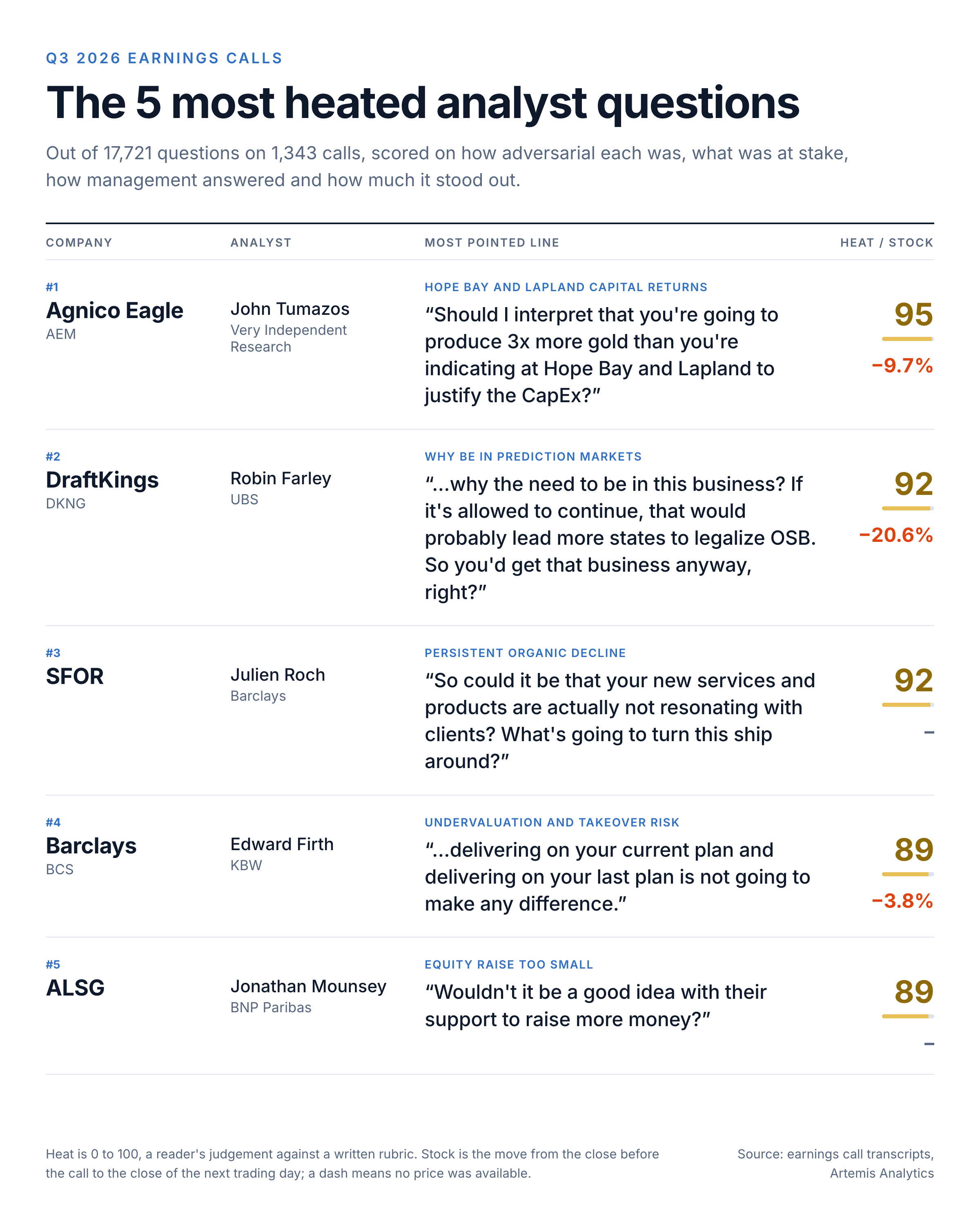
We had Claude read 1,343 calls and 17,721 Analyst questions to determine which questions packed the most punch and controversy. We were very surprised to see that Robin Farley was actually number 2, asking why DraftKings should even be in the prediction market industry. However, top prize goes to John Tumazos at Very Independent Research for questioning Agnico Eagle’s CAPEX returns.
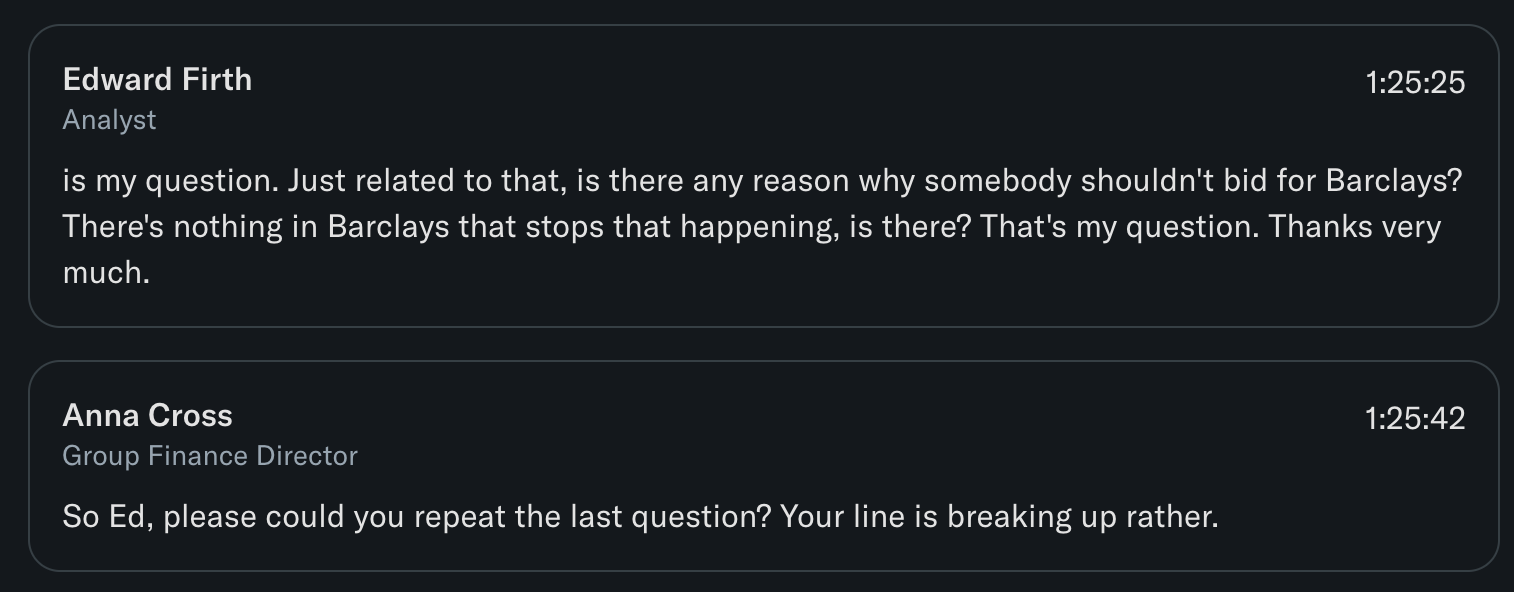
The one that made us laugh the most - Edward Firth from KBW asked why wouldn’t someone buy Barclays, given its discount to peers. He was met with the classic:
Sorry, your line is breaking up
Draft Kings loses share - Maybe Robin is Onto Something
“We continue to see healthy handle on revenue growth, further substantiating our view that prediction market operators are having no discernible impact on our sportsbook business. “
This was Jason Robins, CEO of Draft Kings on their most recent earnings call. Given the rise in Kalshi/Polymarket volume and the sharp decline in sports book stock prices, it’s hard to believe there hasn’t been an impact.
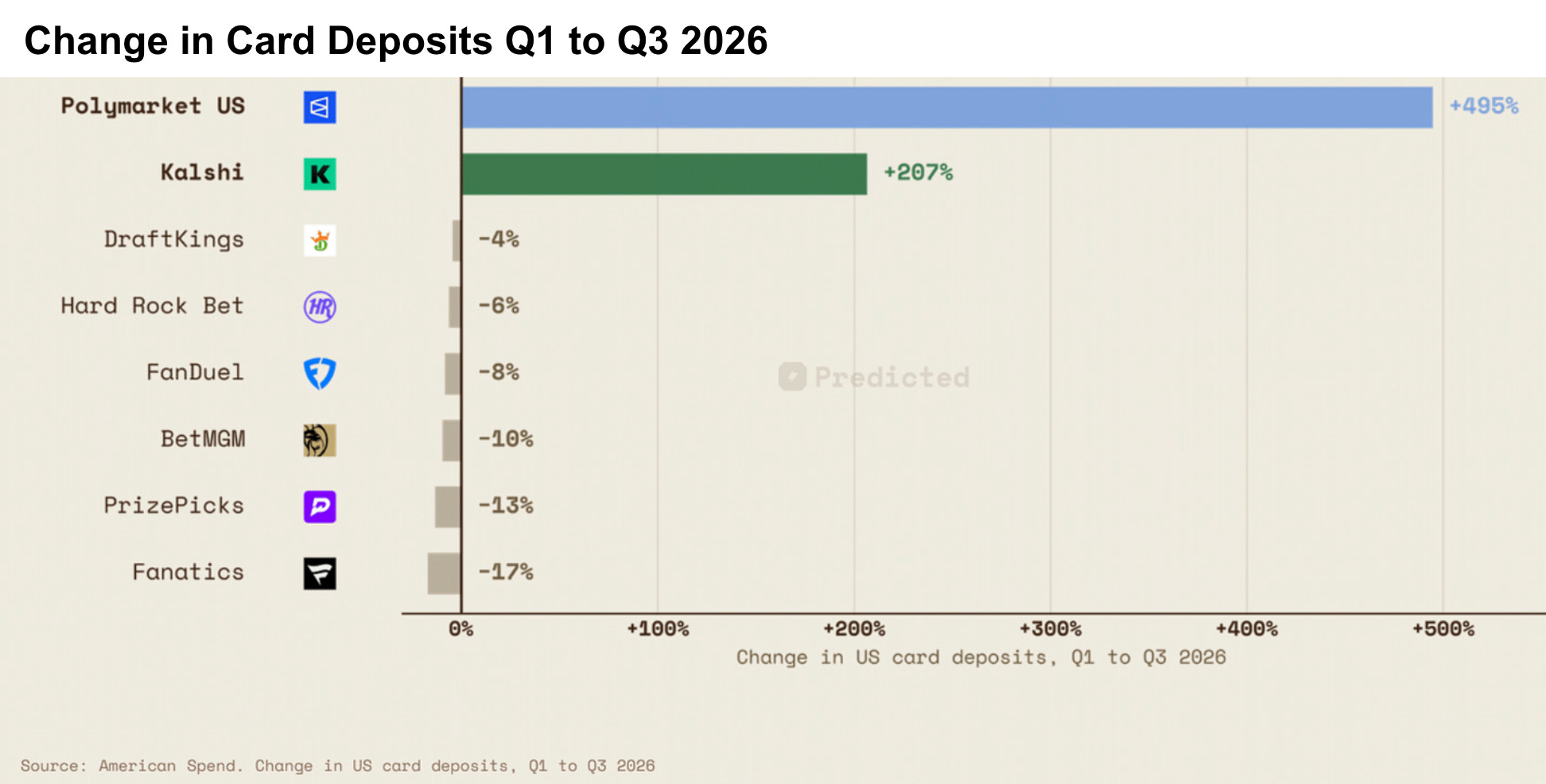
Predicted, in partnership with AmericanSpend, released data this week that flies in the opposite to Robins. Polymarket US and Kalshi both had triple digit increases in card spend from Q1 to Q3 2026, while all other sports books had declines
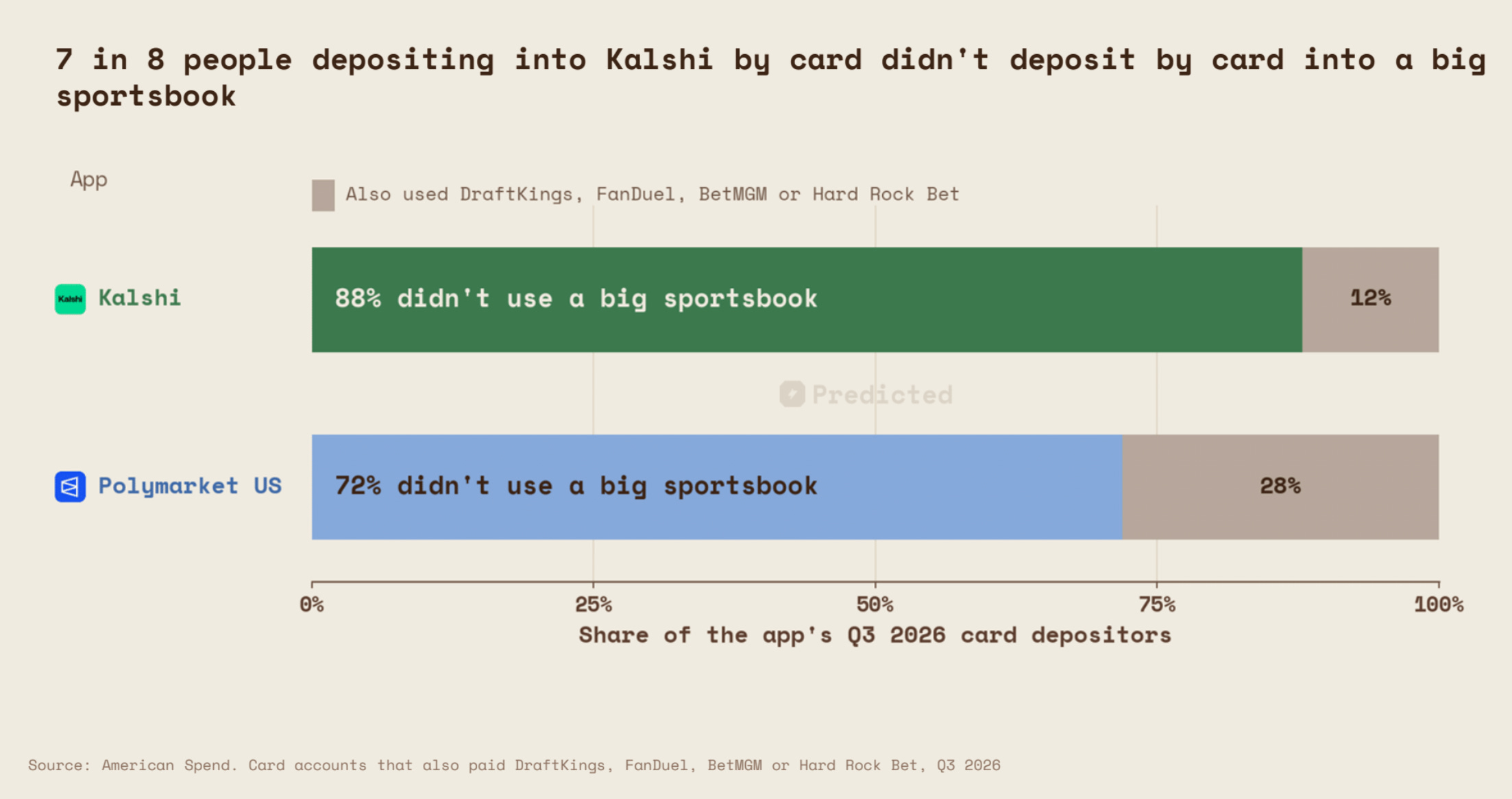
Even worse, almost 90% of people making a deposit into Kalshi and 72% into Polymarket did not make a card deposit into a major sports book.
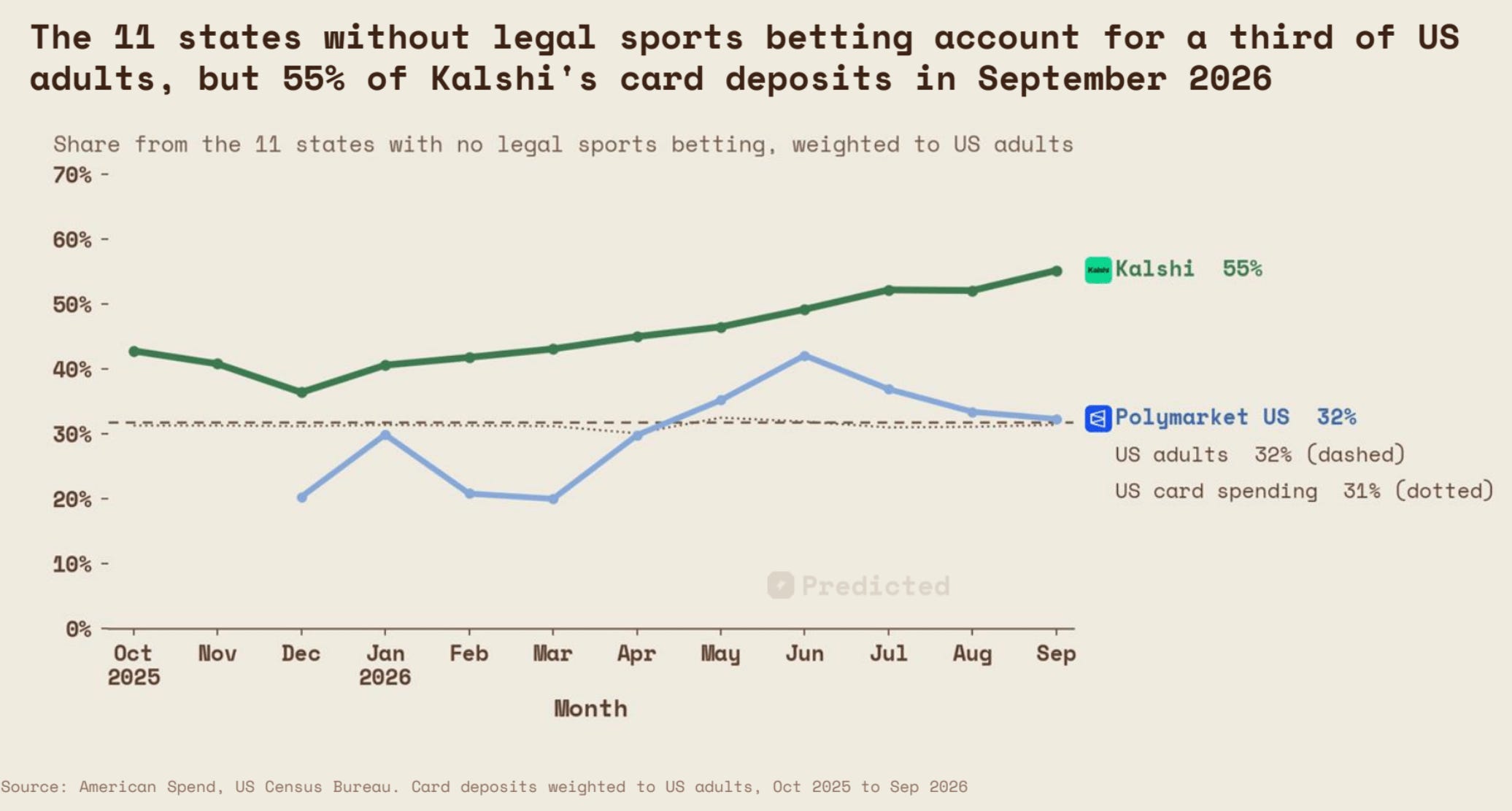
Kalshi and Polymarket have clearly benefited from being able to offer sports contracts in states without sports gambling laws. Deposit volume from states without legal sports betting accounts for 55% of Kalshi volume, despite only 33% of adults living in these states. Clearly Kalshi has been able to find an audience not served by sports books.
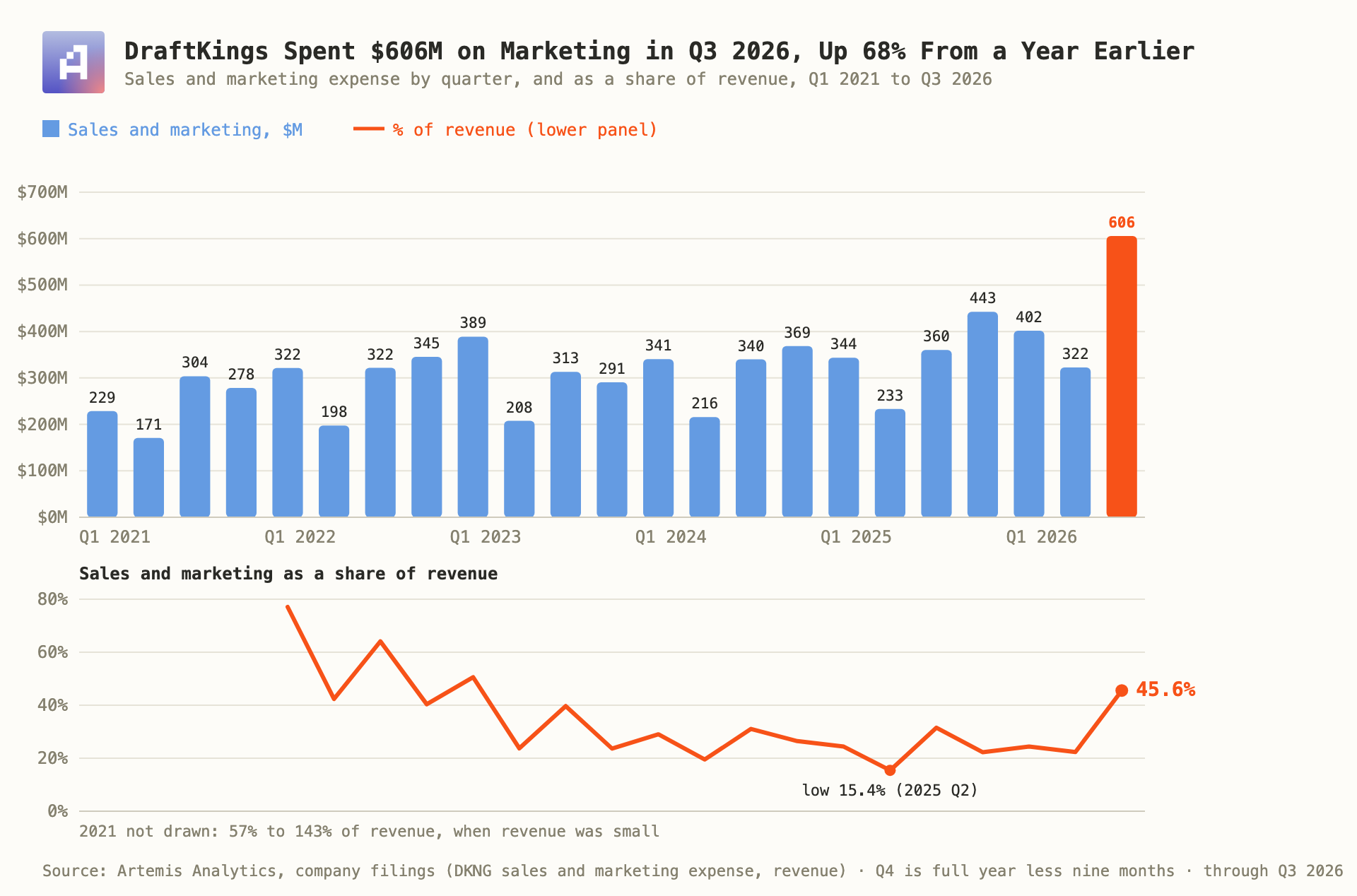
Now sports books are spending big to get these customers back. DraftKings slightly lowered its revenue guidance and plans to spend heavily on prediction markets. and cut adjusted EBITDA guidance from $700–$900 million to $175–$275 million. Sales and marketing where already nearing record highs and now Draft Kings will spend even more.
Demand > AI Supply
Last week we highlighted calls from AMD and Palantir, which talked about significant supply/demand imbalances. This week we got more of the same from Coreweave and Taiwan Semiconductor. Here’s a quote from Mike Intrator, Coreweave CEO on their most recent earnings call:
We have 10x as much qualified demand as available capacity through the end of 2027, and demand for 2028 is already several times larger than our available capacity, even before we have brought it formally to market.
Then Serenity posted an exchange from the Nikkei Forum where TSMC was speaking
"The demand on our leading node [most advanced] silicon is insatiable"
Customers "want to get [their] hands around any compute capability they can have. It's truly an insatiable environment."
Q: Whether AI demand was slowing?
A: "we did not see any sign of slowdown"
Q: How demand compared with TSMC’s ability to supply
A: "the demand actually is still far above our capability today to supply."
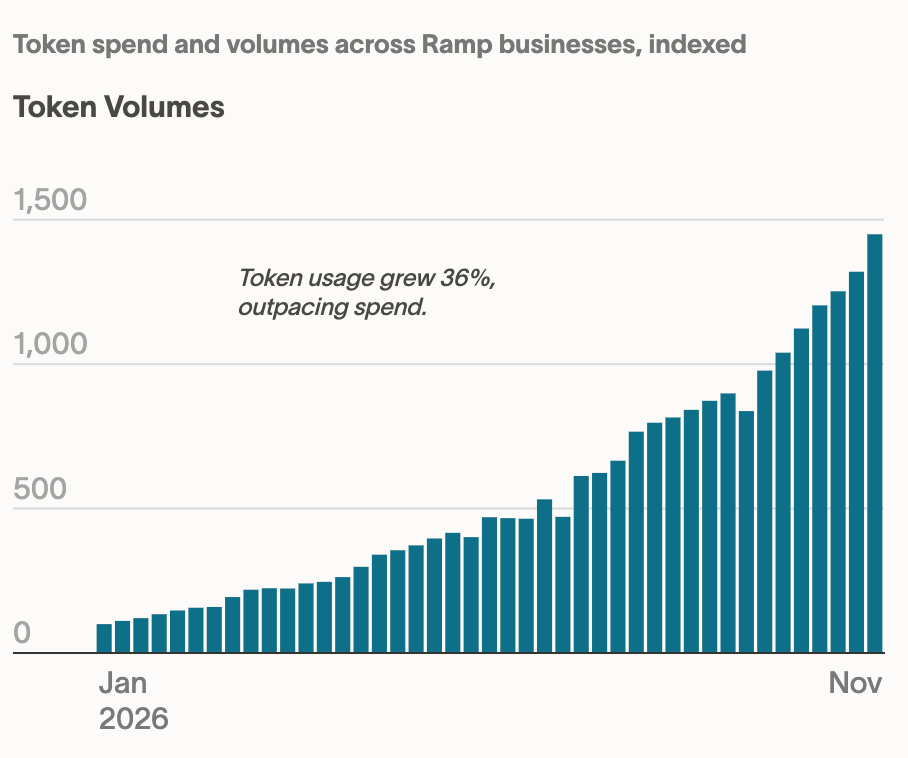
Finally, another wild chart showing a stunning increase in token usage month/month from Ramp
Then Jensen resigned…never a dull week…until next week.