

Market Overview: The Weekly Recap
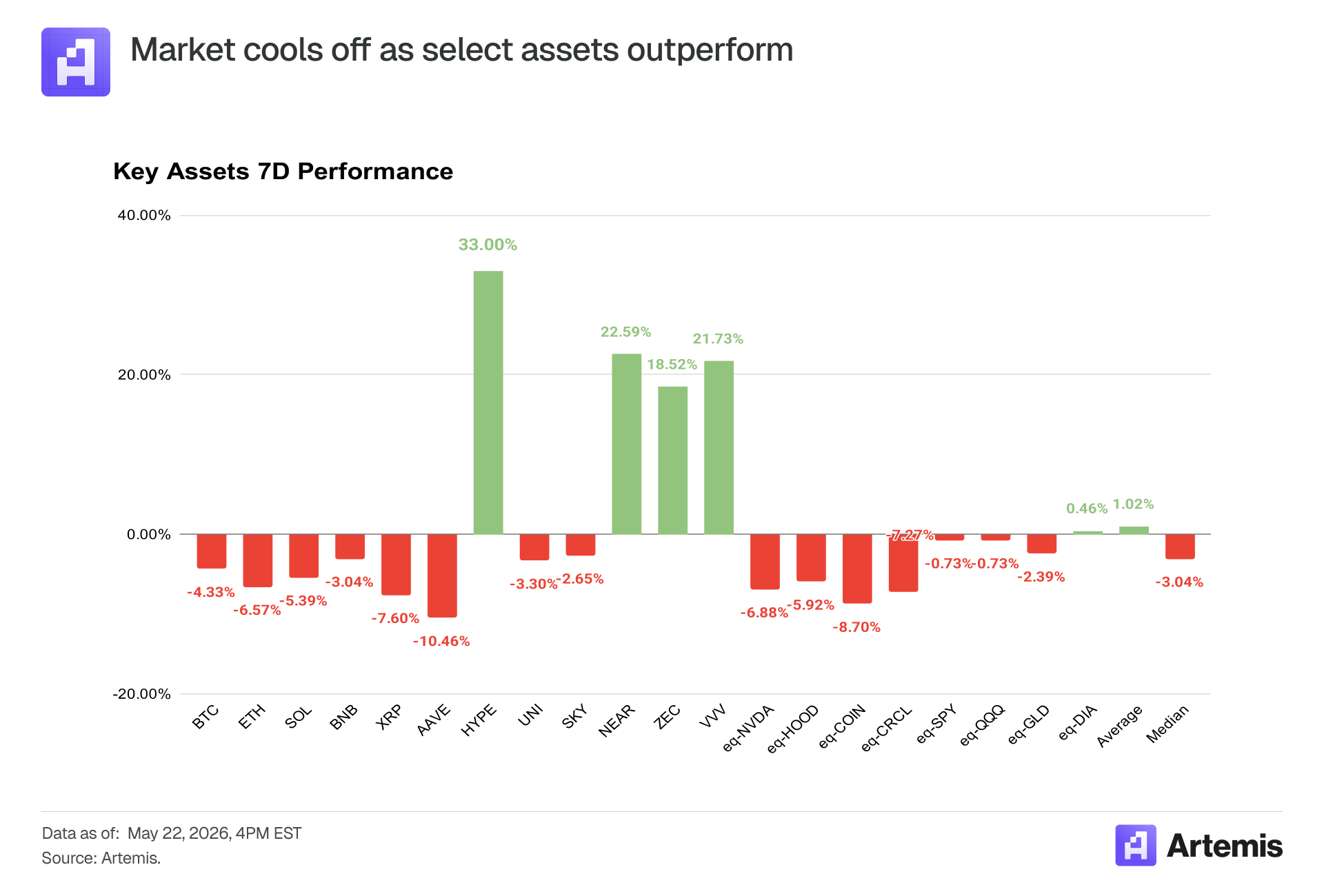
This week we continued to see high dispersion in markets as indices were down on the week (SPY and QQQ -0.73%), and so were digital asset leaders like BTC (-4.33%) and ETH (-6.57%). Through this down market there have been some select winners. Hyperliquid, which we dive into below, hit new all time highs while privacy/AI tokens Zcash (ZEC), Venice (VVV) and Near (NEAR) were each up ~20%. Key macro drivers in markets this past week include:
Kevin Warsh being sworn in as the new Federal Reserve Chair replacing Jerome Powell
Oil continuing to trade at ~$100 as the US and Iran war continues
US 30Y bond yields hit their highest levels since 2007
Today We Highlight:
Hyperliquid: HYPE crosses $60, prints new ATH. We dig into why.
Artemis Research: Crypto Factor Model Analysis: May 2026 Update
Tokenized Stocks: The regulatory landscape is changing (too) quickly
1. Hyperliquid Hits New ATH
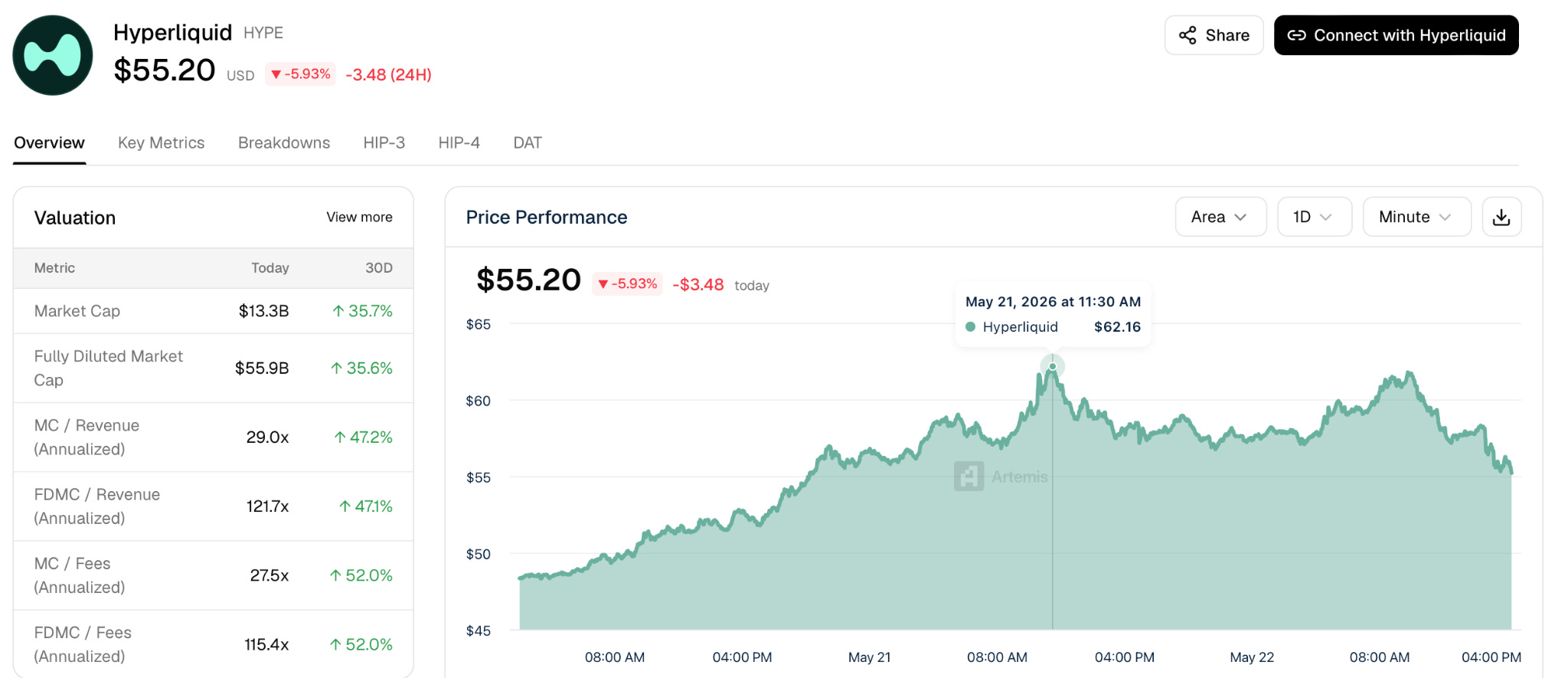
Hyperliquid took the spotlight once again this week as it printed fresh all time highs, the only major crypto asset to do so in many months. HYPE peaked at about $62 a token on Thursday.
A few drivers could be responsible for the dramatic 50% rise over the past month.
The real move started last Thursday, May 14th, with the news that Coinbase and Circle were aligning themselves strongly with the Hyperliquid ecosystem. The alignment manifests itself in a few steps:
Firstly, Coinbase acquired the USDH brand assets from Native Markets. USDH was the original aligned quote asset on Hyperliquid, having won a (slightly controversial) bid last year beating the likes of PayPal, Paxos, Ethena and more. Having only reached ~80m in supply, USDH will be fully sunset in the coming months.
Secondly, Coinbase and Circle will jointly operate Hyperliquid’s first V2 Aligned Quote Asset (AQAv2): USDC. USDC already has ~5B in supply on Hyperliquid, but by becoming an AQA, USDC becomes the default quote asset on Hyperliquid markets. More importantly for HYPE investors, any AQAv2 asset must share 90% of cost-adjusted reserve yield revenue on their Hyperliquid supply with the protocol.
This is really important because it could add an incremental ~$150M in revenue for the protocol, diversifying Hyperliquid’s revenue profile away from pure trading revenues. It also aligns the interests of 2 of the world’s largest digital asset companies (who are also the most influential in Washington), with Hyperliquid’s.
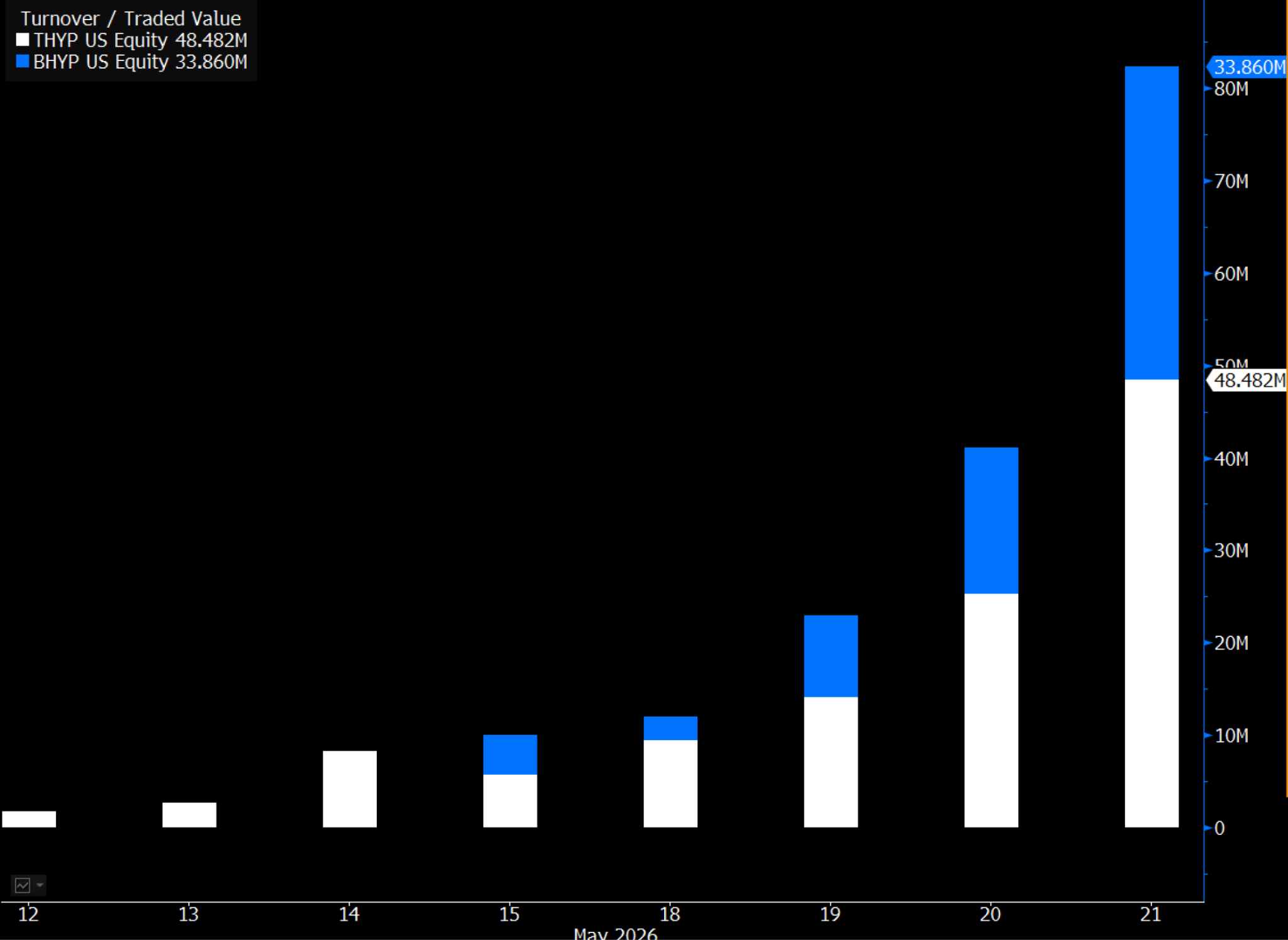
On the institutional side, last week both 21Shares and Bitwise launched HYPE ETFs, giving institutions easier exposure to the asset. Despite a relatively quiet first week, trading volume exploded this week, reaching nearly 100M in volume on Thursday.
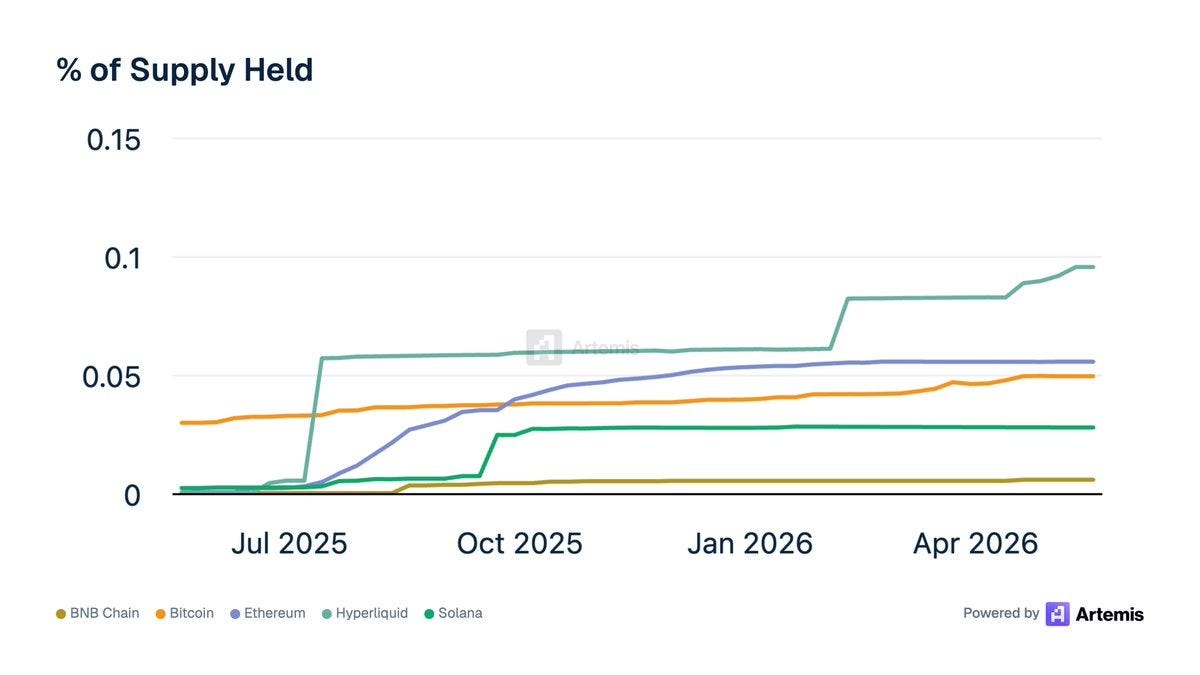
Further showing institutional interest and growth in HYPE, HYPE DATs have been buying HYPE and now own nearly 10% of all HYPE supply, more than any other major asset. Hyperliquid Strategies (PURR) announced at earnings that they have another $100m to deploy, plus a $1B Equity Line of Credit facility. Expect this share to continue rising.
Hyperliquid fundamental metrics continue to strengthen across the board as HIP-3 markets reached new weekly highs at 2.6B in open interest across RWA perp markets. HIP-4 launched outcome markets a couple of weeks ago to more modest growth. Equity perpetuals, pre-IPO markets and prediction markets are all in the very early innings, and Hyperliquid is well positioned to capitalize on that momentum.
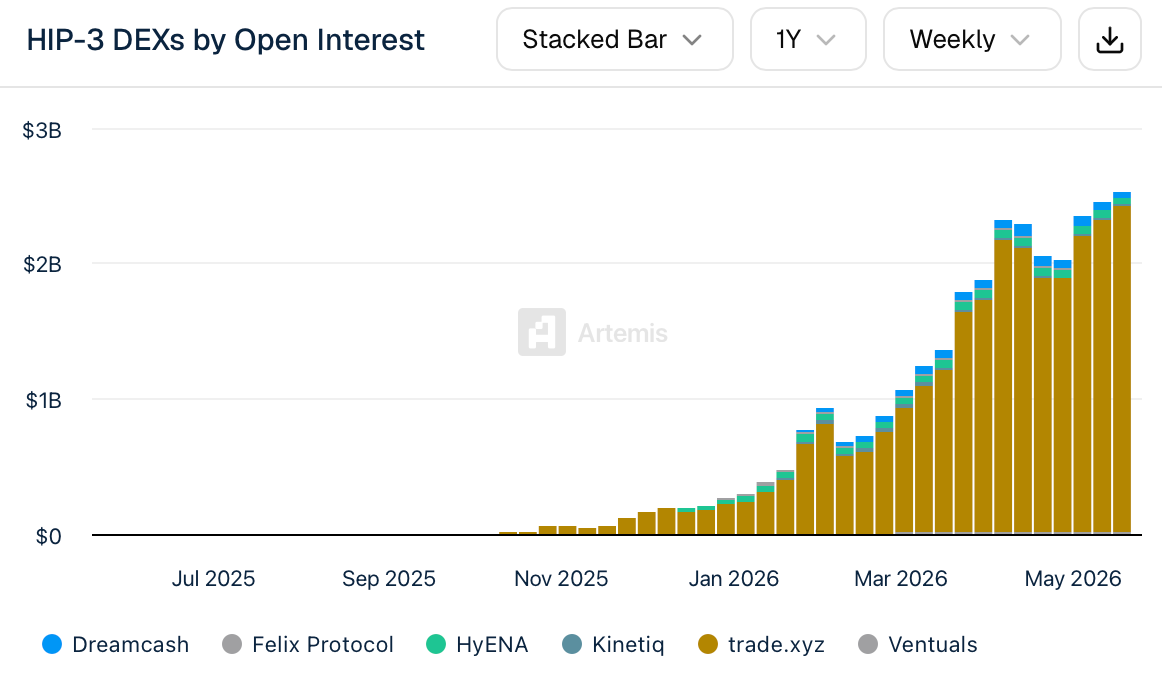
The combination of institutional access via ETFs and publicly listed digital asset treasury companies like PURR and HYPD alongside strengthening fundamentals in the form of revenue diversification and product adoption have driven HYPE to new all time highs. In spite of heavy competition, Hyperliquid has continued to impress and grow. We continue to monitor closely as the US regulatory landscape and markets evolve.
2. Artemis Crypto Factor Model Analysis: May 2026 Update
Executive Summary
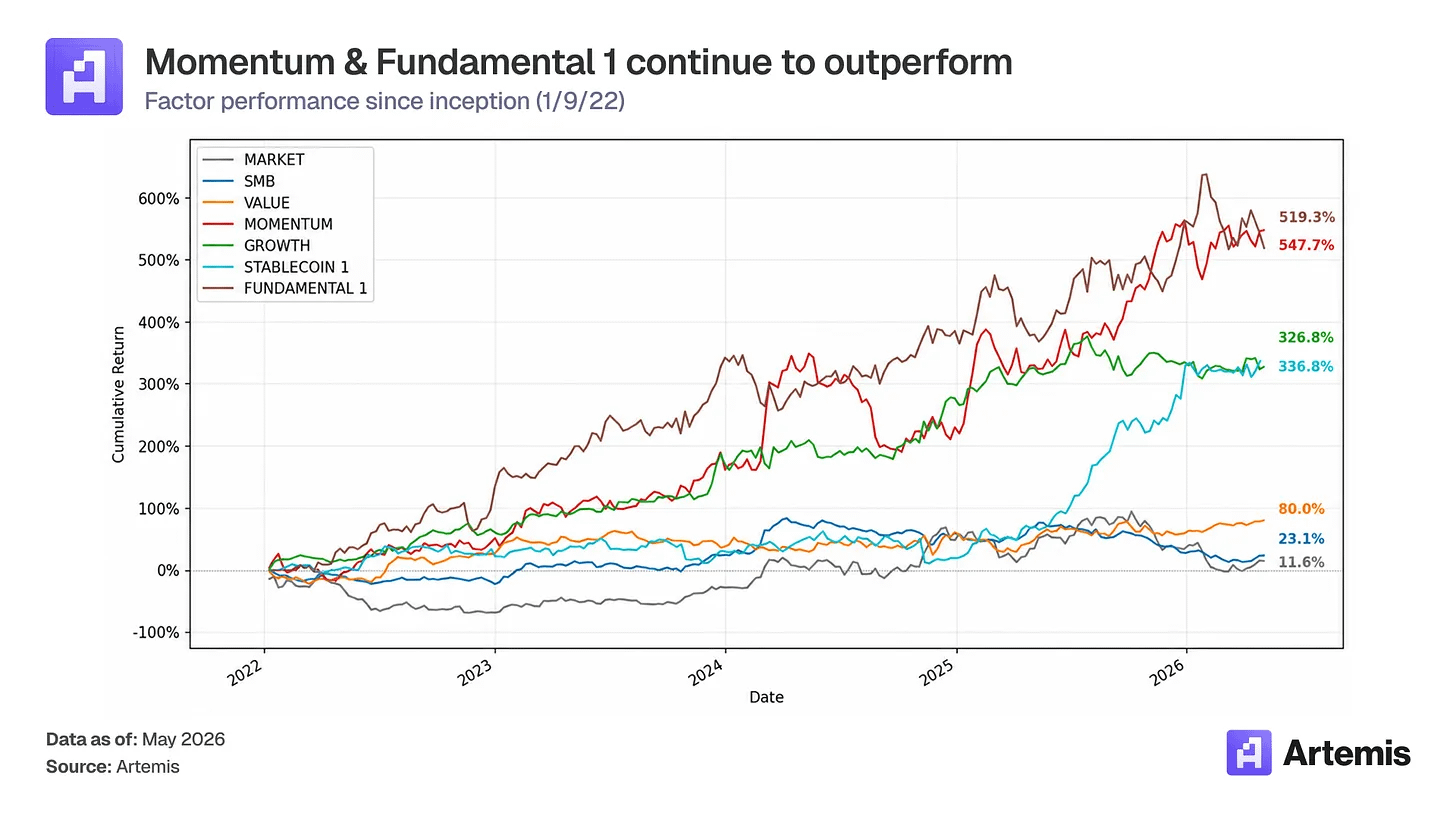
April marked a sharp reversal from the Q1 risk-off regime. The crypto market factor rallied +17.2%, led by BTC (+19.2%) and ETH (+19.5%), as the broader macro backdrop shifted toward optimism on Middle East conflict resolution and a powerful AI-driven rally in equities.
Long-short factors posted muted but mostly positive returns as expected during a broad recovery. Value (+1.7%), Momentum (+0.9%), and Growth (+1.1%) all generated positive alpha, though the short legs were squeezed as previously oversold tokens snapped back. Fundamentals 1 was the only negative factor (-3.7%), driven primarily by PENDLE‘s sharp rally against its short positioning.
Cross-factor themes included the DAO governance narrative (DEXE as a top contributor in both SMB and Momentum for the second consecutive month), explosive privacy coin demand (ZEC rallying 50%+ on SEC clearance and Grayscale’s first-ever privacy coin ETF filing), and a DeFi yield recovery led by PENDLE‘s sPENDLE tokenomics overhaul and Aerodrome‘s cross-chain expansion plans.
Value (+13.3% YTD) and Stablecoins 1 (+2.1% YTD) remain the only factors positive for the year, while the market factor sits at -14.2% and BTC at -10.5%. Since inception, Momentum (547.7% cumulative) and Fundamentals 1 (519.3%) continue to far outpace passive crypto exposure, demonstrating the framework’s compounding advantage over full cycles.
Read the full piece by Maggie on our Substack
3. Tokenized Stocks
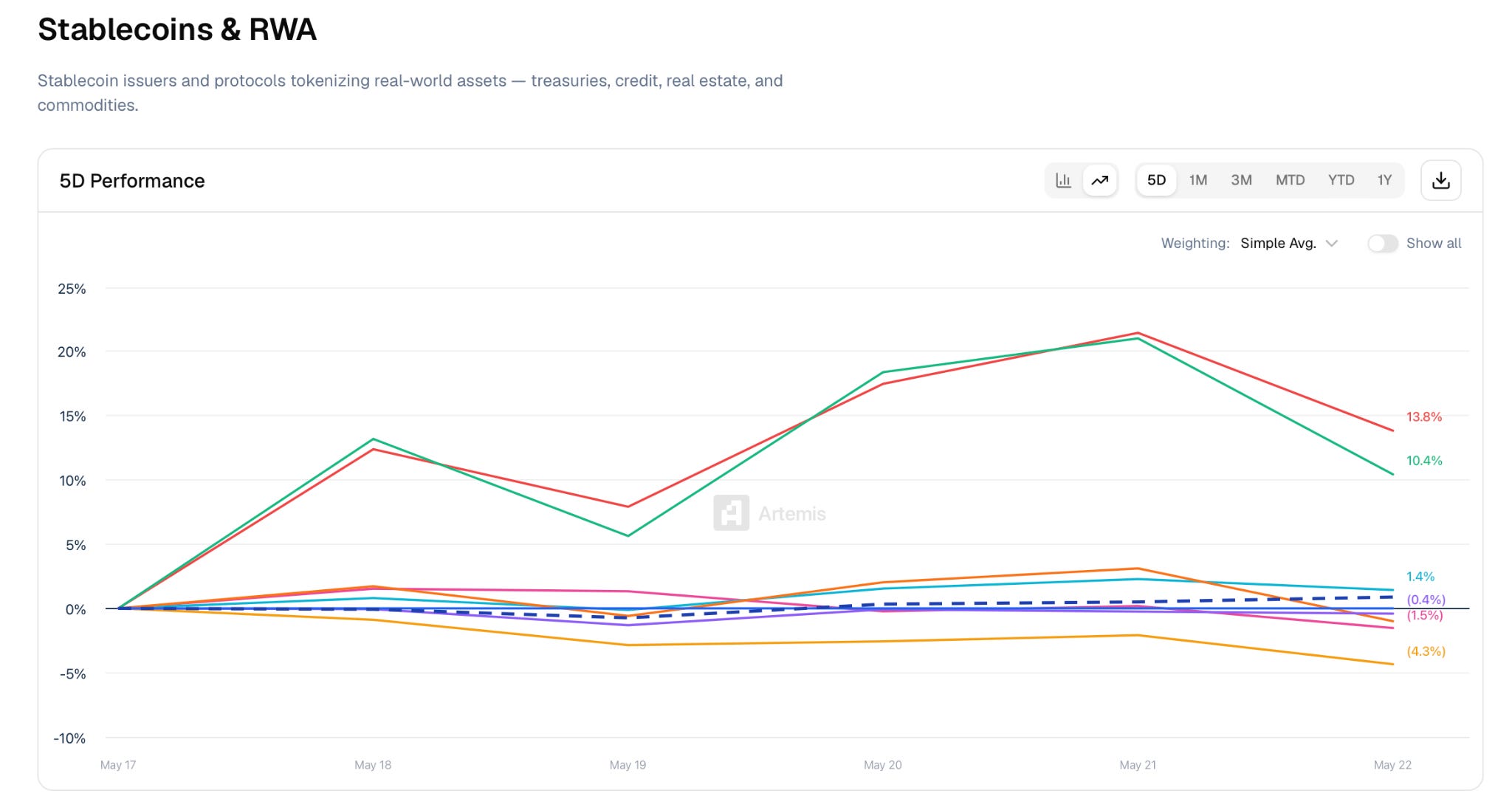
Tokenized equities (on-chain versions of public company stocks like Apple, Nvidia, Tesla, or ETFs) are one of the fastest-growing segments inside the broader Real-World Assets (RWA) boom, but they remain relatively small compared to tokenized Treasuries.
Current Market Snapshot
Tokenized equities market cap: Roughly $1–1.6B (up sharply from ~$960M in March 2026 and ~$424M mid-2025).
Dominant player: Ondo Global Markets leads with the majority of the market (~60% share), offering 100–260+ tokenized U.S. stocks and ETFs. Other activity on Ethereum, Solana, and BNB Chain.
Broader RWA context: Total tokenized RWAs hit a record ~$33–34B (up 1,600% in two years), with equities still a smaller slice but accelerating.
These tokens typically offer price exposure, 24/7 trading, fractional ownership, and DeFi composability (collateral, lending, perps), but most are synthetic wrappers rather than native issuer-issued securities.
Early this week (May 18–19): Bloomberg reported the SEC (under Chair Paul Atkins) was preparing to release an “innovation exemption” for tokenized stocks as soon as this week.
This would have created a lighter-touch framework allowing crypto-native platforms and DeFi protocols to trade third-party tokenized versions of U.S. public equities without issuer consent, enabling 24/7 trading under guardrails (disclosures, exposure limits, etc.).
Today (May 22): The SEC delayed/postponed the innovation exemption amid significant pushback from traditional Wall Street players (stock exchanges, banks, Citadel, SIFMA, etc.).
Concerns raised: investor protections, handling of corporate actions (dividends, voting rights), liquidity fragmentation (parallel markets for the same stock), price discovery issues, and risks around synthetic tokens.
No new timeline has been given. Commissioner Hester Peirce has emphasized narrower, fully backed representations tied to federal securities laws.
ONDO and CFG were up double digit percents on the initial news before retracing nearly all their gains after the postponement.
Charts of the Week
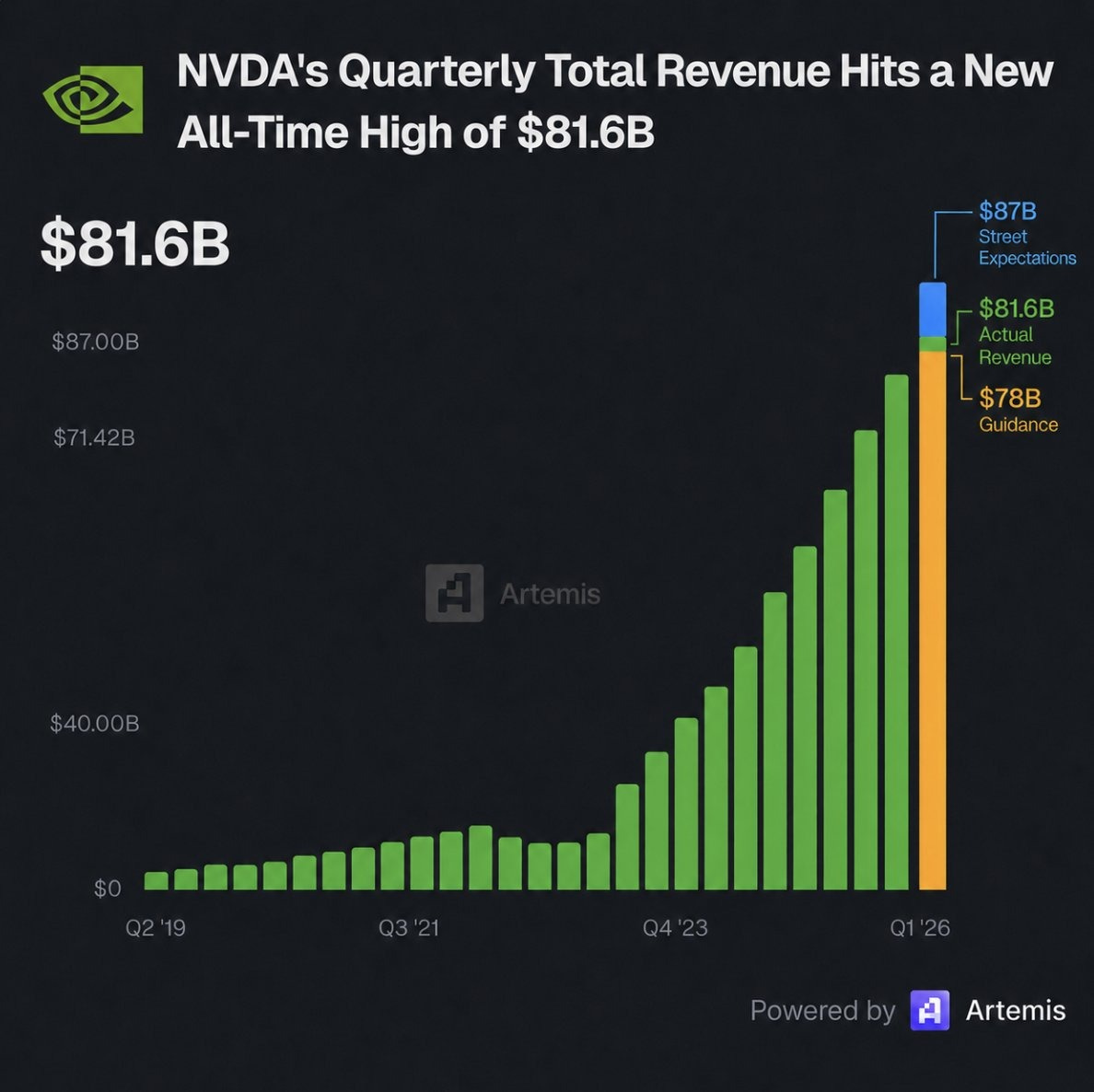
NVDA Q1 Earnings: Nvidia beat guided revenue expectations, reporting $81.6B in quarterly revenue, primarily from data centers.
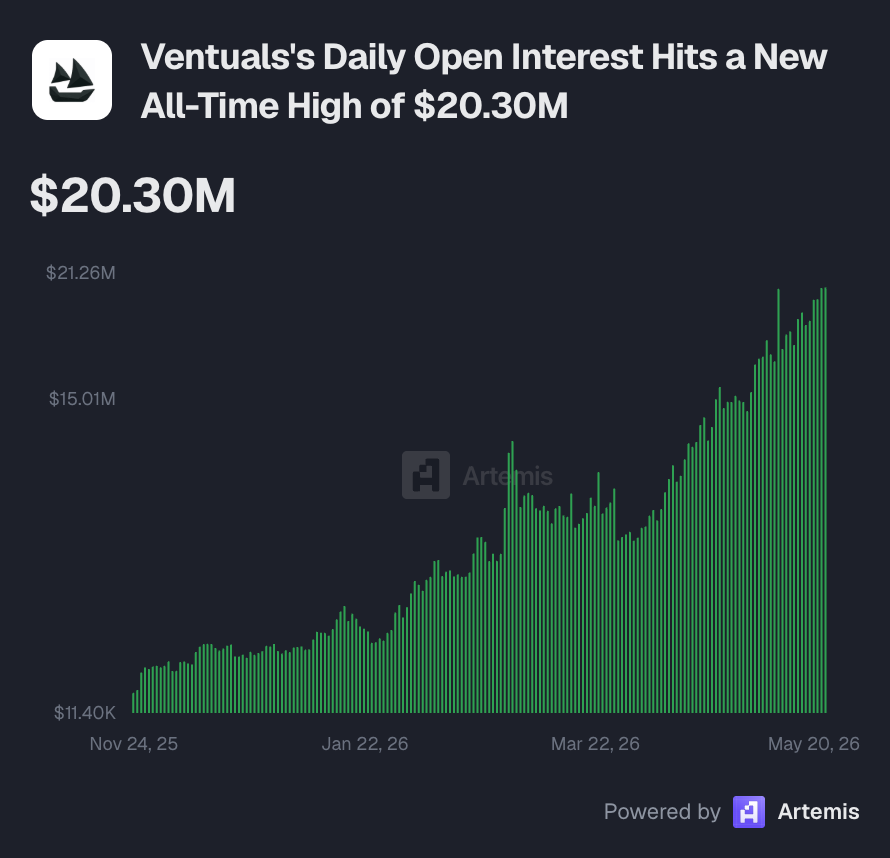
Ventuals Daily Open Interest passes $20M: As appetite for pre-IPO stock exposure surges, Ventuals has captured much of that growth, reaching $20M in open interest this week.
Thanks for reading! Stay ahead this week by using the Artemis Terminal to pull the underlying data on any of the stories above (CLARITY Act vote tracker, COIN Q1 segment revenue, USDC supply on Hyperliquid) or pull live numbers straight into your models with =ART() in Excel.
Disclaimer: This newsletter is produced by Artemis for informational and educational purposes only. It does not constitute investment advice, a recommendation to buy or sell any security or digital asset, or an offer to provide advisory services. Artemis and its employees may hold positions in assets discussed. Figures are accurate to the best of our knowledge as of publication; markets move quickly.